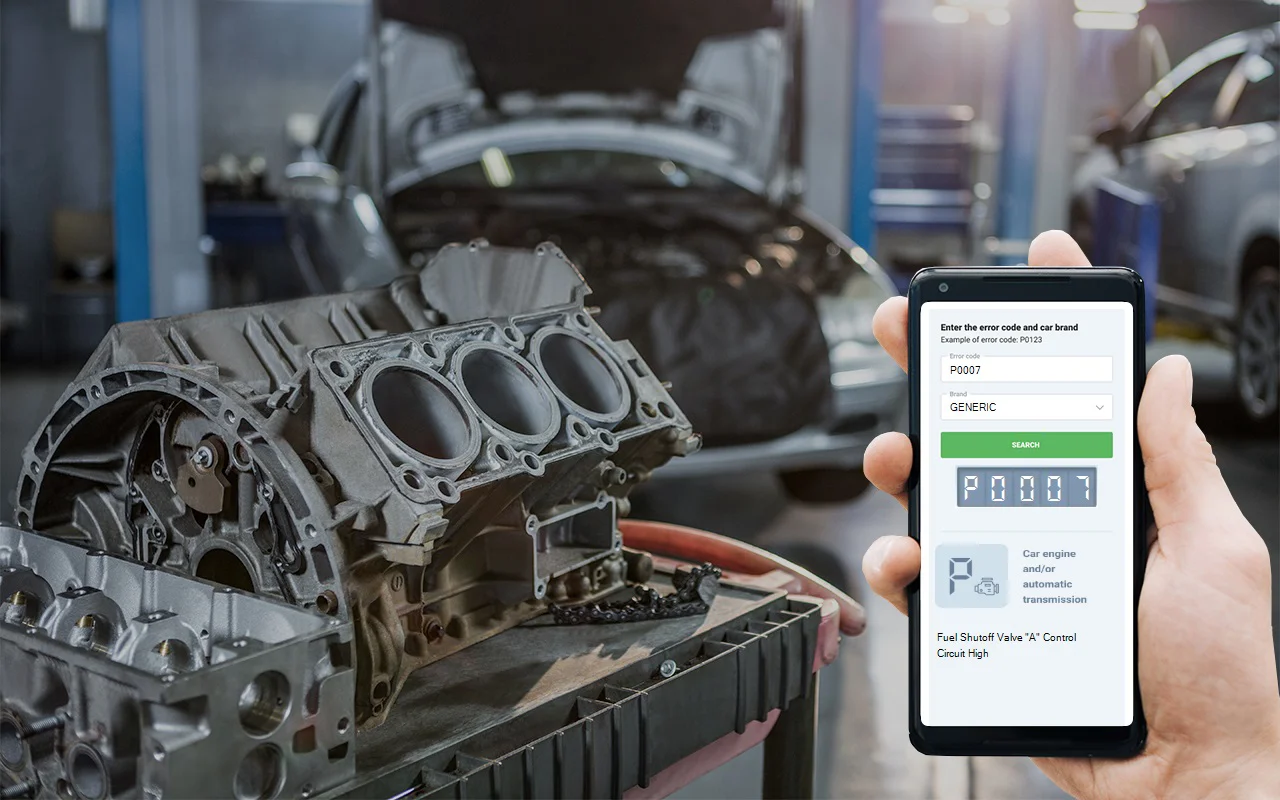
When you see a P0007 code pop up, you’re dealing with what’s called “Fuel Shutoff Valve A Control Circuit High.” Let’s break that down: your car’s computer-what we call the PCM-has picked up an abnormal voltage in the circuit that tells the fuel shutoff valve when to open or close. This valve’s job? It keeps fuel from hitting the engine when you turn off the key and plays a big role in both startup and shutdown. If the PCM sees higher voltage than it expects, it logs this code. Usually, you’ll find the fuel shutoff solenoid mounted right on the fuel pump, working like a little gatekeeper-moving a plunger to allow or block fuel. If something’s off here, your engine might not get fuel when it should, or worse, it might not stop the flow when you shut the car off. Honestly, in all my years wrenching, I don’t see this one every day, but when I do, it’s a red flag that you can’t afford to ignore. This code touches your engine’s ability to run and stop safely, so it deserves immediate attention.
DTC P0007
 4277
4277 6 minutes of reading
Causes and obd code P0007
From my time in the shop and poring over factory manuals, the main culprits behind a P0007 code usually boil down to these:
- A faulty fuel shutoff solenoid or valve-this is the heart of the system, the bit that actually opens or closes to manage fuel flow.
- A bad fuel shutoff relay-if this relay sticks or fails, it can throw the whole circuit out of whack.
- Issues in the wiring or connectors-think corroded plugs, frayed wires, or half-seated harnesses in the fuel shutoff solenoid circuit.
- Every so often, you’ll find the PCM itself at fault, but that’s pretty rare in my experience.
If you’re chasing down this code, start with the solenoid and wiring-they’re the usual suspects. Oh, and don’t be surprised if you run into this issue on brands like Ford, Peugeot, or Renault. I’ve seen it pop up on those more than once.
Symptoms and P0007 code
If you’ve got this code active, here’s what you might notice. The check engine light will be staring you down-that’s your first warning. You could feel the engine running rough, maybe it’s a bit stubborn to start, or you might even have it stall out as you come to a stop. Some drivers notice their fuel mileage taking a dive. In the worst cases, the engine might not fire up at all. My advice? Don’t shrug these off. Letting a p0007 dtc issue linger can turn a minor headache into a major breakdown in no time.

Diagnosis and P0007 engine code
When I’m faced with a P0007, here’s the routine I follow:
- First off, I always check for any other codes-sometimes you’ll get a companion code that points you right to the root of the problem.
- Then, I get hands-on with the wiring and connectors for the fuel shutoff solenoid. Look for green fuzz (corrosion), broken wires, or plugs that aren’t fully seated. Pro-tip: have someone wiggle the harness while you watch the scanner or listen for changes.
- Next, I test the solenoid itself. Grab a multimeter and check the resistance at the terminals. If you’re outside the spec listed in your service manual, it’s probably toast.
- After that, I move to the relay. If there’s another identical relay in your fuse box, swap them-sometimes that’s all you need to diagnose a bad one. Otherwise, test it by the book.
- If the hardware checks out, I’ll test voltage and continuity in the circuit. Watch for unexpected shorts to ground or power.
- And if you’ve covered all that ground and still haven’t found the issue, it’s time to consider the PCM. That’s rare, but it does happen. At that point, you’re usually best off consulting a dealer or a pro with advanced diagnostic gear.
One thing I always tell folks: don’t overlook the basics. Sometimes it’s just a loose connector or a blown fuse causing all your grief.
Common Mistakes and dtc P0007
I’ve watched plenty of well-meaning DIYers (and even a few pros) fall into the same traps with this code. A classic mistake is throwing a new solenoid at the problem before checking the wiring or relay. Another biggie? Ignoring corroded or loose pins in the connectors-those little devils can cause all sorts of weird electrical issues. Some people get tunnel vision and forget to scan for other codes that could offer more clues. My advice? Slow down, work methodically, and don’t swap parts blindly. It’ll save you time, money, and frustration.

Seriousness and obd2 code P0007
This is one of those codes that demands respect. If your fuel shutoff valve’s acting up, your engine could stall with no warning-a nightmare if you’re cruising on the highway or navigating traffic. There’s also the risk that the engine won’t stop when you turn off the key, which can lead to fuel flooding, and in rare cases, even fire hazards. Plus, if the electrical fault is severe, you could damage the fuel pump, injectors, or even the PCM itself. In short: don’t gamble with this one. Get on top of it right away.
Repair and P0007
Here’s what’s worked best for me when fixing this code:
- Replace the fuel shutoff solenoid or valve if it fails resistance or function tests-don’t cut corners here.
- Track down and repair (or replace) any damaged wiring or questionable connectors in the circuit.
- If the relay’s sticking or not switching like it should, swap it out for a new one.
- In the rare event the PCM’s at fault, reprogramming or replacement might be necessary, but that’s the last resort after you’ve ruled out everything else.
My motto? Always start with the simple fixes-wiring and relays-before throwing money at pricier parts.
Conclusion
Wrapping it up, a P0007 code signals a problem in the circuit controlling your fuel shutoff valve-a part that’s absolutely vital for safe engine operation. Ignore it, and you’re inviting stalling, no-starts, or even bigger headaches down the road. In all my years, I’ve found that the surest path to a fix is a step-by-step approach: check the wiring, relay, and solenoid first, and only suspect the PCM if every other stone’s been turned. Don’t wait-addressing it early keeps you safe and your vehicle running the way it should.