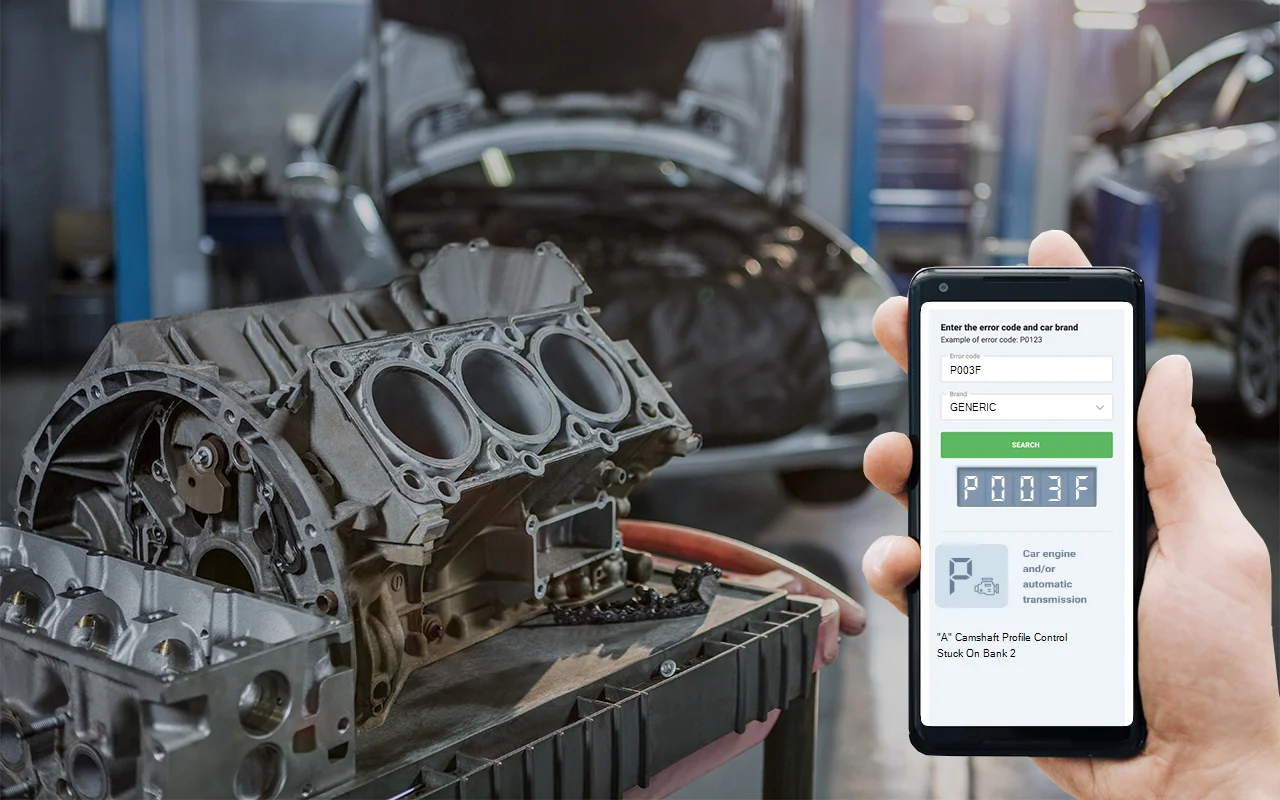
If you’re staring down a P003F code, let me break it down for you in plain shop talk. This code pops up when your engine’s computer-the ECM-spots a problem with the camshaft profile control circuit, specifically a ‘stuck’ issue on bank 2. In my years wrenching on cars, I’ve seen this system trip up plenty of folks. Basically, we’re talking about the tech that tweaks how your camshaft operates to help your engine run smoother and more efficiently under different driving conditions. The camshaft itself? That’s the piece responsible for opening and closing your engine’s valves at just the right times. Today’s engines often have systems that can adjust the camshaft’s timing and lift for better power, fuel economy, and even lower emissions. You’ll find this code across all sorts of brands-Volvo, Chevy, Ford, Dodge, Porsche, Land Rover, Audi, Hyundai, Fiat, you name it. The exact setup will vary from one make to the next, but the heart of the matter is the same: your ECM is seeing that the camshaft profile control isn’t doing its job on bank 2 (which is usually the side with cylinder #2, but always double-check your manual to be sure). Nine times out of ten, this system uses engine oil pressure and some special solenoids to adjust the camshaft’s action, so anything that messes with oil flow or the electronics can trip this code.
DTC P003F
 3607
3607 6 minutes of reading
Causes of P003F
From my time in the garage, the most common culprits behind a P003F code are issues with the oil or the electronics that control the camshaft system. Here’s what I run into most often:
- Engine oil that’s dirty or overdue for a change
- Wrong oil type or viscosity-using anything other than what the manufacturer calls for
- Low oil level (easy to overlook, but critical)
- A faulty oil control solenoid (the gizmo that routes oil to the camshaft system)
- A valve in the camshaft profile control system that’s gummed up or stuck
- Damaged or broken wiring/connectors in the camshaft control circuit
- Short circuits, either from wiring issues or mechanical faults
- Every so often, the ECM itself is at fault, but that’s rare
Honestly, most of the time it comes down to oil that hasn’t been changed when it should’ve, or a solenoid that’s gotten bogged down with gunk from old oil.
Symptoms of P003F engine code
When a P003F code shows up, drivers usually notice something’s off with the way their car runs. Here’s what folks describe to me most often:
- Lack of power, especially when you step on the gas
- Engine feels rough or uneven-sometimes it even hesitates
- Poor fuel economy (watch for that fuel gauge dropping faster than usual)
- Throttle feels lazy or just not as responsive as it should
- Overall, the car just doesn’t have that zip or pep you’re used to
- Sometimes the only clue is the check engine light-but trust me, don’t ignore it

Diagnosis steps for dtc P003F
Let me walk you through how I’d tackle a P003F code, and you can try some of these steps before hauling your car to a shop:
- First thing’s first: pop your hood and check the engine oil. Is it at the right level? Does it look black, gritty, or smell burnt? If so, swap out the oil and filter ASAP. This simple fix solves a surprising number of cases.
- Next, double-check you’re running the exact oil type and viscosity your manufacturer recommends. Trust me, using the wrong oil can set off a whole cascade of headaches in these systems.
- After that, I always take a good look at the wiring and connectors going to the camshaft profile control solenoid on bank 2. Search for broken wires, loose plugs, or any sign of corrosion. Pro-tip: hit those connectors with a little contact cleaner to make sure you’re getting a clean signal.
- If everything looks good so far, I’ll test the solenoid itself. Sometimes they’re just jammed up with debris. If you’re comfortable with tools, you can pull it out and check for gunk-clean it out, or if it’s shot, swap it for a new one.
- Still stumped? I’ll check for technical service bulletins (TSBs) for that specific make and model. Sometimes there are known issues or updated parts that fix these headaches in a hurry.
If you’re not confident poking around under the hood, grab a buddy to help out-and always disconnect the battery before unplugging any of those connectors. Better safe than sorry.
Common Mistakes when fixing P003F code
I see it all the time-folks jump straight to swapping out pricey parts, skipping the basics. Here are the big mistakes I see over and over:
- Ignoring the oil-dirty, wrong, or low oil is the #1 offender, so always start here
- Missing wiring or connector issues-a loose or corroded plug can be the real gremlin
- Replacing the solenoid or even the ECM without confirming they’re actually the problem
- Not checking for TSBs-sometimes a quick software update or revised part is all you need
Take my advice: always start simple and work up the ladder. Skipping steps just burns time and cash.

Seriousness of obd2 code P003F
Don’t kid yourself-this isn’t a code you can ignore for long. While it might not leave you stranded on the side of the road right away, letting a P003F code linger can set you up for bigger (and pricier) headaches later. If the camshaft profile system isn’t working right, your engine may run rough, guzzle more fuel than usual, and in serious cases, suffer internal damage if oil flow gets blocked or timing goes haywire. I’ve seen things go downhill fast, especially if oil starvation kicks in. You could end up damaging the camshaft, the timing chain or belt, and even vital engine guts. Bottom line: don’t wait around-get it checked out before it snowballs.
Repair steps for obd code P003F
Here’s what usually does the trick for a P003F code, based on my own hands-on experience and the factory repair guides:
- Start by changing the engine oil and filter-use the exact type and viscosity the manufacturer wants
- Clean or replace the camshaft profile control solenoid on bank 2, depending on what you find
- Repair or swap out any damaged wiring or connectors in the control circuit
- If you find sludge or debris in the oil passages, clean them out thoroughly (sometimes this takes a bit more work)
- If there’s a TSB or updated part, follow the manufacturer’s fix step-by-step
- On rare occasions, you might need to update or reprogram the ECM if the manufacturer calls for it
Stick with the basics-oil and wiring-first. Don’t move on to pricey parts until you’ve ruled out the simple stuff.
Conclusion
To wrap it up, P003F means your engine’s camshaft profile control system isn’t working right on bank 2-usually because of oil or electrical gremlins. It’s not something you want to put off, since it can snowball into much bigger issues if ignored. My advice? Start with a fresh oil and filter, then check the wiring and solenoid. More often than not, that’s all it takes to get things back to normal. If you’re unsure, don’t wait-get it checked out. Trust me, the peace of mind (and your wallet) will thank you.