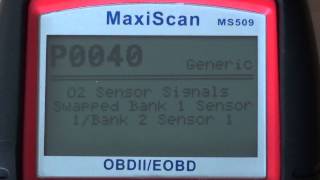
Let me break down what P0040 means for your vehicle. This code stands for “O2 Sensor Signals Swapped Bank 1 Sensor 1/Bank 2 Sensor 1.” Basically, your car’s computer (the PCM) has figured out that the wiring for the upstream oxygen sensors-those are the ones before the catalytic converter-has been crossed or swapped. These sensors are crucial because they help the engine control how much fuel to inject, keeping everything running efficiently and cleanly. When their signals get mixed up, the computer can’t tell which bank of the engine is running rich or lean, and that throws off the whole fuel management system. This code only pops up on engines with two banks of cylinders, like V6s or V8s-not inline engines. The system is smart enough to spot when the signals don’t match up with what it expects, and that’s when you get this code.
DTC P0040
 5521
5521 6 minutes of reading
Causes of P0040 trouble code
From experience, the most common reason for a p0040 issue is someone accidentally swapping the oxygen sensor connectors-usually after a repair or maintenance job where the sensors were unplugged. The connectors often look identical and can be close together, so it’s easy to mix them up if you’re not careful. Other causes I’ve seen include:
- Misrouted oxygen sensor wiring (wires plugged into the wrong sensors)
- Damaged or shorted oxygen sensor wiring (from heat, rubbing, or previous repairs)
- Improper wiring repairs or patching after damage
- Very rarely, a failed PCM (the car’s main computer)
Most often, it’s just a case of the connectors being swapped. But don’t rule out wiring damage, especially if there’s been work done in that area recently. This error can also happen on car brands Ford, Renault.
Symptoms of P0040
When this code is active, here’s what you’ll likely notice: the check engine light will come on, and you might feel the engine running rougher than usual. You could also see a drop in fuel economy-meaning you’ll be stopping for gas more often. Sometimes, the engine might hesitate, idle roughly, or just not feel as peppy as it should. In some cases, you might not notice much at all except for that warning light, but don’t let that fool you-it’s still a problem that needs attention. A dtc p0040 ford warning may occur in affected vehicles.

Diagnosis using obd2 code P0040
Here’s how I usually approach diagnosing this issue. First, I always start simple: pop the hood and visually inspect the oxygen sensor wiring and connectors for both Bank 1 Sensor 1 and Bank 2 Sensor 1. Look for any obvious signs of damage-like melted insulation, pinched wires, or connectors that look out of place. If someone’s worked on the exhaust or sensors recently, double-check that the connectors haven’t been swapped. They’re often the same shape and color, so it’s easy to mix them up. I recommend comparing the wire colors at each connector to the wiring diagram in your vehicle’s service manual-make sure each sensor’s wires match up with the correct harness. If everything looks good, I’ll use a scan tool to monitor the live data from both sensors. If the readings seem reversed when you rev the engine or create a vacuum leak on one bank, that’s a big clue the connectors are swapped. If you’re not comfortable with wiring diagrams or scan tools, it’s best to have a technician help out. Don’t forget to check for any signs of previous repairs-sometimes wires get patched in the wrong order. Only after ruling out wiring and connector issues would I suspect a problem with the PCM, but that’s pretty rare. The dtc p0040 can also be confirmed through proper obd2 diagnostics.
Common Mistakes regarding P0040 engine code
I’ve seen a few common mistakes with this error. The biggest one is replacing the oxygen sensors right away without checking if the connectors are simply swapped. That’s a surefire way to waste money and time. Another mistake is not checking the wiring harness for damage-sometimes a wire gets pinched or melted, causing crossed signals. Skipping the step of comparing wire colors to the service manual is another pitfall. And finally, some folks clear the code and hope it doesn’t come back, but that just masks the real issue. Always make sure the wiring is correct before replacing any parts. The dtc p0040 should be carefully investigated before replacing components.

Seriousness of P0040 code
This isn’t something you want to ignore. When the O2 sensor signals are swapped, the engine can’t control fuel mixture properly. That means you could end up running too rich or too lean on one side of the engine, which can cause rough running, poor fuel economy, and even damage to the catalytic converter or the engine itself if left unchecked. Honestly, it’s dangerous to ignore this-things can go south quickly, and you don’t want to risk expensive repairs down the road. The risks just aren’t worth it. If you see a dtc p0040 warning, get it addressed promptly.
Repair for obd code P0040
In cases like this, the fix is usually straightforward. Here’s what I recommend:
- Correct any swapped oxygen sensor connectors-make sure each sensor is plugged into the right harness.
- Repair or replace any damaged or shorted wiring you find during your inspection.
- If the wiring and connectors are all correct and undamaged, and the code still returns, have the PCM checked and tested by a professional-though that’s rarely needed.
- After repairs, clear the code and test drive the vehicle to make sure it doesn’t come back.
It’s best to start with the simple stuff-double-check those connectors before replacing any sensors or computers. If you encounter a dtc p0040, following these steps can help restore proper operation.
Conclusion
To sum it up, P0040 means your car’s computer has detected that the upstream oxygen sensor signals are swapped between the two banks of the engine. This throws off fuel management and can lead to rough running, poor mileage, and even bigger problems if ignored. The most reliable way to fix it is to carefully check the wiring and connectors, making sure nothing’s crossed or damaged. Don’t put this off-get it checked and sorted out promptly to avoid more serious (and expensive) trouble down the line.