
Causes and dtc P0048
From what I see most often in the shop, P0048 usually comes down to a handful of culprits. Here’s what I’d look for first:
- A faulty boost pressure or turbo position sensor-these can send bad info to the computer.
- A malfunctioning turbocharger or supercharger-sometimes the unit itself is damaged or stuck.
- A bad boost control solenoid-if this little valve fails, the system can’t regulate boost.
- Wiring issues-broken, corroded, or shorted wires between the PCM, solenoid, or sensors.
- A problem with the PCM itself-rare, but it does happen.
- Vacuum leaks-if the system uses vacuum to control the valve, any leak can throw things off.
In my experience, wiring and solenoid problems are the most common, but you can’t rule out sensor or turbo issues without a proper check. This error can also happen on this car brand Ford, Toyota, Mazda, Chevy.
Symptoms and P0048 engine code
If your car throws a P0048 code, you’ll probably notice a few things right away. The check engine light will almost always come on. You might feel a loss of power, especially when you try to accelerate hard-like the car just isn’t as peppy as usual. Sometimes, you’ll hear odd noises from the turbo area, or even a whistling sound. In more severe cases, the engine can run rough, hesitate, or even go into limp mode to protect itself. If the boost gets too high, you could get engine knocking or pinging, which is really bad news for your motor.

Diagnosis and obd code P0048
Here’s how I’d tackle a P0048 code, step by step. First, I always start with a good visual inspection-look for loose or damaged wiring around the turbo, the boost control solenoid, and any sensors. Don’t forget to check for vacuum leaks if your system uses vacuum lines; a split hose can cause all sorts of headaches. Next, I recommend checking for any technical service bulletins (TSBs) related to this code for your specific vehicle-sometimes there’s a known fix. If everything looks okay, I use a scan tool to command the boost control solenoid on and off while watching the sensor readings and engine RPM. If the readings don’t change, it points to a sensor or solenoid issue. I’ll also check the solenoid’s power and ground with a multimeter-if there’s no voltage or ground, you’ve got a wiring problem. For the solenoid itself, I often test its resistance with an ohmmeter, comparing it to factory specs. If I suspect the turbo or supercharger, I’ll remove the intake hose and inspect the unit for damage or debris. Finally, I’ll check the sensor wiring for proper voltage, ground, and signal. It’s best to have someone assist you with these checks, especially when commanding the solenoid with a scan tool.
Common Mistakes and P0048 code
I’ve seen a lot of folks jump straight to replacing the turbo or the PCM without checking the basics first. Skipping the wiring inspection is a big mistake-corroded or broken wires are a common cause and easy to miss. Another one is not checking for vacuum leaks when the system uses vacuum control. Also, some people forget to verify the solenoid’s operation with a scan tool or multimeter, which can lead to unnecessary parts swapping. Always start simple and rule out the easy stuff before moving on to the expensive components.

Seriousness and P0048 trouble code
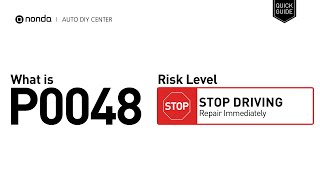
This isn’t something you want to ignore. Problems with the boost control system can lead to dangerously high boost levels, which can cause engine knocking, overheating, or even catastrophic engine damage. I’ve seen pistons, head gaskets, and even turbochargers themselves get ruined from unchecked boost issues. At best, you’ll have poor performance and higher fuel consumption; at worst, you could be looking at a major engine rebuild. Don’t put this off-things can go south quickly if overlooked.
Repair and P0048
Most of the time, the fix comes down to one of these steps: repairing or replacing damaged wiring or connectors in the boost control circuit, swapping out a faulty boost control solenoid, replacing a bad sensor, or fixing any vacuum leaks. If the turbocharger or supercharger is damaged, it’ll need to be rebuilt or replaced. In rare cases, if the PCM is at fault, it may need reprogramming or replacement. Always follow the manufacturer’s diagnostic flowchart to be sure you’re addressing the real issue.

Conclusion
To sum it up, P0048 means your vehicle’s boost control system isn’t working right, and that’s a serious risk for your engine. Start with the basics-wiring, solenoid, and sensors-before moving to more complex or expensive repairs. Don’t delay getting this checked out; the risk of engine damage is just too high. The most reliable way to fix it is to follow a step-by-step diagnostic process, address any wiring or component faults, and confirm the repair with a scan tool. That’s the best way to keep your engine safe and your car running strong.
 4183
4183 5 minutes of reading