
Causes of P004D Trouble Code
From years of turning wrenches and poring over wiring diagrams, I can tell you these are the usual suspects when it comes to a P004D:
- Boost pressure or turbo position sensors that have either failed outright or are getting gummed up by oil and grime.
- Turbos or superchargers with internal wear or damage-bearings can go bad, vanes can stick, you name it.
- Boost control solenoids that just give up the ghost. These little guys are notorious for quitting unexpectedly.
- Wiring issues-broken, corroded, or loose connectors can turn a simple problem into a real headache.
- PCM failures-rare, but I’ve seen a couple where the computer itself was the culprit.
- Vacuum leaks (for systems that use vacuum)-a split hose or leaky fitting can throw the whole boost system out of whack.
Honestly, most of the time it comes down to a flaky sensor or a bad solenoid. Still, I always say, start by checking the wiring and connections. You’d be surprised how often that’s all it is.
P004D Symptoms and Warning Signs
If you’re dealing with a P004D, you’ll probably notice the check engine light shining at you first. But that’s just the beginning. You could feel a serious drop in power, especially when you put your foot down-almost like the turbo just isn’t doing its job. Sometimes you’ll catch strange noises from the turbo area, or the engine might run rough. If the boost spikes too high, you might even get knocking or pinging, and trust me, that’s the last thing you want. In some cases, the signs are pretty subtle at first, but from what I’ve seen, things can go downhill fast if you don’t get on top of it.

How to Diagnose DTC P004D
When I get a car in with a P004D, here’s the process I follow to get to the bottom of it:
- First up, a good visual inspection. I’m looking for anything obvious-loose hoses, broken or corroded wires, connectors that aren’t fully snapped in. And if there are vacuum lines, I’ll go over them for cracks or leaks.
- I always check for TSBs (Technical Service Bulletins). Sometimes the manufacturer’s already got a fix or a known issue, so it pays to check before going further.
- With my scan tool, I’ll command the boost control solenoid on and off, watching the sensor data as I do it. If I see the engine reacts but the sensor’s flat, I’m thinking sensor or wiring. If there’s no response at all, it might be the solenoid, the turbo, or a wiring issue.
- I’ll grab the multimeter and check that the solenoid’s getting both power and ground. If something’s missing, I start tracing the wiring back for a break or a bad pin.
- If the solenoid’s getting juice, I’ll pull the intake hose and take a look at the turbo vanes for damage or debris. Anything out of the ordinary means the turbo needs attention.
- For the sensor, I check it’s getting power, ground, and sending a proper signal back to the PCM. If not, it’s time to repair or replace.
- Sometimes, I’ll bench-test the solenoid with direct power and ground-if it doesn’t click or move, that’s a dead solenoid for sure.
Having a second set of hands is a big help, especially when checking for leaks or moving parts. And before you dive deeper, always double-check the basics-it saves you a lot of frustration later.
Common Mistakes When Addressing the P004D Code
A classic mistake I see is folks rushing to swap out the turbo or solenoid before even glancing at the wiring or connectors. That’s a quick way to throw money at the problem without fixing it. Another one? Overlooking vacuum leaks-they sneak up on you and can cause all sorts of boost headaches. And don’t forget to check for TSBs; sometimes the answer’s right there in a service bulletin. Skipping the simple, foundational checks is where most people trip up.

How Serious Is the P004D Engine Code
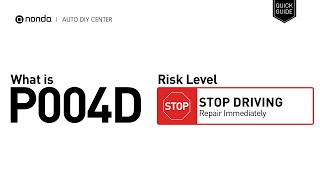
Let me be straight with you: this isn’t one to brush aside. Problems with the boost control system can spiral out of control fast, leading to dangerously high boost, engine knock, overheating, or even a total engine meltdown. You could be risking pistons, valves, the head gasket, and even the turbo itself. I’ve seen engines ruined because someone thought they could just ‘drive it a little longer.’ Don’t be that person.
Repair Options for OBD2 Code P004D
When it comes to actually fixing a P004D code, here are the repairs I end up doing the most:
- Repairing or replacing any damaged wiring or connectors in the boost control circuit-this is usually the cheapest and quickest fix.
- Swapping out a bad boost control solenoid.
- Installing a new boost pressure or turbo position sensor if the old one’s no good.
- Finding and fixing vacuum leaks-sometimes it’s just a cracked hose or a loose clamp.
- If the turbo or supercharger is toast, you’re looking at repair or replacement.
- On rare occasions, reprogramming or replacing the PCM if it’s turned out to be the root cause.
My advice? Always start with the easy stuff like wiring and sensors before you shell out for big-ticket parts.


Conclusion
Bottom line-P004D means there’s trouble brewing in your vehicle’s boost control system, and ignoring it is a gamble you don’t want to take. The risks are serious and can snowball quickly, so it’s essential you get on it fast. Begin with the basics: wiring, sensors, solenoids, and never underestimate a small vacuum leak. Take a methodical approach and you’ll keep your engine running strong and healthy for miles to come.

 5616
5616 6 minutes of reading