
Causes and obd2 code P007B
From my time under the hood, I can tell you that a p007b code almost always comes down to one of a few usual suspects:
- The charge air cooler temperature sensor itself is faulty-this little guy can go bad, especially after years of heat and vibration.
- Wiring or connector problems-think brittle wires, corroded pins, or a connector that’s not quite clicked in all the way. I’ve found plenty of sensors tossed for no reason when the issue was just a broken wire.
- Intercooler or ducting issues-like a blocked or leaking pipe that throws off the airflow and cooling. Don’t overlook a crushed intercooler tube from a curb or road debris.
- And, rarely, the PCM (car’s computer) may be at fault, but honestly, in all my years, that’s not the first thing I’d point a wrench at.
Nine times out of ten, you’re best off starting with the sensor and its wiring. That’s where I’d put my money first.
Symptoms and P007B engine code
When this code’s active, here’s what you’re likely to run into:
- The check engine light-no surprise, it’ll be on and staring you down.
- You might feel the engine running rough, maybe a hesitation when you hit the throttle, or just a general lack of zip.
- Your fuel mileage could drop off, so don’t be surprised if you’re hitting the pump more often.
- Sometimes the engine will slip into ‘limp mode’ to protect itself-power gets cut back, and you’re not going to win any races.
- On diesels, you might not be able to do a DPF regeneration, which is a headache you don’t want down the line.
One thing I’ve noticed is some folks only catch the check engine light and miss the other signs, but trust me, you don’t want to ignore this. It doesn’t get better on its own.

Diagnosis and obd code P007B
Here’s how I get to the bottom of a p007b code in the shop:
- First thing’s always a solid visual inspection. I get in there, check the sensor and all its wiring-look for anything out of place, broken, or crusty. Sometimes just jiggling the connector tells you everything you need to know. If you’ve got an extra set of hands, have them watch the scan tool while you move wires around.
- Next, I look over the intercooler and the ductwork. Any sign of a crushed pipe, tear, or blockage can mess with things. Don’t forget to check for oil or debris inside the ducts, especially on turbo cars.
- If all that checks out, I’ll pull up any technical service bulletins (TSBs) for your specific make and model. Sometimes there’s a pattern failure or a quick fix the manufacturer already knows about.
- Then it’s on to scan tool readings. I’ll check the live data from the CACT sensor, unplug it, and see if the reading nosedives. Bridging the terminals with a jumper wire should spike the reading-if it does, you know the wiring and PCM are probably good, and you’re staring at a bad sensor.
- If things are still murky, out comes the multimeter. I’ll measure the sensor’s resistance, compare it to the spec in the manual, and see if it changes as the engine warms. If it’s stuck or way off, swap the sensor.
- Finally, I check for that sweet 5-volt reference and a solid ground at the connector. No voltage or ground? Time to start tracing wires back to the PCM. Sometimes you’ll find a pinched harness or a spot where the insulation’s rubbed through.
Don’t skip the basics-loose connectors and bad grounds are the top offenders. I’ve seen techs chase their tails for hours on what turned out to be a simple plug not clicked in all the way.
Common Mistakes and dtc P007B
Here’s a few things I see folks get wrong time and again:
- Swapping out the sensor first without even glancing at the wiring. Nine times out of ten, it’s a bad connection, not a bad sensor.
- Forgetting to check the intercooler and its pipes. Airflow problems here can throw this code just as easily as a bum sensor.
- Skipping the technical service bulletins. Sometimes the fix is right there, spelled out by the engineers, but gets missed by rushing.
- Jumping to the conclusion that the PCM is toast. I can count on one hand the number of times the computer was actually the problem. Don’t throw parts at it without proof.
Work through the steps, even if you’re pressed for time. That’s how you avoid headaches and wasted money.

Seriousness and P007B
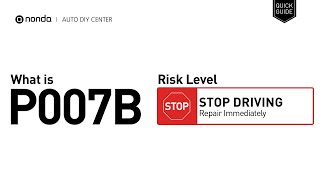
I wouldn’t advise pushing this repair down the road. Sure, your car might still start and drive, but letting a p007b code linger can mean worse performance, more money spent on fuel, and-if the air gets too hot-potential engine or turbo damage. For diesel drivers, you’re risking bigger issues if the DPF can’t regenerate. I’ve seen turbochargers cook themselves and intercoolers fail just from overheating. Bottom line: you want to tackle this sooner rather than later. Don’t gamble with engine health.
Repair and P007B trouble code
Here’s what fixes a p007b code in the real world, based on the cars I’ve had in my bay:
- Swap out the charge air cooler temperature sensor if it’s faulty or not reading right-that’s the most common fix.
- Repair any broken or corroded wires or connectors between the sensor and the PCM. Sometimes all it takes is cleaning up a dirty plug.
- Patch up any leaks, remove blockages, or replace damaged intercooler pipes and ducts. Don’t forget to check clamps and boots for tightness.
- If, after all that, you’re still seeing the code and you’ve verified everything else, you might be looking at a PCM issue. But honestly, that’s your last shot-double and triple check before going there.
After you finish the repair, clear the code and hit the road for a test drive. If the light stays off and performance is back, you nailed it.



Conclusion
Bottom line: P007B means your car’s computer isn’t getting the intake air temperature it expects from the charge air cooler sensor on bank 1. That throws off engine performance and can eat into your fuel budget, and if left alone, could cause bigger headaches. My advice? Start with a careful look at the sensor and wiring-those are your prime suspects-then check the intercooler setup. Don’t wait on this one. Most of the time, sorting out the sensor or a wiring issue gets you back on the road, hassle-free.

 4258
 7 minutes of reading