
Causes and P007C engine code issues
From experience, the most common reasons I see for a P007C code are:
- A faulty charge air cooler temperature sensor (it just wears out or fails)
- Problems with the wiring-like frayed wires, loose connectors, or corrosion
- A damaged or restricted intercooler (the air can’t flow or cool properly)
- In rare cases, a malfunctioning PCM (the computer itself has an issue)
Most often the issue is with the sensor or the wiring, so that’s where I recommend starting your checks.
Symptoms of a P007C trouble code
When you’re dealing with this code, a few things nearly always crop up. You’ll spot the check engine light, no doubt about it. The engine might start running rough, or it just won’t have the same get-up-and-go you’re used to. Don’t be surprised if your fuel economy heads south, either. On some models, especially diesels, the car might even throw itself into limp mode-basically putting on the brakes to protect itself. I’ve seen cases where a diesel’s DPF regeneration gets blocked up, and that’s a headache you don’t want. Usually, when this code shows up, you’ll know something’s off without even plugging in a scan tool.

Diagnosis steps for the P007C code
Here’s how I usually go about diagnosing this code, step by step:
- Start with a good visual inspection. Look at the sensor itself and the wiring harness-check for broken wires, loose or dirty connectors, or anything that looks out of place. Don’t forget to check the intercooler and air ducts for damage or blockages.
- If you spot any obvious damage, fix it, clear the code, and see if it comes back. Sometimes, that’s all it takes.
- If everything looks good, I recommend checking for any technical service bulletins (TSBs) related to this code for your specific make and model. Sometimes there are known issues or updated parts.
- Next, I use a scan tool to watch the live data from the charge air cooler temperature sensor. If you unplug the sensor, the reading should drop to a very low value. If you jump the terminals together, it should shoot up to a very high value. If that happens, the wiring and PCM are probably fine, and the sensor itself is likely the culprit.
- To be sure, I test the sensor with a digital multimeter. With the engine cold, measure the resistance across the sensor’s pins. As the engine warms up, the resistance should drop smoothly. If it doesn’t, the sensor is bad and needs replacing.
- If the sensor checks out, I move on to the wiring. With the ignition on, check for a 5-volt reference signal at the sensor connector. If it’s missing, there could be a break in the wire between the PCM and the sensor. Use your meter to check continuity and look for any open circuits.
- Also, make sure the ground side of the circuit is solid. Test for continuity between the sensor ground and the PCM ground. If there’s a break, you’ll need to track it down and repair it.
- Finally, double-check that the PCM itself is getting a good ground. If not, that can cause all sorts of weird electrical problems.
It’s better to have someone assist you if you’re not comfortable with electrical checks, but these are the steps I follow in the shop.
Common mistakes when addressing dtc P007C
A classic mistake I see all the time is folks rushing to swap out the sensor without even glancing at the wiring. That’s a quick way to lighten your wallet without fixing a thing. Another one? Overlooking the intercooler and ducts. If those are blocked up, leaking, or full of debris, you’ll chase your tail trying to clear the code. And don’t skip the TSB check-sometimes the factory’s already found a fix or an updated part. Skipping these checks is like changing spark plugs when you’ve got a blown head gasket; you’re just wasting effort.

The seriousness of P007C
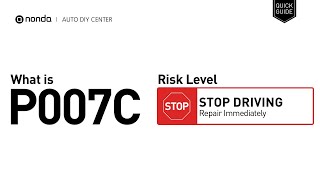
If there’s one thing I tell everyone who rolls into my bay with a P007C, it’s this: don’t put it off. Sure, your car might still get you home today, but keep driving with this problem and you’re flirting with bigger issues. Your engine could end up running rich, guzzling more fuel, or even going into limp mode just when you need it most. Leave it too long, and you risk damaging the turbo, intercooler, or worse-the engine itself. Bottom line? Ignore this code, and you could be facing repairs that’ll really sting.
Repair solutions for obd2 code P007C
Here’s what usually fixes P007C in my experience:
- Swap in a new charge air cooler temperature sensor if the old one’s toast
- Patch up or replace any dodgy wiring or crusty connectors you find
- Fix or replace a busted, blocked, or leaking intercooler or air duct
- Very rarely, you might have to change out the PCM if it’s not doing its job
After you’ve done the work, always clear the code and take the car for a spin. If the check engine light stays off, you’ve hit the mark.


Conclusion
So, to wrap things up, P007C means your PCM isn’t happy with the charge air cooler temp numbers it’s seeing from bank 1. This isn’t just about keeping a warning light off-it’s about performance, fuel mileage, and making sure your engine stays healthy. My advice? Don’t sit on this. Get in there, check the sensor and wiring first, and follow the steps I laid out. Tackle it head-on and you’ll save yourself a lot of headache down the road. Trust me, it’s worth the effort.
 5860
5860 6 minutes of reading