
Common Causes of P0080 code
From what I’ve seen in the shop and based on the official repair info, there are a handful of usual suspects when it comes to P0080:
- Most often the issue is a faulty exhaust valve control solenoid itself. These can wear out or get stuck.
- Low engine oil level is another big one-if there’s not enough oil, the solenoid can’t do its job properly.
- Wiring problems, like damaged wires or poor electrical connections in the solenoid’s circuit, are also common. Corrosion or loose plugs can easily cause trouble.
- In rare cases, the PCM itself could be failing, or it might just need a software update.
In my experience, starting with the solenoid and oil level checks saves a lot of time.
Recognizing Symptoms with P0080 engine code
If you’re driving around with a P0080 code, here’s what you’ll probably notice:
- The check engine light will almost always be on-that’s your first clue.
- You might feel the engine running rough or just not as strong as usual. Acceleration can be sluggish.
- Fuel economy tends to drop, so you’ll find yourself filling up more often.
Sometimes, these symptoms are subtle at first, but they can get worse if you ignore them.

Steps for Diagnosing dtc P0080
Here’s how I’d tackle a P0080 code step by step:
- First, I always check the engine oil level. It’s quick and can save you a lot of hassle-low oil is a common culprit.
- Next, I visually inspect the wiring and connectors going to the exhaust valve control solenoid on bank 1. Look for frayed wires, corrosion, or loose plugs. It’s better to have someone help you wiggle the harness while you watch for changes.
- Then, I test the solenoid itself. Most solenoids can be checked with a multimeter for proper resistance (the spec will be in your repair manual). If it’s way off, the solenoid is likely bad.
- If everything looks good so far, I use a scan tool to check for related codes or live data from the solenoid circuit. Sometimes, the PCM will log other codes that help narrow things down.
- Finally, if all else fails, I consider PCM issues or software updates, but that’s pretty rare in my experience.
Don’t forget to clear the code and test drive after repairs to make sure it doesn’t come back.
Common Mistakes when Fixing P0080
Let me give you a heads-up-these are the mistakes I see most often:
- Jumping straight to replacing the solenoid without checking the oil level or wiring first. That’s a surefire way to waste money.
- Overlooking a simple loose connector or corroded pin. Always double-check the basics before moving on.
- Not using the correct resistance specs for the solenoid during testing. Each car can be different, so always look up the right numbers.
- Ignoring related codes that could point to a bigger issue elsewhere in the VVT system.
Take your time with the basics-it pays off.

How Serious is obd code P0080
I can’t stress this enough: don’t put off fixing a P0080 code. If you ignore it, you risk poor engine performance, wasted fuel, and even long-term engine damage. The solenoid controls vital oil flow to the camshaft-if it’s not working, you could end up with camshaft or actuator damage, and that’s a much bigger repair bill. Plus, driving with poor performance can be dangerous, especially if you need to accelerate quickly. Things can go south quickly if overlooked, so it’s best to act promptly.
Repair Solutions for obd2 code P0080
Here’s what usually fixes a P0080 code, based on what I see and what the manuals say:
- Replacing a faulty exhaust valve control solenoid is the most common repair.
- If the oil level is low, top it up with the correct type and check for leaks.
- Repair or replace any damaged wiring or connectors in the solenoid circuit.
- In rare cases, updating or reprogramming the PCM, or replacing it if it’s faulty.
Always clear the code and test drive to confirm the fix before calling it done.
- P0080 Exhaust Valve Control Solenoid Circuit High 🟢 Trouble Code Solved 🟢 Symptoms Causes Solutions

- How to Test and Fix P0079 & P0080 Exhaust Oil Control Valve Circuit Low and Circuit High Fault Codes

- CODE P0078 P0079 P0080 EXHAUST VALVE CONTROL SOLENOID KIA SORENTO, KIA SPORTAGE CHECK ENGINE LIGHT
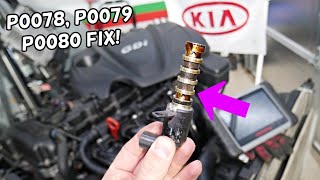
- Test & Fix P0080 Exhaust Valve Control Solenoid Circuit High | KIA SORENTO UM 2015-20 | 2.4 GDI
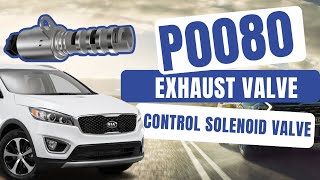
Conclusion
To sum it up, P0080 means your engine’s computer isn’t happy with the exhaust valve control solenoid circuit on bank 1. It’s important to diagnose and fix this quickly-start with the simple stuff like oil level and wiring, then move to the solenoid itself. The risks just aren’t worth ignoring, since you could end up with expensive engine damage or unsafe driving conditions. From experience, most cases are solved by replacing the solenoid or fixing a wiring issue. Don’t wait-get it checked and sorted for peace of mind and a healthy engine.

 5010
5010 5 minutes of reading