DTC P0081

18.09.2025
Author:Ihor Koziar. Reviewed by:Lisa Morgan
eye5406
clock5 minutes of reading
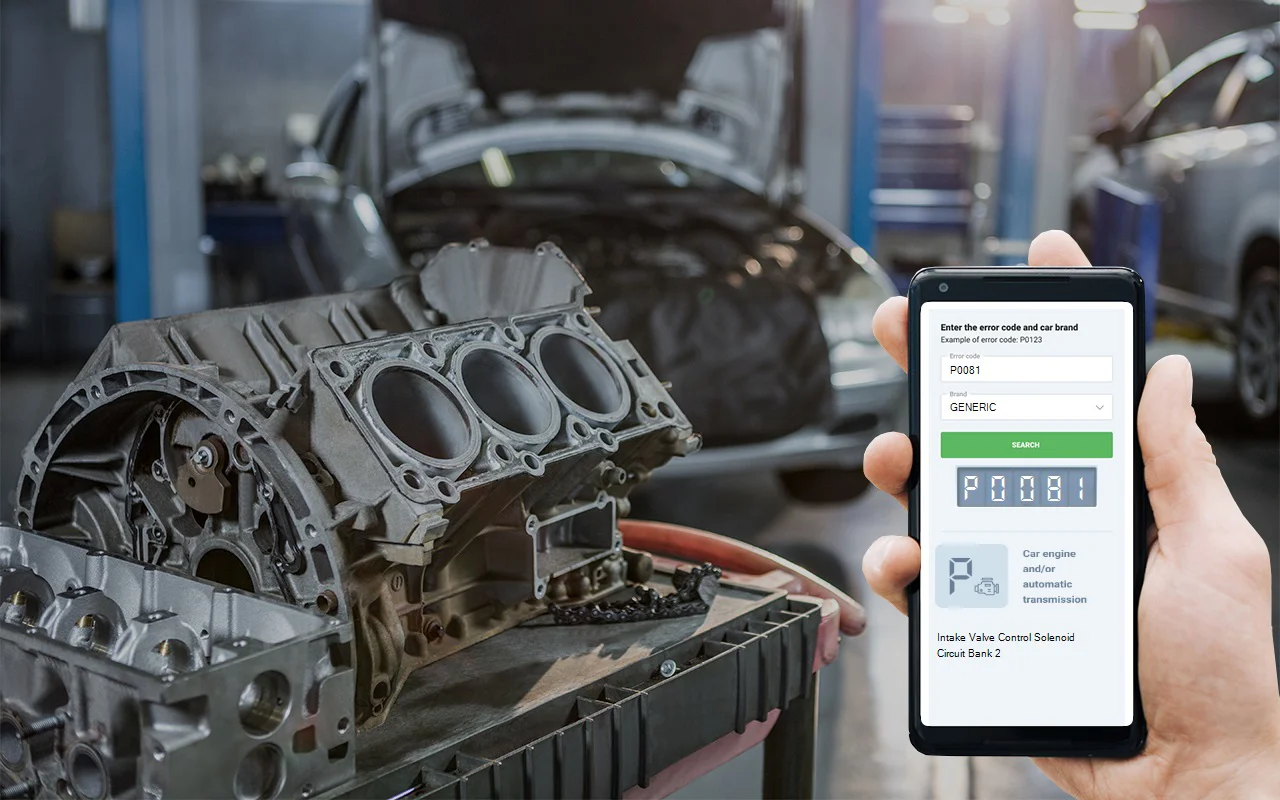
Enter the error code and car brand
Brand
logo
P0081

Vehicle engine and/or automatic transmission
Code: P0081 - The intake valve control solenoid circuit on engine bank 2 (the side with cylinder 2) has a problem. This affects how air enters your engine.

Let me break down what P0081 means for you. This code pops up when your car’s computer (the ECM or PCM) detects something off with the intake valve control solenoid circuit on what’s called "Bank 2"-that’s the side of the engine that doesn’t have cylinder #1. This solenoid is a key part of your engine’s variable valve timing (VVT) system, which helps your engine run smoother and more efficiently by adjusting the timing of the intake valves using oil pressure. The computer sends a special signal to the solenoid, and if the voltage isn’t right or the signal is interrupted, you get this code. In short, the system is trying to keep your engine breathing just right, and when it can’t, it lets you know with a check engine light.

Contents

Causes and obd code P0081

From my time under the hood, P0081 usually traces back to a handful of usual suspects. Here’s what I see trip folks up most often:

  • Corroded or loose wiring connections-especially at the solenoid or the computer.
  • A faulty intake valve control solenoid itself.
  • A short to power or ground somewhere in the wiring harness.
  • Once in a blue moon, a problem inside the ECM/PCM (your car’s computer).

In the majority of cases, the real trouble comes down to wiring or the solenoid-not the computer. My advice? Always start simple before chasing down the rare stuff.

Symptoms and P0081

When this code pops up, here’s what you’re likely to feel or see:

  • First off, that check engine light will be staring you down-sometimes that’s the only thing you’ll notice.
  • Your car might feel a little sluggish, especially when you hit the gas.
  • Don’t be surprised if you’re burning through more fuel than usual-your wallet might feel it before you do.

Sometimes, the issues are subtle, but if you catch yourself filling up more often or your ride feels tired, P0081 might be the culprit.

logo

Diagnosis with the P0081 engine code

Here’s how I go after P0081 in the shop:

  • I always kick things off by checking wiring and connectors at the intake valve control solenoid and at the computer. Look for corrosion, loose pins, or any wires that look beat up. Fixing a dirty or loose connector has solved more problems than I can count.
  • Next up, I disconnect the harness from both the solenoid and the computer. With a digital voltmeter set to Ohms, I check resistance in the wires headed to the solenoid. You want to see about 1 Ohm or less. If it’s way off, you’re probably dealing with a bad connection or rust.
  • Then I test the solenoid itself. With everything unplugged, I check the resistance across its terminals. If the reading’s nowhere near the spec, or it’s open (no continuity), swap out that solenoid.
  • I never skip checking for shorts. That means making sure wires aren’t accidentally touching power or ground. Use your meter to spot voltage where there shouldn’t be any-check both at the solenoid and back at the computer.
  • If wiring and the solenoid pass inspection, I’ll watch the solenoid’s action with the engine running, using a scan tool or sometimes an oscilloscope. The computer’s signal should match factory specs. If it doesn’t, and everything else is good, you might be looking at a computer issue-but honestly, that’s a rare bird.

Here’s a pro-tip from the garage: Tackle the basic stuff first. Don’t jump into the deep end with advanced tests until you’ve ruled out connectors and wiring. If you’re uneasy with electrical work, it’s smarter (and safer) to get a pro in your corner.

dtc p0081

Common Mistakes with the P0081 code

Over the years, I’ve seen folks trip up with this code because of a few classic missteps:

  • Diving straight into replacing the solenoid without checking the wiring. Nine times out of ten, loose or corroded connections are the true troublemakers.
  • Missing corrosion or loose pins at connectors-tiny issues, but they can cause major headaches.
  • Pointing fingers at the computer before ruling out everything else. ECM/PCM failures almost never happen, and you don’t want to shell out big bucks for nothing.

Patience pays off here. Take your time with the basics. Rushing only burns cash and brings more frustration.

logo

Seriousness of the P0081 trouble code

If I’m being honest, this is not a code to brush off. Ignore it, and you could be looking at weak engine performance, lousy fuel mileage, and even damage to the VVT system or the engine itself. I’ve seen things go south in a hurry if the solenoid sticks or timing really gets out of line. You don’t want nasty surprises on the road-wait too long, and you might face pricey repairs, busted camshafts, timing parts, or a ruined catalytic converter if the engine keeps running rough.

Repair process for dtc P0081

When it comes to fixing P0081, here’s what usually does the trick-both from my experience and the official guides:

  • Repair or replace any corroded, broken, or loose wiring and connectors at the solenoid or computer.
  • If the solenoid flunks the resistance or continuity tests, swap it out for a new one.
  • Take care of any shorts to power or ground you uncover in the harness.
  • And if, after all those checks, the computer turns out bad (super rare), you may need to replace the ECM/PCM.

Here’s what I’ve found-wiring and solenoid issues are almost always the root cause. That’s your best bet for a fast fix.

Conclusion

So, what does P0081 actually mean for you? There’s a glitch with the intake valve control solenoid circuit on bank 2, and that can mess with your engine’s timing and overall performance. Don’t put this one on the back burner-the risks aren’t worth it. Start with simple checks on wiring and the solenoid, and only think about the computer after you’ve crossed everything else off the list. Trust me, a careful, step-by-step diagnosis is how you keep your engine running strong and avoid those wallet-busting repairs down the road.

The following error codes are often searched for

Comments on the article