
Causes of obd2 code P0083
I can’t tell you how many times I’ve chased down a P0083 and found the same repeat offenders. Nine times out of ten, it comes back to:
- Wiring harness gremlins - think loose connections, corrosion, or even a wire that’s come unplugged from the solenoid
- A break somewhere in the control wiring to the solenoid
- A short to power in the harness
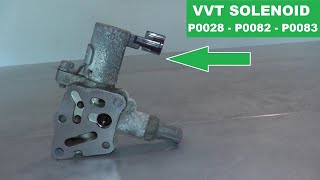
- The solenoid itself calling it quits
- Once in a blue moon, it’s a hiccup in the ECM/PCM (that’s your engine’s brain)
If I had to put money on it, I’d start my search with the wiring every single time. Bad solenoids do come up, and a faulty computer is possible, but those are far less common in my experience.
Symptoms of P0083 engine code
When this code’s active, you’re definitely going to notice some changes. The check engine light will be glaring at you - that’s a guarantee. Maybe your car starts dragging its feet when you press the gas, or it just doesn’t have its usual pep. Sometimes, you’ll spot your fuel mileage taking a nosedive. I’ve seen engines run rough, stumble, or hesitate, especially when you try to accelerate. If you’re picking up on any of these symptoms, don’t brush them off. Catching this early can save you a mountain of trouble.

Diagnosis steps for P0083
Here’s how I tackle a P0083 code when a vehicle rolls into my bay:
- I always kick things off with a good, old-fashioned visual inspection. I check every inch of the harness running to the exhaust valve control solenoid on Bank 2. Look for anything out of place - loose plugs, green corrosion, brittle or broken wires. You’d be shocked how many problems come down to a connector that’s just barely hanging on.
- Next, I disconnect both ends of the harness - at the solenoid and the ECM/PCM. With a wiring diagram in hand, I find the power and ground wires that feed the solenoid.
- Out comes the DVOM (that’s a digital volt/ohm meter). I set it for resistance, then test every wire for continuity. If I get an ‘open’ or a wildly high reading, I know I’ve got a wiring break or poor connection on my hands.
- After that, I test the solenoid. With everything unplugged, I measure resistance right at the solenoid’s terminals and compare the numbers to what the manufacturer says is normal. If it’s way out of spec, that solenoid’s toast.
- Then, I check for an unwanted short to power. With the harness unplugged from the ECM/PCM, I use my DVOM to see if there’s voltage on the solenoid wires when there shouldn’t be. If I spot voltage here, I’m usually hunting down a short in the harness.
- If wiring and the solenoid both get a clean bill of health, it’s time to look at the ECM/PCM. This is where a scan tool comes in handy - I’ll watch the solenoid’s duty cycle with the engine running and use a graphing multimeter or oscilloscope to see if the control signal matches what the computer’s supposed to be sending. If the numbers don’t line up, the computer could be the troublemaker.
Take your time working through these steps, and don’t rush past the basics. I’ve caught more than one tricky issue just by double-checking connectors that looked okay at first glance. If you’re stumped, a second set of eyes can make all the difference.
Common mistakes with P0083 trouble code
A classic mistake I see is folks yanking the solenoid and swapping in a new one without ever checking the wiring. That’s a fast way to empty your wallet for nothing if the problem’s just a loose plug or frayed wire. Another pitfall: not using the exact wiring diagram for your specific vehicle - trust me, guessing here can send you chasing your tail. Always inspect both ends of every harness, and cross-check your measurements with the manufacturer’s specs. If you skip these basics, you’re setting yourself up for a much bigger headache down the road.

Seriousness of dtc P0083
I can’t stress this enough: ignoring a P0083 is a recipe for trouble. The longer you drive with this code active, the more you risk hurting your engine’s performance and burning extra fuel. Left unchecked, things can spiral into misfires, wrecked catalytic converters, or even internal engine damage if the timing wanders too far. Bottom line? Don’t wait - this is one of those issues that can go from nuisance to nightmare in a hurry. Get it sorted before it turns into a major repair bill.
Repair solutions for P0083 code
Here’s what I’ve found works to knock out a P0083 code, based on years of turning wrenches:
- Repair or replace any wiring or connectors that are damaged, corroded, or loose on the way to the solenoid
- If the solenoid fails resistance or function checks, swap it out for a new one
- Track down and fix any shorts to power that show up in the harness
- On rare occasions, if the ECM/PCM isn’t sending the right signal and everything else checks out, it might need reprogramming or replacement
My advice: always start with the wiring and connectors. That’s where most of these gremlins hide. Only move on to the solenoid or computer after you’re absolutely sure the wiring is 100% right.



Conclusion
So here’s the bottom line: P0083 points to a problem with the exhaust valve control solenoid circuit on Bank 2, and if you let it slide, you’re asking for bigger headaches. The best approach - and the one that’s saved me and my customers time and money - is to begin with a careful check of the wiring and connectors, test the solenoid next, and only suspect the computer if you’ve ruled out everything else. Jump on this early and you’ll keep your engine running smooth, your wallet happy, and your car out of the shop for the long haul.

 4387
4387 6 minutes of reading