
Causes of P0085 code
From years of chasing electrical gremlins and reading through service manuals, I can tell you the usual suspects for a p0085 are:
- A wiring harness shorted to ground-this is hands-down the most frequent issue I run into, especially if the wiring’s aged or has rubbed against something hot over the years.
- The exhaust valve control solenoid itself shorted to ground-sometimes the solenoid bites the dust internally, and there’s no fixing that.
- An ECM/PCM that’s gone bad-rare, but I’ve seen it happen when nothing else adds up.
Honestly, I’d put my money on wiring problems nine times out of ten, but it pays to run through each possibility methodically.
Symptoms associated with obd2 code P0085
When this code crops up, here’s what you’ll likely notice from behind the wheel:
- The trusty old check engine light glows-sometimes that’s the only sign you get.
- The car feels sluggish or slow to respond when you step on the gas-acceleration just isn’t what it should be.
- Your wallet takes a hit at the pump-fuel mileage drops, and you’re filling up more than usual.
Sometimes, the difference is subtle, but don’t make the mistake of ignoring the problem. Letting it go can snowball into much bigger headaches later on.

Diagnosis steps for P0085 trouble code
Here’s how I typically chase down a p0085 code in the shop:
- Start simple: Double-check the engine oil level and make sure the oil’s clean. Dirty or low oil can throw VVT systems for a loop.
- Give the wiring harness going to the exhaust valve control solenoid on bank 2 a good look. I’m talking melted insulation, frayed wires, or spots where the harness got pinched. A good trick is to have someone gently wiggle the harness while you watch for changes in the code or the way the engine runs.
- Unplug the solenoid and eyeball the connector for corrosion or bent pins. Clean or fix any issues before moving forward.
- Get your digital voltmeter out and check for proper voltage at the solenoid connector, following your vehicle’s wiring diagram. If you find voltage where it doesn’t belong, you’re probably chasing a short to ground-trace those wires back toward the ECM/PCM.
- Test the solenoid for a short to ground, too. With it unplugged, check resistance between each terminal and a solid ground. If you see a really low reading, that solenoid’s likely toast.
- If both the wiring and solenoid look good, I’ll hook up a scan tool and watch how the solenoid’s behaving while the engine’s running. Sometimes an oscilloscope or graphing multimeter helps spot weird duty cycle signals from the ECM/PCM. If the signal’s off and everything else checks out, you might have an ECM/PCM problem on your hands.
Take your time at each step. Rushing is a recipe for missing something simple-and that’s how you end up with repeat visits.
Common mistakes when fixing P0085
These are the classic blunders I see with this code:
- Folks swapping out the solenoid right away without checking the wiring first. More often than not, a wiring gremlin is to blame, not the solenoid itself.
- Missing bad connections at the solenoid plug-corroded or loose pins have tripped up even experienced techs, and they can mimic bigger problems.
- Ignoring the wiring diagram for your exact model. Power and ground aren’t always where you expect, so always verify before you start tearing things apart.
Skip these checks, and you’re almost guaranteed to waste time and money. A methodical approach always pays off.

Seriousness of dtc P0085
Take it from me-this isn’t a code you want to drive around with. Sure, the car might limp along, but you’re risking poor performance and lousy fuel economy. More critically, a malfunctioning VVT system can trigger rough running, misfires, or even serious engine damage if you keep ignoring it. Things can go downhill fast if the wiring shorts out further or the ECM/PCM starts frying. Bottom line: Don’t gamble with this one. Get it checked and sorted out before you’re stranded or facing a bigger repair bill.
Repair process for obd code P0085
Here’s what I’ve found gets results, both from the garage and straight out of the service books:
- Repair or swap out any damaged wiring or connectors heading to the exhaust valve control solenoid on bank 2. This fixes the majority of cases I see.
- If the solenoid measures bad or doesn’t respond, go ahead and replace it. No sense trying to save a solenoid that’s shorted inside.
- If you’ve covered all the bases and the ECM/PCM still isn’t sending the right signals, you might be looking at reprogramming or replacing it-but that’s a last resort in my playbook.
Don’t forget: Always clear the code and take the car for a test drive before calling it done. That’s your proof the job’s finished right.



Conclusion
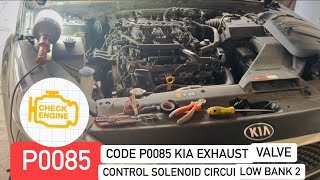
So, here’s the rundown: P0085 means trouble with the exhaust valve control solenoid circuit on bank 2, and in my experience, it’s usually a wiring or solenoid issue at the root. Diagnose it quickly-waiting only ups the odds something else will break. Start with the basics: wiring, connectors, and the solenoid. Only point the finger at the ECM/PCM after you’ve ruled out the obvious. Most of the time, sorting out the wiring or swapping the solenoid gets you back on the road. Don’t let this one fester-fix it before it turns into a bigger headache.

 5414
 6 minutes of reading