
Causes of obd code P0086
From the countless cars I’ve worked on and what’s spelled out in the wiring diagrams, here’s what usually causes a p0086 code to rear its head:
- Wiring harness problems-think loose plugs, green corrosion, or connections that just aren’t making good contact to the exhaust valve control solenoid
- An open circuit somewhere in the control wiring
- A short to power within the harness
- A bad exhaust valve control solenoid (these do fail, especially as cars age)
- A rare one, but sometimes the ECM/PCM itself can be at fault
In my experience, nine times out of ten it boils down to an issue with the wiring or the solenoid. That’s always where I start my hunt.
Symptoms of P0086 trouble code
When p0086 shows up, the first thing you’ll likely notice is that pesky check engine light staring back at you. Beyond that, a lot of drivers mention weak acceleration and a drop in fuel mileage. Sometimes, your car just feels bogged down or slow to respond when you press the gas. If you’re running into these issues, odds are good your VVT system isn’t happy.

Diagnosis steps for dtc P0086
Here’s the process I follow when tracking down a p0086 code:
- Start with a close visual inspection. Pop the hood and check out the harness going to the exhaust valve control solenoid on bank 2. Keep an eye out for loose, corroded, or broken wires. Here’s a trick: have someone gently move the harness while you watch for any changes or oddities at the connectors.
- Unplug the harness at both the solenoid and at the ECM/PCM end. Grab your wiring diagram, find the relevant wires, and use a digital volt/ohm meter (DVOM) set to ohms. Check resistance from end to end. If your meter reads ‘open’ or the numbers are way off from spec, you might be looking at a broken wire or a bad connection.
- Test the solenoid itself. Leave the wiring unplugged, then check resistance across the solenoid’s terminals with your DVOM. Compare what you get to the manufacturer’s specs-or check against a known good one if you have it on hand. Way too high or too low? That solenoid’s probably toast.
- If the wiring and solenoid look solid, check for a short to power. With the harness unplugged at the ECM/PCM, set your meter to volts. Touch the negative lead to ground and check for any voltage on the solenoid wires. If you’re reading voltage when there shouldn’t be any, there’s likely a short hiding in the harness.
- If all that checks out, it’s time to break out the scan tool and monitor the solenoid operation with the engine running. Check the duty cycle and compare it to what the ECM/PCM is commanding. If things don’t line up, there might be an issue with the ECM/PCM, but I’ll tell you straight-that’s rare in the real world.
Here’s a pro-tip from the garage: Don’t skip the basics. I’ve lost count of how many times a simple loose plug was to blame.
Common mistakes during P0086 engine code troubleshooting
A classic mistake I see is folks rushing to swap out the solenoid before even glancing at the wiring. Another pitfall is misidentifying bank 2-get that wrong, and you’ll chase your tail all afternoon. Skipping resistance checks or using the wrong specs? That’s another surefire way to waste time and money. Always start simple and double-check your basics before tossing parts at the problem.

Seriousness of obd2 code P0086
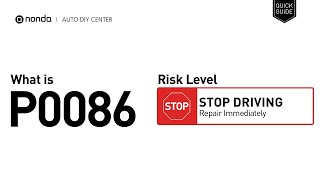
Let me be blunt-this isn’t a code you want to brush off. If you keep driving with p0086 hanging around, you’re almost guaranteed to see performance and fuel economy start to slide. In some cases, if the VVT system isn’t doing its job, the engine can run rough or, in the long run, even suffer internal damage. I’ve seen ignored VVT problems lead to worn camshafts, stretched timing chains, and even damaged catalytic converters. Bottom line: get it checked out before it turns into a major headache.
Repair solutions for P0086
Here’s what usually gets the job done when you’re facing a p0086 code, based on my own repairs and what the factory guides recommend:
- Fixing or swapping out any damaged, corroded, or sketchy wiring/connectors to the exhaust valve control solenoid
- Replacing the exhaust valve control solenoid if it fails the resistance test or just isn’t responding like it should
- Tracking down and repairing any shorts to power or breaks in the harness
- On those rare occasions where the ECM/PCM is the culprit, replacing or reprogramming it
My advice? Always tackle the wiring and connectors first. They’re the usual suspects, and you’ll save yourself a ton of trouble (and cash) by checking there before replacing anything big.


Conclusion
If I had to sum it up, p0086 means there’s a hiccup in the exhaust valve control solenoid circuit on bank 2-a key piece of your engine’s variable valve timing system. Ignore it, and you could wind up with lousy performance, lower fuel mileage, or worse, expensive engine repairs. Start with the simple stuff: check your wiring and connectors before blaming the solenoid or ECM/PCM. Act fast and work methodically, and you’ll be back on the road-with your engine running the way it should-in no time.
 4618
 6 minutes of reading