
Causes of obd2 code P00AA
From my time in the shop, nine times out of ten, the p00aa code boils down to a handful of usual suspects. Here’s what I see most often causing grief:
- The IAT sensor on bank 2 gets bumped, knocked loose, or isn’t fully positioned in the airflow. Happens more than you’d think, especially after air filter changes.
- The sensor itself just gives up-either the readings are off, or it’s flat-out dead.
- Signal wire issues are another classic: a short to ground or an open circuit can throw everything out of whack.
- Don’t overlook the ground wire. If it’s broken or the connection’s weak, you’ll chase your tail trying to get good readings.
- Corroded, loose, or damaged connector pins at the sensor can cause all sorts of gremlins.
- Every once in a blue moon, the PCM itself is the problem, but honestly, I can count those cases on one hand.
In almost every case, it’s either the sensor or the wiring-not the PCM-so start there before replacing big-ticket parts.
Symptoms of P00AA code
I’ve seen cars run just fine with a P00AA code, with nothing to tip you off except that pesky check engine light. But sometimes, you’ll feel the engine running a bit rough, maybe a stumble or hesitation when you hit the gas. If the air temp reading is way off, your engine might not run as strong-especially when it’s cold out or during a heatwave. But truth be told, most drivers only notice the warning light and don’t pick up on much else. It’s sneaky like that.

Diagnosis with P00AA engine code
When a car rolls in with a p00aa, I follow a pretty methodical approach-feel free to try some of these steps yourself if you’re handy around the garage:
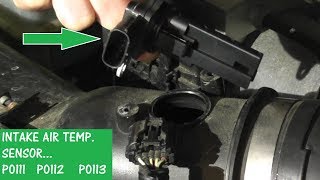
- Always start with the simple stuff: look at the IAT sensor on bank 2. Make sure it’s snug and not dangling out of the intake tube or manifold. I can’t tell you how many times I’ve found one just hanging by the wires.
- Tug gently on the wires and inspect the connector. Any signs of fraying, chewed insulation (hello, mice), or obvious breaks? Make sure the connector is seated fully, and look for corrosion or bent pins-those little details matter.
- Once everything passes the eye test, I’ll grab the scan tool. With the key on and engine off, compare the IAT sensor reading to the coolant temperature sensor (CTS). On a cold engine, both should be pretty close. If the IAT is reporting a crazy number like -40°F or 300°F, you’ve found your problem spot.
- If readings are off, unplug the sensor and check resistance across the terminals using a multimeter. You’ll want to look up the exact resistance specs for your vehicle, but if you’re seeing infinity or something way out of range, it’s a bad sensor.
- If unplugging doesn’t budge the reading, start chasing the wires-check for continuity, shorts, and make sure you’ve got that 5-volt reference and a solid ground at the connector.
- At this point, if everything else checks out, only then do I start looking at the PCM. But honestly, that’s rare.
If you’re not comfortable poking around with electrical connectors, get a second set of hands. And double-check you’re working on bank 2-I’ve seen more than a few techs test the wrong sensor and go in circles.
Common Mistakes with P00AA
A classic mistake I see is folks immediately buying a new IAT sensor without even glancing at the wiring or the connector. If you skip the basics, it’s all too easy to throw money at the wrong part. Another pitfall: working on the wrong sensor. Some engines sport more than one IAT sensor, so make sure you’re really on bank 2 before you start unplugging things. And don’t be that person who ignores a quick visual check-so often, a simple inspection reveals a loose plug or a chewed wire, saving you hours of frustration.

Seriousness of dtc P00AA
Look, if your car’s still running okay, it’s tempting to ignore this code. I get it. But from what I’ve seen, letting a P00AA code slide isn’t a good bet. When your PCM is working with bad air temperature data, it can throw off fuel delivery and timing. This can lead to sluggish performance, higher emissions, and if you leave it long enough, even engine damage. The engine could start running too rich or too lean-either way, you’re asking for trouble. And if you get used to ignoring the check engine light, you might miss something bigger down the line. Bottom line: don’t put this off. Get it looked at before it turns into a real headache.
Repair steps for obd code P00AA
Over the years, here’s what I’ve found actually solves a p00aa-the factory repair info matches up with real-world fixes:
- First, reseat or correctly reinstall the IAT sensor if it’s not sitting tight. Sometimes, that’s all it takes.
- If the sensor fails the resistance checks or the readings are wacky, replace the IAT sensor on bank 2.
- Patch up or swap out any damaged wiring or connectors leading to the sensor. Even a tiny nick in the wire can cause big problems.
- Clean the connector, making sure you’ve got a solid, clean contact.
- If you’ve checked everything else and the code just won’t clear, only then think about the PCM. Honestly, that’s a last resort.
Start with the obvious stuff-the sensor’s position and wiring-before buying parts. Nine times out of ten, it’s something simple.



Conclusion
Here’s the takeaway: P00AA means the engine computer isn’t happy about the air temperature signal from bank 2. It’s almost always a sensor or wiring issue, and while your car might seem fine now, ignoring it can turn a small problem into a big one. My advice? Go after the sensor and wiring first-they’re usually the troublemakers. Don’t put off repairs-fixing this now keeps your engine happy and saves you from bigger bills down the road. Trust me, it’s worth the effort.

 3105
3105 7 minutes of reading