
Causes of P00B6 code
From what I’ve seen in the shop and what the factory manuals say, there are a handful of usual suspects behind a P00B6 code:
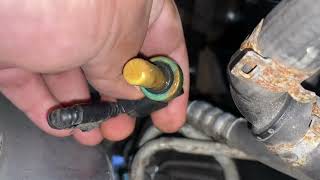
- A faulty engine coolant temperature (ECT) sensor-these can wear out or give bad readings over time.
- A bad radiator coolant temperature sensor-sometimes the sensor itself just fails.
- Wiring issues-broken, corroded, or loose wires or connectors between the sensors and the PCM can throw off the readings.
- Low coolant level-if your coolant is low, the sensors might not be reading actual coolant temperature, which confuses the PCM.
- In rare cases, a failing PCM (the car’s computer) can be the culprit, but that’s not where I’d start.
Most often the issue is with one of the sensors or the wiring, rather than the computer itself.
Symptoms of P00B6 engine code
If you’ve got a P00B6 code, here’s what you might notice while driving:
- The check engine light will come on-sometimes that’s the only clue at first.
- You might see your temperature gauge acting strange, like jumping around or showing readings that don’t make sense.
- Engine overheating is a real risk-if the sensors aren’t working right, the cooling fans or thermostat might not kick in when they should.
- Poor fuel economy-your engine might run too rich or too lean if it’s getting bad temperature info.
- Overall, you might feel the engine running rough or not performing like it should.
Honestly, if you notice any of these, especially overheating, don’t ignore it. Things can go south quickly if overlooked.

Diagnosis steps for P00B6 trouble code
Here’s how I’d go about tracking down the cause of a P00B6 code, step by step:
- First, I always start by checking the coolant level. Make sure the engine is cool before you open the cap-safety first! Low coolant can throw off sensor readings.
- Next, I visually inspect the wiring and connectors at both the ECT sensor and the radiator coolant temperature sensor. Look for any obvious damage, corrosion, or loose connections. Sometimes just wiggling the connector can reveal an intermittent issue.
- With a scan tool, I compare the live data from both sensors. On a cold start, their readings should be pretty close. If one is way off, that’s a big clue.
- If the readings are off, I’ll test the sensors themselves. Most sensors can be checked with a multimeter for resistance-compare the readings to the specs in the repair manual.
- If both sensors and wiring check out, I’ll look for any Technical Service Bulletins (TSBs) related to this code for your specific vehicle. Sometimes there’s a known issue or updated part.
- Only after all that would I suspect the PCM, but in my experience, it’s rarely the computer.
It’s best to have someone assist you, especially when checking live data or testing for voltage at the connectors.
Common Mistakes when fixing obd code P00B6
I’ve seen a few common pitfalls when folks try to fix this code:
- Jumping straight to replacing sensors without checking the wiring or coolant level first. That’s a surefire way to waste money.
- Overlooking a simple loose or corroded connector-sometimes it’s just a bad connection, not a bad sensor.
- Ignoring the importance of comparing both sensor readings on a cold start. If you don’t do this, you might miss which sensor is lying.
- Assuming the PCM is bad before ruling out everything else. Replacing the computer is expensive and rarely necessary.
Don’t forget to check the basics before moving on to more complicated or costly repairs.

Seriousness of obd2 code P00B6
This isn’t a code you want to put off. A mismatch in coolant temperature readings can lead to the engine overheating, which is a serious hazard. Overheating can cause major engine damage-think blown head gaskets, warped cylinder heads, or even a seized engine. Plus, if the engine isn’t running at the right temperature, you’ll burn more fuel and risk damaging the catalytic converter. The risks just aren’t worth it-address this as soon as possible to avoid a much bigger repair bill down the road.
Repair tips for dtc P00B6
Here’s what I typically do to fix a P00B6 code, based on what the manuals and real-world repairs show:
- Top off or replace the coolant if it’s low, and fix any leaks you find.
- Repair or replace any damaged wiring or connectors at the sensors.
- Replace the faulty ECT sensor or radiator coolant temperature sensor if testing shows one is bad.
- Clear the code and test drive the vehicle to make sure the issue is resolved and the code doesn’t return.
- In rare cases, if all else fails and the PCM is confirmed faulty, replace or reprogram the PCM as per factory procedures.
I recommend starting with the simple stuff-coolant and wiring-before swapping out sensors or the computer.


Conclusion
To sum it up, code P00B6 means your car’s computer is seeing a mismatch between the engine and radiator coolant temperature sensors. This is a high-priority issue because it can lead to overheating and serious engine damage if ignored. The most reliable way to fix it is to check the coolant level, inspect the wiring and connectors, and test both sensors before replacing anything. Don’t put this off for later-get it checked and fixed promptly to keep your engine safe and running smoothly.

 4409
 6 minutes of reading