
Causes of P011A
From my time under the hood, and what the manuals back up, here’s what usually causes a p011a code:
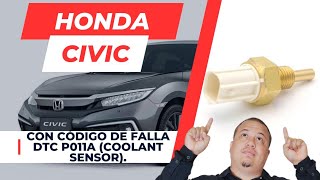
- One of the engine coolant temperature (ECT) sensors has gone bad-either one can be the troublemaker.
- The wiring or connectors feeding those sensors might be broken, shorted out, or just plain corroded.
- Your coolant level might be low, letting air pockets develop and throw off the sensor readings.
- A thermostat that’s stuck open or closed can mess with how the coolant flows and heat gets measured.
- A water pump that’s starting to fail can’t move coolant properly through the system.
- If you’ve recently had repairs or a coolant change, air might still be trapped in the lines.
- Every once in a blue moon, the PCM itself glitches or has a software hiccup.
In my experience, it’s almost always a bad sensor or wiring issue, but don’t rule out a lazy thermostat or low coolant-they can be sneaky culprits, too.
Symptoms when P011A code is present
When that P011A code is hanging around, here’s what you might run into:
- The dreaded check engine light comes on. Sometimes that’s all you’ll see.
- The engine could run rough, especially when you fire it up cold.
- You might catch a whiff of extra fuel or notice black smoke if the mix is too rich-or, if it’s too lean, maybe it hesitates or stumbles.
- Your fuel mileage can take a nosedive; sometimes it’s obvious, sometimes it’s more subtle.
- The engine might feel tired or just not as peppy as usual.
Now, sometimes you won’t spot much besides that warning light, but trust me, ignoring it isn’t a smart move.

Diagnosis steps for obd2 code P011A
Here’s how I go about tracking down a obd2 code p011a, step by step:
- Start with the basics-make sure the coolant’s topped off where it should be. Low coolant is a classic issue, and it’s the first thing I check. While you’re at it, look for leaks or signs someone’s been in there recently; air pockets love to hide after a fresh repair or coolant change.
- Fire up the engine and watch how fast it warms up. I always keep an eye on the temp gauge and listen for the cooling fans. If the engine’s taking ages to heat up, or if it overheats quickly, you might be staring at a thermostat or water pump that’s not doing its job.
- Next, I give the wiring and connectors to both ECT sensors a real close look. Broken wires, green corrosion, or a plug that’s not fully seated have tripped up more than one tech-including me, years ago.
- After that, I plug in my scan tool and pull live data from both ECT sensors. If one’s way off from the other, you’ve found a big clue. I’ll also check for any other codes that might be hanging around.
- If I’m still scratching my head, I bring out the digital voltmeter and check the resistance across each sensor, comparing it to the specs in the service manual. Any sensor that doesn’t match up gets swapped out.
- If all that checks out and the code is still there, I’ll dig up any technical service bulletins (TSBs) that might point to a known PCM or software issue. Rare, but it happens.
Pro-tip from the garage: When checking for air pockets, a helper makes the job easier-sometimes you need a hand bleeding the system to chase out stubborn air bubbles.
Common Mistakes during obd code P011A troubleshooting
A classic mistake I see-especially with less experienced techs or DIYers-is jumping straight to swapping out sensors without checking the basics. If you skip checking the coolant level or don’t bleed the system for air, you might end up spending money for nothing. Another pitfall: not giving the wiring and connectors a good, close inspection. Sometimes it’s just a loose plug or some hidden corrosion causing all the drama. And don’t forget about TSBs; sometimes the answer’s right there in a manufacturer update. Rushing or skipping simple steps? That’s a shortcut to frustration.

Seriousness of dtc P011A
Let me be clear-this isn’t a code you want to brush off. If you ignore it, you risk lousy engine performance, higher emissions, and the real possibility of overheating if the cooling fans stop doing their job. Worst case? You could be looking at serious engine or catalytic converter damage, and that gets expensive fast. Driving around with a cooling system problem is asking for trouble; things can escalate quickly if you’re not careful. My advice? Don’t wait-get it checked and fixed before it turns into a much bigger headache.
How to repair a P011A trouble code
Here’s my go-to game plan for fixing a p011a trouble code:
- Top off the coolant and make sure to bleed the system-air pockets are sneaky and can mess with sensor readings.
- Swap out any ECT sensors that don’t meet factory specs. Don’t just guess-test them first.
- Repair or replace any damaged wiring or connectors leading to those sensors.
- If you find a stuck thermostat or a weak water pump, those need to go, too.
- If you’ve checked everything else and are still coming up empty, see if there’s a PCM update or reflash available for your vehicle-it’s rare, but sometimes necessary.
Most of the time, you’ll find the fix is with the sensors or the wiring, but never underestimate the basics like coolant level and trapped air.


Conclusion
Bottom line: P011A means your car’s computer is seeing a mismatch between its two coolant temperature sensors, and that can throw off how the engine runs-or even cause damage if you let it slide. My advice? Always start with the simple stuff: check your coolant, look for leaks, and inspect the wiring. Get on it early and fix what’s wrong, and you’ll save yourself a world of trouble down the line. Trust me, ignoring this isn’t worth the risk-to your wallet or your ride’s health.
 6114
 6 minutes of reading