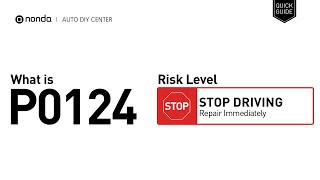
When you see a P0124 code, your car’s computer-the PCM-is basically waving a red flag because it’s picking up strange blips or interruptions from the throttle position sensor (TPS) or the pedal position sensor (PPS). From my time under the hood, I can tell you these sensors are absolutely vital. They let the PCM know how hard you’re pressing the gas, and that info controls your air-fuel mix. If the signal from sensor 'A' isn’t steady, the computer just can’t trust what it’s getting, so it throws this code. Usually, you’ll find the TPS bolted onto the throttle body, while the PPS lives down in the accelerator pedal assembly-especially on newer drive-by-wire setups. Both of these work hand in hand to make sure the engine responds the way you expect when you step on it. So, if P0124 pops up, that’s your clue there’s a breakdown somewhere in that communication line. You might notice rough acceleration, weird idling, or even emission issues-all because the system just isn’t getting the right message from your foot to the engine.
DTC P0124
 5375
5375 6 minutes of reading
Causes of P0124 code
From experience, the most common reasons I see for a p0124 on vehicles such as Ford or Renault are:
- A throttle position sensor that’s starting to fail or is out of adjustment.
- A pedal position sensor that’s faulty.
- Wiring issues - like a loose connector, broken wire, or corrosion in the circuit for sensor 'A'.
- A throttle body that’s damaged or gummed up with carbon deposits.
- Less often, a problem with the car’s computer (PCM) itself, or a programming glitch.
Honestly, in the real world, it’s usually a sensor or a wiring problem, but I’ve lost count of how many times a dirty throttle body was the real culprit. My advice? Always start by checking the basics before chasing down rare computer faults.
Symptoms related to P0124
When this code is active, you might notice a few things. Sometimes, the only clue is the check engine light coming on. But in cases like this, it’s usually more than just a light. You could feel the engine hesitate when you try to accelerate, or it might be hard to start the car at all. Some folks notice the car uses more fuel than usual, or that it’s running rough. If things get bad enough, the car could go into 'limp' mode, where it limits power to protect itself. And sometimes, you might not notice anything at all - but that doesn’t mean it’s safe to ignore.

Diagnosis steps for obd2 code P0124
Here’s how I usually tackle a p0124 code, step by step:
- First, I check for any other codes. Sometimes, P0124 shows up with related codes that can help narrow things down.
- Next, I do a visual inspection. I look at the throttle body and the accelerator pedal area for anything obvious - like loose connectors, frayed wires, or signs of corrosion. Don’t forget to check under the floor mat near the pedal; I’ve seen torn mats interfere with the pedal sensor more than once.
- Then, I clean the throttle body if it looks dirty or carboned up. A sticky throttle can cause erratic sensor readings.
- After that, I use a scan tool to watch the live data from the TPS and PPS. I slowly press and release the pedal and look for any jumps, dropouts, or weird spikes in the readings. If the signal isn’t smooth, that’s a big clue.
- If the data looks off, I’ll test the sensors with a multimeter, checking for proper voltage and resistance as per the service manual. It’s better to have someone assist you here, pressing the pedal while you watch the readings.
- If everything checks out but the code keeps coming back, I’ll inspect the wiring harness more closely, looking for pinched or broken wires, especially where the harness bends or rubs against other parts.
- As a last resort, if all else fails, I’ll consider the PCM as a possible culprit, but that’s rare.
It’s best to start with the basics and work your way up - don’t skip the simple stuff.

Common Mistakes When Repairing a P0124 trouble code
Honestly, one of the biggest mistakes I see is replacing the throttle position sensor right away without checking the wiring or cleaning the throttle body first. Another common slip-up is overlooking the pedal position sensor or not noticing a damaged floor mat interfering with the pedal. Skipping the live data check with a scan tool is another one - you really want to see how those sensors behave in real time. Don’t just clear the code and hope for the best; that’s a surefire way to end up back where you started.

Seriousness of dtc P0124
I’ll tell you straight: this isn’t something to push aside. If your PCM can’t trust the readings it gets from the throttle or pedal sensors, you’re risking bigger headaches. You could end up with sluggish throttle response, higher fuel bills, or even trouble passing emissions. In the worst cases, your car might suddenly cut engine power and throw itself into limp mode-imagine that happening in the middle of traffic. I’ve seen folks ignore this code and wind up with damaged throttle bodies, or even a fried catalytic converter if the engine runs too rich for too long. Once things start going wrong, they can spiral quickly. My advice? Don’t sit on it-get it looked at before it turns into a much bigger (and pricier) problem.
Repair process for an obd code P0124
Most of the time, the fix is one of these:
- Cleaning the throttle body if it’s dirty or sticky.
- Repairing or replacing damaged wiring or connectors in the TPS or PPS circuit.
- Replacing a faulty throttle position sensor or pedal position sensor, if testing shows they’re bad.
- Making sure the sensors are properly adjusted and mounted.
- In rare cases, updating or replacing the PCM if it’s found to be the problem.
Always follow the specific repair steps for your vehicle, since the details can vary a lot between makes and models.
Conclusion
Here’s the bottom line: P0124 means your PCM isn’t getting a steady signal from the throttle or pedal sensors. That can spell hesitation, tough starts, or your car suddenly losing power. Don’t shrug this off-it’s just not worth the risk. The smart move is to inspect everything carefully, clean the throttle body, check your wiring, and test those sensors before swapping parts. If you jump in with a clear head and the right steps, your car will be back to its old self in no time.