Let me break down what the P014A code actually means for your car. This code is a pretty common one across many makes and models, and it points to a problem with the oxygen sensor, specifically the one located after the catalytic converter on the side of the engine that doesn’t have cylinder number one (that’s called Bank 2, Sensor 2). The job of this sensor is to monitor how well the catalytic converter is working and help the engine computer (PCM) fine-tune your fuel mixture and emissions. When the PCM sees that this sensor is reacting too slowly to changes in the exhaust gases-basically, it’s not switching between rich and lean as quickly as it should-it triggers the P014A code. This is the car’s way of telling you that the sensor isn’t keeping up, which can throw off your fuel economy and emissions. The system relies on this sensor to make sure your engine runs efficiently and cleanly, so when it’s not working right, it can affect a few different things under the hood.
DTC P014A
 4840
4840 6 minutes of reading
Causes of obd2 code P014A
From what I see most often in the shop, there are a handful of usual suspects when it comes to the p014a:
- A failing or sluggish downstream oxygen sensor (the one after the catalytic converter on Bank 2) is by far the most common cause.
- Wiring issues-like burnt, broken, or disconnected wires or connectors-especially since these wires run close to hot exhaust parts and can get damaged pretty easily.
- A faulty catalytic converter can also cause this code, especially if it’s not working efficiently and the sensor readings get thrown off.
- Exhaust leaks before the sensor can let extra air in and mess with the readings, which can also trigger this code.
In my experience, it’s usually the sensor itself or wiring, but I always check for exhaust leaks and catalytic converter problems too, just to be thorough.
Symptoms associated with P014A code
When this code pops up, here’s what you’re likely to notice as a driver:
- The check engine light will almost always come on.
- You might see a drop in fuel efficiency-so you’re stopping at the pump more often.
- The engine can feel a bit sluggish or just not as peppy as usual.
- Sometimes, you’ll notice other codes show up along with P014A, especially if the issue is affecting how the engine runs overall.
It’s not always super dramatic, but these symptoms are your car’s way of saying something’s not right with how it’s handling the exhaust and fuel mixture.

Diagnosis process for P014A trouble code
Here’s how I personally go about diagnosing a p014a, step by step:
- First, I always check for any other codes-especially misfire, throttle position, or mass airflow sensor codes-because those need to be fixed first. If the engine isn’t running right, it can throw off the oxygen sensor readings.
- Next, I do a careful visual inspection of the wiring and connectors for the downstream oxygen sensor on Bank 2. I pay close attention to wires near the exhaust, since they’re prone to heat damage or getting snagged.
- It’s a good idea to look up any Technical Service Bulletins (TSBs) for your vehicle-sometimes there are known issues that can save a lot of time.
- Then, I hook up a scan tool and check all the stored codes and freeze frame data. This tells me what was happening when the code set.
- After clearing the codes, I start the engine and let it warm up to normal temperature. Using the scan tool’s live data, I watch the readings from the downstream oxygen sensor. I’m looking for the voltage to move up and down regularly-if it’s slow or stuck, that’s a red flag.
- If I need to dig deeper, I use a digital volt/ohm meter (DVOM) to check the sensor’s signal and ground wires for proper voltage and resistance. If I’m checking resistance, I always disconnect the sensor to avoid damaging the computer.
- Don’t forget to check for exhaust leaks before the sensor-those can really mess with the readings.
It’s best to start with the simple stuff-wiring and connectors-before moving on to the sensor or catalytic converter.
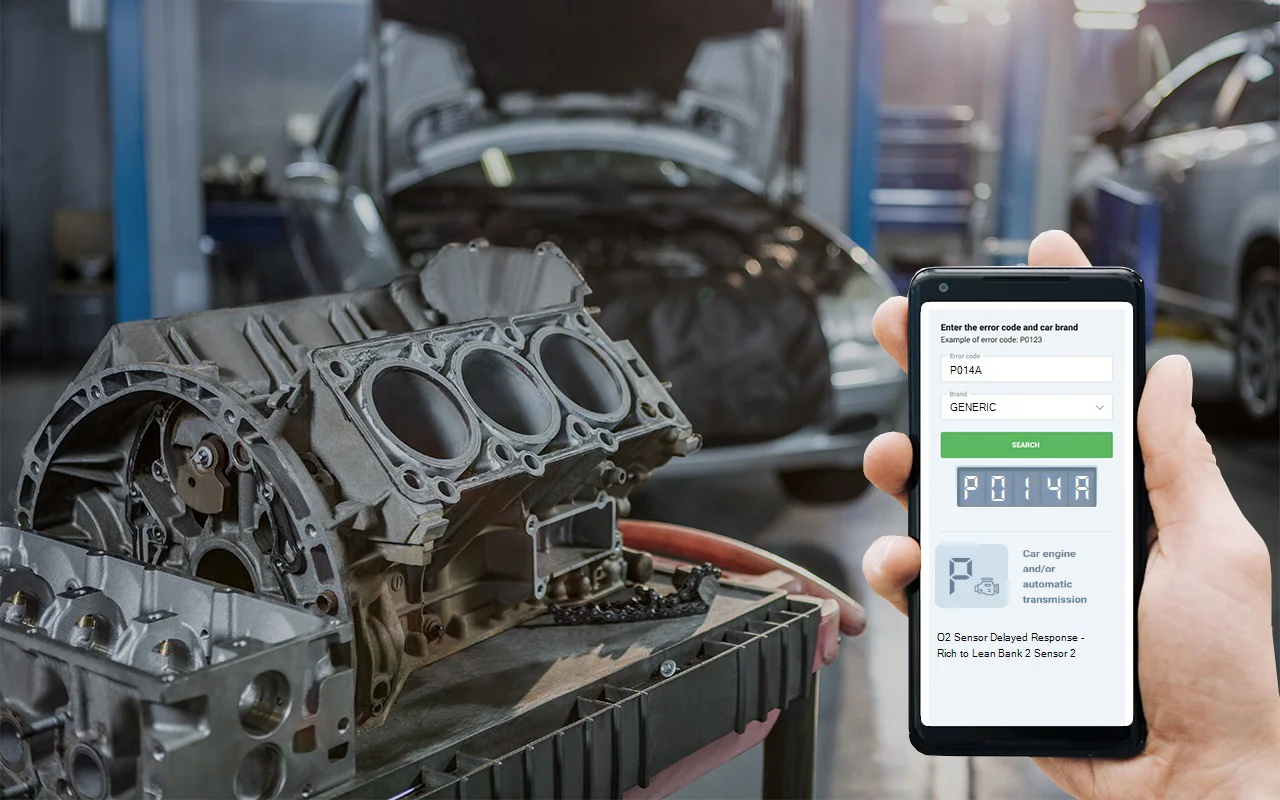
Common mistakes during P014A engine code troubleshooting
Honestly, I’ve seen a lot of folks jump straight to replacing the oxygen sensor without checking the wiring or for exhaust leaks first. That’s a surefire way to waste money and time. Another common mistake is ignoring other engine codes that could be causing the sensor to act up-if the engine isn’t running right, the sensor can’t do its job. Skipping the basics, like a visual inspection, or not checking for TSBs, can lead to unnecessary repairs and frustration.

Seriousness of obd code P014A issues
This isn’t something you want to ignore. A slow or unresponsive oxygen sensor can lead to poor fuel economy, higher emissions, and in some cases, damage to the catalytic converter if the engine runs too rich for too long. That’s an expensive part to replace. Plus, if your car isn’t running efficiently, you could end up stranded or fail an emissions test. Things can go south quickly if this is left unchecked, so I always recommend taking care of it sooner rather than later.
Repair solutions for P014A
Here’s what usually fixes a p014a, based on what I see in the field:
- Replacing the downstream oxygen sensor on Bank 2 if it’s found to be slow or faulty.
- Repairing or replacing any damaged wiring or connectors going to the sensor.
- Fixing any exhaust leaks before the sensor.
- If the catalytic converter is found to be the culprit, replacing it with a quality part (not a cheap aftermarket one, since those can fail quickly).
It’s always best to confirm the root cause before replacing any parts-guesswork can get expensive fast.
Conclusion
To sum it up, P014A means your car’s engine computer is seeing a slow response from the downstream oxygen sensor on Bank 2. This is a serious issue that can hurt your fuel economy, emissions, and even damage expensive parts like the catalytic converter if ignored. The best way to tackle it is to start with a careful inspection of the wiring and sensor, check for exhaust leaks, and only replace parts once you’ve confirmed what’s wrong. Don’t put this off-getting it fixed promptly is the safest and most cost-effective way to keep your car running smoothly.