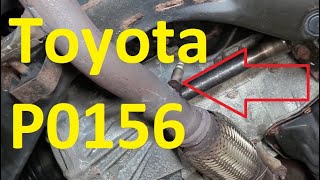
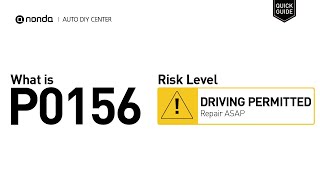
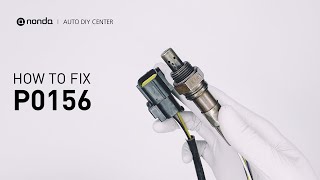
Let me break down what code P0156 means for you. This code stands for “O2 Sensor Circuit Malfunction Bank 2 Sensor 2.” In plain English, your car’s computer (the PCM) is keeping an eye on the oxygen sensors in your exhaust system. Specifically, Bank 2 Sensor 2 is the downstream sensor, usually located after the catalytic converter on the side of the engine with cylinder 2. This sensor’s job is to monitor how well the catalytic converter is working by measuring the oxygen content in the exhaust gases. If the computer notices that this sensor is not responding or is stuck reading low oxygen for too long, it sets the P0156 code. This is important because the data from this sensor helps the engine adjust fuel delivery and keep emissions in check. If it’s not working right, your car can run poorly and pollute more than it should.
DTC P0156
 5149
5149 6 minutes of reading
Causes of the P0156 code
From my time under the hood, I've seen a handful of culprits show up over and over when it comes to a p0156. Nine times out of ten, the issue comes down to a tired or flat-out failed O2 sensor, but it’s not always that simple. There are a few other things that can throw a wrench in the works. Here’s what usually lands a car on my lift:
- The Bank 2 Sensor 2 O2 sensor is on its last legs or completely shot
- Wiring leading to the sensor is chewed up, corroded, or just plain loose
- There’s a crack or hole in the exhaust pipe right near the sensor, letting in unwanted air
- Every now and then, the PCM (that’s your car’s brain) is to blame, but that’s pretty rare in my book
Here’s a pro-tip from the garage: start by giving the sensor and wiring a good once-over before worrying about the big-ticket items.
Symptoms of the P0156 engine code
When this code rears its head, here’s what you might bump into. The check engine light is usually the first thing you’ll notice-it loves to make an appearance. In my experience, you may also see your fuel gauge dropping faster than usual, meaning extra trips to the pump. Sometimes the engine just doesn’t feel quite right; maybe it stumbles, maybe it feels sluggish. One more thing-expect your car to puff out more emissions, which is a real problem if you’re due for a smog test. Occasionally, all you’ll get is that warning light, without any real drivability changes. Don’t ignore it just because the car seems fine.

Diagnosis process for obd2 code P0156
When I tackle a dtc p0156, I always start with the basics. Safety first: let the engine cool before you get your hands in there. Then, walk through these steps:
- Check out the wiring and connector for Bank 2 Sensor 2. I can’t tell you how many times I’ve found a simple corroded or loose connection causing the headache. Look closely-sometimes it’s just a spot of green corrosion hiding in the plug.
- Inspect the exhaust pipe in the sensor’s neighborhood. Any cracks, holes, or leaks? Even a tiny exhaust leak can throw the sensor readings way off. A bit of black soot or a ticking noise can tip you off.
- If everything looks solid, grab a scan tool and watch the sensor’s live data. The voltage should move up and down as the engine runs. If it’s stuck or flatlined, you’re likely looking at a bad sensor.
- Don’t skip checking for other codes. Sometimes, clues about the fuel system or PCM will show up and point you in a new direction.
Here’s something I’ve learned: always double-check your vehicle’s repair manual. Sensor locations and wiring diagrams can be sneaky, especially on newer models. And if you’re not used to crawling under a car, grab a buddy to help out-better safe than sorry.
Common mistakes when handling P0156
I’ve watched plenty of DIY’ers (and even a few pros) trip up with this code. The biggest blunder? Swapping out the O2 sensor right away without checking for wiring problems or exhaust leaks. Another classic mistake is mixing up sensor locations-Bank 2 Sensor 2 is not the same animal as Bank 1, or the upstream sensor. Skipping a close inspection of the wiring and connectors is a fast way to waste money and time. My advice: always be sure you’re chasing the right part before you shell out for replacements.

How serious is an obd code P0156
Let me be straight with you: p0156 isn’t something you want to shove to the bottom of your to-do list. Sure, your car will probably still get you from A to B, but you’re playing with fire if you ignore it. A faulty sensor can make your engine run too rich or too lean, and that spells trouble for your catalytic converter-one of the priciest parts on your car. Not to mention, your emissions go up and you could fail your next inspection. Things can spiral if you let this one sit, so get on top of it sooner rather than later.
Repair tips for the P0156 trouble code
Here’s my battle-tested approach for knocking out a p0156 code:
- Swap out the Bank 2 Sensor 2 O2 sensor if it’s proven to be faulty
- Repair or replace any sketchy wiring or corroded connections you find
- Patch up any exhaust leaks near the sensor-don’t overlook even the smallest hole
- On rare occasions, if you’ve checked everything else, it’s time to look at the PCM-but that’s almost always a last resort
Start with the easy stuff. Make sure everything’s clean, tight, and properly connected before you jump into pricier fixes. Sometimes, a good cleaning or a fresh connector is all it takes.
Conclusion
So, here’s the bottom line: code P0156 means your car’s computer isn’t getting what it wants from the downstream O2 sensor on Bank 2. Leave it unchecked, and you could be looking at wasted gas, higher emissions, and even a ruined catalytic converter. My advice? Take a careful look at the sensor, the wiring, and the exhaust for anything out of place. Don’t drag your feet on this one-getting it sorted now will save you a world of hassle down the line. Most times, a fresh sensor or a wiring repair will get you back on the road, problem-free.