
Causes and dtc P0163
If there’s one thing I’ve learned after years under the hood, it’s that most p0163 codes have pretty common roots. Here’s what usually brings folks into my shop:
- Leaks in the exhaust system before the oxygen sensor-this is a classic one, as even a small leak can let in air and throw the sensor’s reading way off.
- An engine running too lean, which messes with what the sensor sees.
- Corroded or damaged connectors at the O2 sensor-I’ve lost count of how many times a crusty plug has been the culprit.
- Signal wires from the sensor shorting out to ground, or a broken ground circuit altogether.
- A plain old failed O2 sensor-these guys can get fouled by coolant or raw fuel over time.
- And on rare occasions, a glitchy PCM (the computer itself) is at fault.
In my experience, nine times out of ten it’s a wiring or sensor issue, not a bad cat.
Symptoms and P0163 engine code
I’ll be honest with you-when p0163 pops up, you usually won’t notice much change in how your car runs. That check engine light is often the only sign. But if there are other problems lurking, you might spot:
- An engine that idles rough or just doesn’t sound quite right
- Slightly uneven running-maybe it feels a bit off, but nothing dramatic
- Loss of power, though this is pretty rare unless the computer tries to compensate
- Poor idle, especially if you’ve got a vacuum leak in the mix
But for most folks, it’s just that stubborn warning light staring back at you every time you turn the key.

Diagnosis steps for P0163
Here’s my go-to process for hunting down a P0163:
- I always start by checking for exhaust leaks in front of the O2 sensor. Even a tiny leak can cause headaches, so get in there and listen for hissing or feel for escaping air around the manifold and pipes.
- Next, I look over the sensor’s wiring and connector. Corrosion, broken wires, or loose pins? Those are all troublemakers. Watch for places where the wire might have melted against the hot exhaust, too-heat damage is sneaky.
- Once everything’s buttoned up and the engine’s fully warmed, I’ll hook up a scanner or a voltmeter to watch the sensor’s voltage. For this one, you’re aiming to see it hovering near 0.45 volts, moving slowly. If it’s stuck down below half a volt, that’s a red flag.
- If things look weird, I unplug the sensor and check the connector for moisture or corrosion. If that’s all clean, I’ll check for battery voltage and a solid ground at the heater circuit. No juice or missing ground? Time to hunt for a wiring or fuse problem.
- If the heater circuit’s good, I’ll use a jumper to ground the sensor’s ground wire and watch the voltmeter. If the reading jumps up, the sensor’s shot. If not, you might have a wiring issue or, on rare occasions, a PCM glitch.
- Always trace the harness where it runs near hot spots to make sure it’s not rubbing through or getting cooked by the exhaust.
If you’re not comfortable poking around hot engines or electrical connectors, it’s smart to get someone with experience to lend a hand.
Common Mistakes with P0163 code
One mistake I see all the time? Folks go straight to swapping out the O2 sensor without so much as a glance at the wiring or looking for exhaust leaks. That’s a fast way to drain your wallet with no fix in sight. Another pitfall: forgetting to check the heater circuit. If the sensor’s not heating up, it won’t work right, and you’ll just keep chasing your tail. Make sure you rule out the simple stuff before throwing parts at the problem-you’ll save yourself a headache and a few bucks, too.

Seriousness of obd code P0163
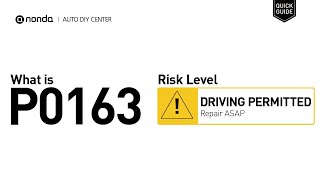
While P0163 probably won’t strand you on the side of the road, it’s not a code you want to blow off. Leave it alone long enough and your emissions will climb, you might take out your catalytic converter, or worse, wind up paying for pricier repairs down the line. If you’ve got an inspection coming up, you can bet your car won’t pass. And if a wiring short starts spreading trouble to other systems, things can get ugly fast. My advice? Don’t put this one on the back burner.
Repair advice for obd2 code P0163
Based on what I’ve fixed in the shop and what the service manuals say, here’s how you usually get rid of a p0163:
- Seal up any exhaust leaks before the sensor. This step alone fixes a ton of these codes.
- Clean or repair the O2 sensor connector and wiring. Don’t ignore green crust or brittle wires.
- If testing proves the sensor’s dead, swap it out for a new one.
- Chase down and repair any shorts or open circuits in the sensor’s signal or ground wires.
- If you’ve ruled out everything else and the code’s still here, it might be time to look at the PCM, but that’s rare.
My advice? Always start with leaks and wiring before you reach for a new sensor or, heaven forbid, a new computer.

Conclusion
Bottom line: when you see P0163, your car’s computer isn’t happy with what it’s hearing from a downstream O2 sensor. It’s usually not the catalytic converter-nine times out of ten, it’s wiring or the sensor itself. Even if your car seems to run fine, get it checked out soon. Start with a careful look for exhaust leaks and wiring problems, then test the sensor. If you don’t skip steps, you’ll fix it right the first time and save yourself a lot of trouble down the road.

 5788
5788 6 minutes of reading