
Causes and obd code P0195
From what I've seen in the shop and based on the official repair info, the most common reasons for a p0195 code are:
- A faulty engine oil temperature sensor itself. Honestly, this is what I see most often.
- Wiring problems-like damaged wires, corroded connectors, or loose plugs going to the sensor. These can be sneaky and cause intermittent issues.
- Problems with the engine's cooling system. If the engine is running too hot or too cold, it can throw off the readings and trigger this code.
- In rare cases, a bad PCM (the engine computer) can be the culprit, but that's pretty uncommon in my experience.
I always recommend starting with the sensor and its wiring before suspecting anything more serious.
Symptoms and P0195 trouble code
If your vehicle has a p0195 code, here’s what you might notice:
- The check engine light will almost always be on.
- You might see the engine running rough, especially when it’s cold or just warming up.
- Fuel economy can take a hit, since the computer isn’t getting the right oil temperature info to adjust things properly.
- On diesels, you could have trouble with cold starts or issues with the glow plug system.
- In some cases, if the oil temperature reading is way off, it could even cause the engine to go into a limp mode to protect itself.
From experience, sometimes the only sign is that pesky check engine light, but it’s not something to ignore.

Diagnosis and P0195
Here’s how I usually go about diagnosing a p0195 code, step by step:
- First, I start with a good visual inspection. Look at the EOT sensor and its wiring. Check for any loose connectors, frayed wires, or signs of oil contamination. Sometimes just plugging a connector back in properly solves the problem.
- Next, I check for any technical service bulletins (TSBs) related to this code for your specific make and model. Sometimes there are known issues or updated parts.
- Then, I use a scan tool to look at the live data from the oil temperature sensor. If the reading is way out of line with the engine’s actual temperature, that’s a big clue.
- To test the sensor, I disconnect it and see if the scan tool shows a very low temperature. Then, I use a jumper wire to connect the sensor terminals together; the scan tool should now show a very high temperature. If it does, the wiring and PCM are probably fine, and the sensor itself is likely bad.
- If the sensor checks out, I move on to testing the wiring. With the ignition on, I use a multimeter to check for a 5-volt reference signal at the sensor connector. No voltage? There could be a broken wire or a problem with the PCM.
- I also check the ground circuit for continuity between the sensor and the PCM. Any open circuits here need to be tracked down and repaired.
- Finally, if everything else checks out, I’ll consider the PCM as a last resort-but that’s rare.
It’s best to have someone assist you with the scan tool and multimeter, and don’t forget to double-check all your connections before moving on to the next step.
Common Mistakes with P0195 code
In cases like this, I’ve seen folks jump straight to replacing the sensor without checking the wiring or connectors first. That’s a surefire way to waste money and time. Another common mistake is ignoring the cooling system-if your engine isn’t reaching the right temperature, it can set off this code too. Skipping the basics, like checking for TSBs or not using a scan tool to compare sensor readings, can also lead you down the wrong path. Always start simple and rule out the obvious before replacing parts.

Seriousness of P0195 engine code
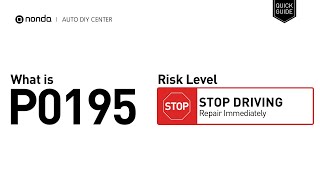
This isn’t something you want to put off. If the engine oil temperature sensor isn’t working right, your engine computer is basically flying blind when it comes to oil temp. That can lead to poor fuel economy, rough running, and in the worst case, engine overheating or even internal damage if the oil gets too hot and breaks down. On diesels, you could end up with hard starting or glow plug issues. Honestly, things can go south quickly if overlooked, and you don’t want to risk major engine damage or getting stranded. Parts that can be affected include the engine itself, the PCM, and even the fuel injection system if things get bad enough.
Repair solutions for dtc P0195
Here’s what I personally recommend for fixing a p0195 code, based on what’s worked in the field and what the manuals say:
- Replace the engine oil temperature sensor if it’s found to be faulty.
- Repair or replace any damaged wiring or connectors going to the sensor. Make sure everything is clean and tight.
- Address any cooling system problems-like a stuck thermostat or low coolant-that could be causing abnormal oil temperatures.
- In rare cases, if all else fails, the PCM may need to be replaced or reprogrammed, but that’s the last thing I’d try.
Always clear the code and test drive the vehicle to make sure the repair worked and the code doesn’t come back.



Conclusion
To sum it up, P0195 means your engine’s oil temperature sensor circuit isn’t working right, and that’s a big deal for how your engine runs and protects itself. It’s not the most urgent code out there, but it can turn into a serious hazard if ignored. I recommend starting with a careful inspection of the sensor and wiring, then moving on to more detailed tests if needed. Most of the time, it’s a simple fix, but don’t let it slide-getting it sorted quickly is the best way to avoid bigger headaches down the road.

 4958
4958 6 minutes of reading