
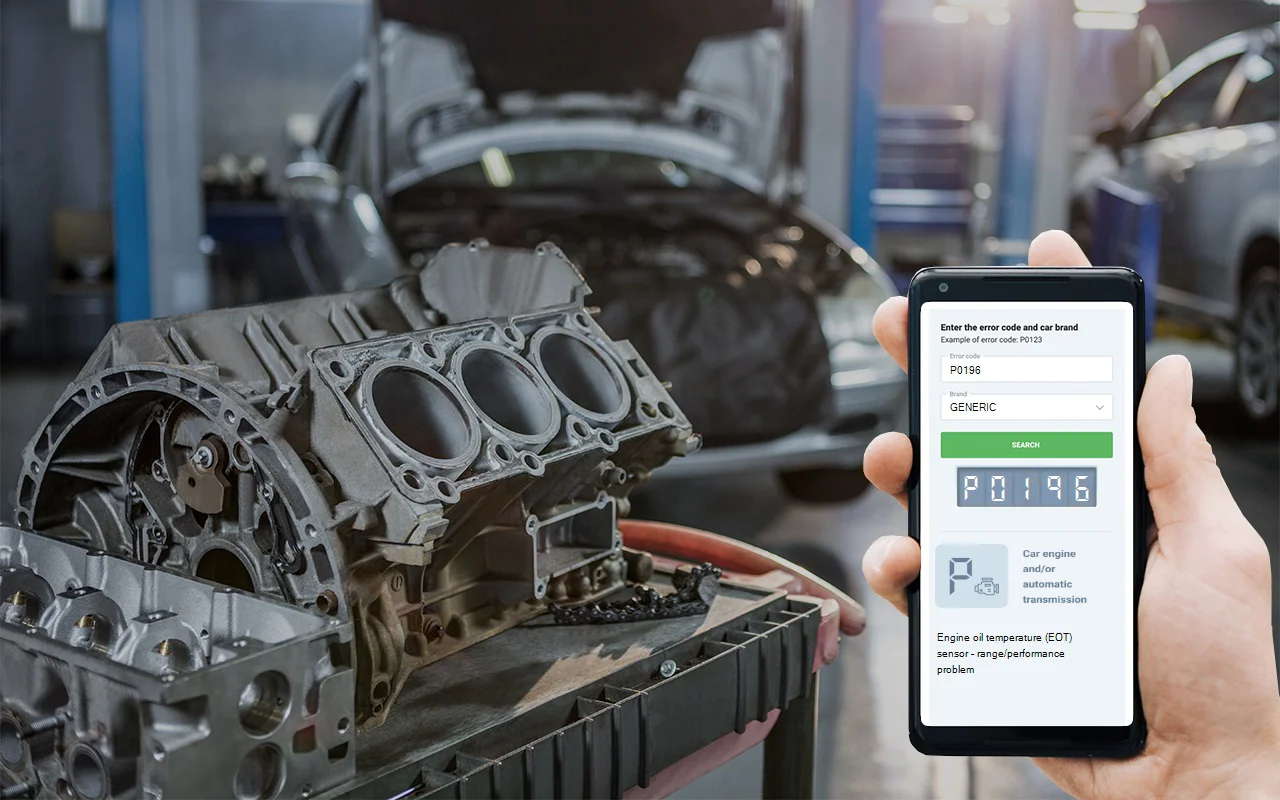
P0196 is one of those trouble codes that gets my attention right away. Anytime your scanner throws this code, it’s pointing to a glitch with the engine oil temperature sensor-what most of us call the EOT sensor. This little guy keeps track of your engine oil’s temperature and sends that info straight to your vehicle’s brain, the PCM. The PCM then relies on that reading for a bunch of important decisions, like adjusting fuel calculations, dialing in the timing, and setting glow plug function on diesels. From my time wrenching on these systems, I’ve seen how the EOT works alongside the likes of coolant and intake air temp sensors, giving the PCM a full snapshot of what’s happening inside your engine. If the EOT’s signal seems fishy or drifts way out of the expected range, the PCM flags it and you get a P0196. I’ll tell you right now-this isn’t limited to just one brand. You’ll see this code on all sorts of vehicles, but it pops up a lot on diesels.
DTC P0196
 5261
5261 6 minutes of reading
Causes of the P0196 trouble code
Over the years, here’s what usually sets off a P0196 code in my shop:
- Wiring headaches-think frayed insulation, corroded pins, or connectors barely hanging on at the sensor or somewhere along the harness.
- A worn-out or flat-out bad engine oil temperature sensor. These things don’t last forever.
- Trouble in the cooling system-if your engine’s running hotter or cooler than it should, that’ll throw the readings off.
- Every now and then, it’s a PCM issue, but honestly, I rarely see that as the root cause.
Most of the time, your problem is going to be with the sensor or its wiring, so that’s always my first stop when tracking down P0196.
Symptoms of dtc P0196
Here’s what you’ll probably notice if your car’s got a P0196 lurking:
- The check engine light flips on-yep, that’s usually your first clue.
- The engine might run rough, especially when it’s cold or just starting to warm up. That stumble at startup? Could be this.
- On certain vehicles, especially diesels, you might face hard starting, lousy fuel mileage, or glow plug issues.
- If things get ugly or the cooling system’s involved, you could see overheating or find your engine never quite reaching its normal temp.
But here’s the tricky part: sometimes the car feels totally normal. Don’t let that fool you-ignoring this code can come back to bite you.

Diagnosis steps for obd2 code P0196
When I’m chasing down a P0196, here’s how I roll through the process:
- I always kick things off with a good, old-fashioned visual check. Inspect the EOT sensor and wiring-look for broken insulation, green fuzz (corrosion), or loose connectors. And don’t miss any oil leaks around that area.
- If you catch a wiring issue, fix it first. Clear the code and see if it comes back. Sometimes you get lucky and that’s all it takes.
- Next, I like to check if there are any technical service bulletins (TSBs) for your specific car and code. Sometimes the automaker already knows about a pattern problem and has a fix.
- If the basics check out, I hook up a scan tool and watch the oil temp readings. On a cold start, the EOT should be close to coolant temperature, then climb steadily as the engine warms. If the reading’s bouncing around or stuck, you’ve found your problem.
- To really test the sensor, I’ll unplug it-your scan tool should then read a super low temp. Bridge the connector with a jumper wire, and it should shoot up to a high temp reading. If that happens, your wiring and PCM are probably fine, and it’s time for a new sensor.
- If I’ve got my multimeter handy, I’ll measure resistance across the sensor pins. As the engine heats up, that resistance should drop smoothly. If not, or it’s way off from the factory numbers, you know what to do-replace it.
- Don’t forget to look at the cooling system. Make sure the engine is reaching and holding its proper operating temperature. If not, fix that before you start chasing the sensor.
Here’s a tip: having an extra set of hands while you monitor live data or work around a hot engine makes the job a whole lot safer and easier.
Common Mistakes When Addressing P0196
I see folks trip up on this code all the time. Here are the most common blunders:
- Throwing a new sensor at it right away, without checking the wiring or connectors. Don’t waste your money-often it’s just a loose pin or a split wire.
- Overlooking cooling system faults. If the engine can’t reach or hold temp, you’ll keep chasing your tail with this code.
- Skipping the scan tool comparison between oil and coolant temps. That’s a goldmine for figuring out if the sensor’s talking nonsense or telling the truth.
- Ignoring those technical service bulletins. Sometimes the answer’s right there and gets missed.
Slow down and work through the basics before you start buying parts. It’ll save you cash and headaches.

Seriousness of obd code P0196
This is not one of those codes you can just shrug off. When the engine oil temperature sensor isn’t doing its job, your PCM can’t make smart calls about fuel and timing. That spells rough running, headaches at startup, and if things heat up too much, you’re flirting with engine damage. If P0196 shows up alongside coolant temp codes, now you’re skating on thin ice-could be overheating, and that gets expensive fast. I’ve seen folks push their luck and end up with ruined pistons, shot bearings, or even a complete engine meltdown. Bottom line: don’t drag your feet on this one. Get it checked out as soon as you can.
Repair steps for P0196 engine code
Here’s my usual game plan for clearing a P0196:
- Fix or swap out any busted wiring or connectors at the EOT sensor. Don’t cut corners-secure connections matter.
- If the sensor fails your resistance or scan tool tests, replace it with a quality part.
- If you spot a cooling system issue-thermostat stuck open, leaks, or gunky coolant-sort that out. Sometimes a flush or a new thermostat is all you need.
- In rare cases, if you’ve done all that and still have the code, you might have a PCM problem. That’s a last resort and not where I’d bet my money.
After you finish any repair, always clear the code and take the car for a good test drive. Make sure the fix holds.
Conclusion
Here’s the bottom line-P0196 means your engine oil temperature sensor isn’t sending the right info to your car’s brain, and that can throw everything else off balance. Most of the time, it comes down to a wiring hiccup or a tired sensor, so check those first before you go deeper. Don’t downplay this code-let it linger, and you’re asking for major engine trouble. Take it step by step, start simple, and fix it fast. Your engine (and your wallet) will thank you later.
- Easily diagnosed the vehicles #DTC P0196 and P0195 by #DonosHome #OBD2 #scanner. #Amazon
- How to Diagnose and Fix P0196 Engine Code - OBD II Trouble Code Explain
- P0196 Engine Oil Temperature Sensor Range/Performance 🟢 Trouble Code Symptoms Causes Solutions
- Oil Temperature Sensor P0196 / P0197 / P0198 | How to Test and Replace
