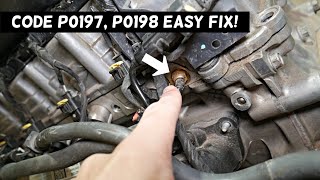
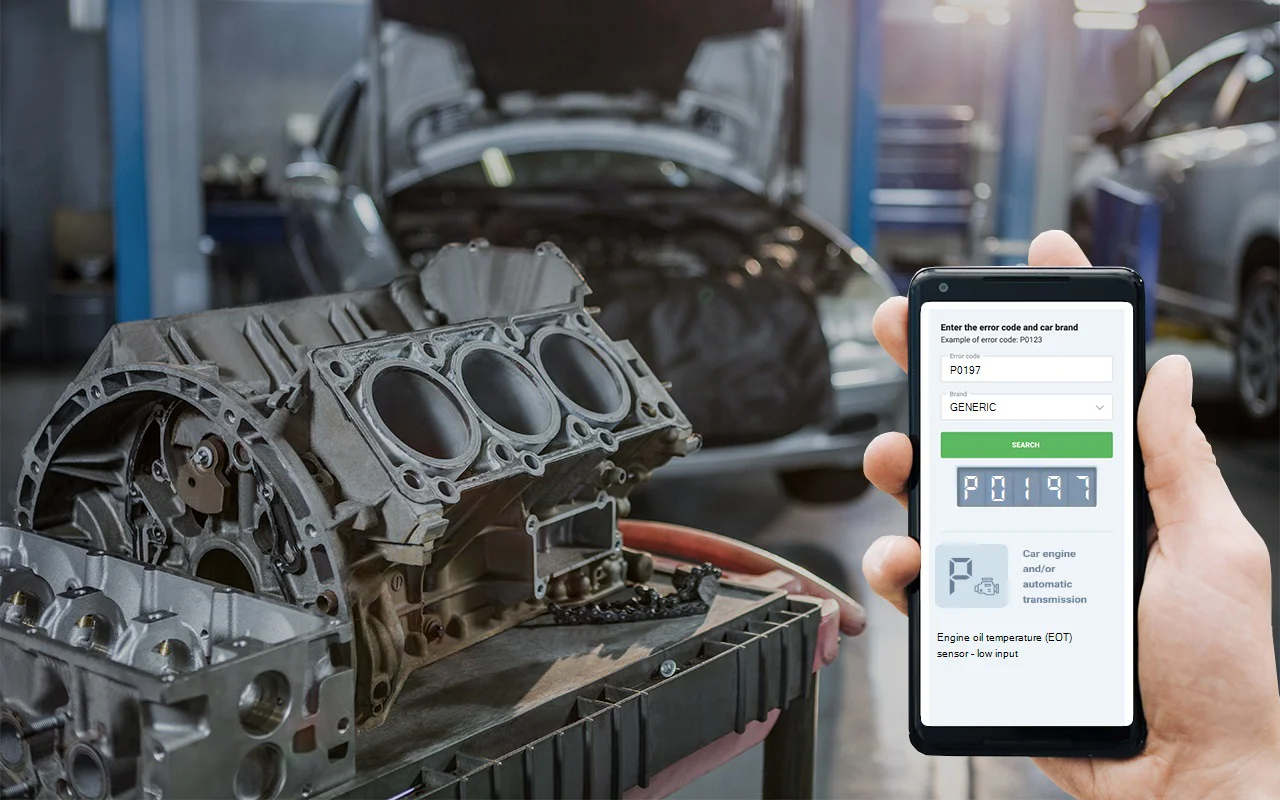
Let me break down what code P0197 means for you. This code pops up when your engine oil temperature sensor isn’t sending the right signals to the car’s computer, which is called the powertrain control module (PCM). The PCM relies on this sensor to keep track of how hot or cold your engine oil is. That’s important, because if the oil gets too cold, it can’t flow properly and won’t lubricate the engine parts. On the flip side, if it gets too hot-think over 300°F-the oil thins out too much and can’t protect the engine from metal-on-metal wear. The PCM uses this info not just for oil life calculations, but also to help keep the engine running safely. So, when the sensor’s signal is too low, the PCM sets the P0197 code to let you know something’s off in the oil temperature circuit.
DTC P0197
 4284
4284 5 minutes of reading
Causes and obd2 code P0197
From what I see most often in the shop, there are a handful of usual suspects behind a P0197 code:
- Failed engine oil temperature sensor - This is the most common reason. Sensors can wear out or get damaged over time.
- Wiring problems - Things like broken wires, loose connectors, or corrosion in the harness can interrupt the signal.
- Engine overheating - If the engine is running way too hot, it can throw off the sensor readings and trigger this code.
- PCM failure - Rare, but sometimes the computer itself is at fault.
In my experience, it’s usually the sensor or wiring at the root of the problem, but it’s important to check everything to be sure.
Symptoms and P0197 trouble code
Honestly, you probably won’t notice much besides the check engine light coming on with this code. There aren’t any obvious drivability issues tied directly to P0197. No strange noises, no rough running-just that warning light on your dash. But don’t let that fool you into thinking it’s not important!

Diagnosis and dtc P0197
Here’s how I usually tackle a P0197 code, step by step:
- First, I grab a scan tool and confirm the code. I also check for any other related codes that might give more clues.
- Next, I visually inspect the oil temperature sensor and its wiring. Look for any signs of damage, loose connections, or corrosion. It’s easy to overlook a frayed wire or a connector that’s not fully seated.
- Then, I test the sensor itself. With the engine cool, I use a multimeter to check the sensor’s resistance and compare it to the specs in the service manual. If the reading is way off, the sensor is likely bad.
- If the sensor checks out, I move on to the wiring. I’ll do a continuity test from the sensor connector back to the PCM, making sure there are no breaks or shorts in the circuit.
- If everything else looks good, I consider the PCM as a last resort, but that’s pretty rare. It’s best to rule out the simple stuff first.
It’s better to have someone assist you when checking wiring, especially if you need to wiggle the harness while watching the meter. And always double-check the sensor connector before moving on to more complex diagnostics.
Common Mistakes with P0197
I’ve seen folks jump straight to replacing the sensor without checking the wiring or connectors first. That’s a surefire way to waste money if the real problem is just a loose or corroded connection. Another common slip-up is not checking for engine overheating, which can also set this code. Don’t forget to inspect the basics before swapping parts-otherwise, you might miss the root cause and end up chasing your tail.

Seriousness of P0197 code
This isn’t something you want to ignore. While you might not notice any immediate symptoms, driving with a faulty oil temperature sensor means your engine could be running with oil that’s too hot or too cold-and you wouldn’t know it. That’s a serious hazard, because poor lubrication can lead to major engine damage, like worn bearings or even a seized engine. Things can go south quickly if overlooked, so don’t put this off for later.
Repair steps for obd code P0197
Here’s what I typically do to fix a P0197 code:
- Replace the engine oil temperature sensor if it’s faulty or out of spec.
- Repair or replace any damaged wiring or connectors in the sensor circuit.
- Address any engine overheating issues-check coolant level, thermostat, and cooling fans.
- In rare cases, if all else fails, inspect and possibly replace the PCM.
It’s best to start with the sensor and wiring, since those are the most common culprits and the easiest to fix.
Conclusion
To sum it up, P0197 means your engine oil temperature sensor isn’t communicating properly with the car’s computer. Even though you might only see a check engine light, this is a high-priority issue because it can lead to serious engine damage if ignored. I recommend starting with a careful inspection of the sensor and its wiring, and replacing the sensor if needed. Don’t delay-taking care of this now is the most reliable way to keep your engine safe and running smoothly.