
Causes and obd code P0224
From experience, the most common reasons I see for a p0224 code are:
- A faulty or incorrectly adjusted Throttle Position Sensor (TPS) "B"
- Broken, shorted, or corroded wiring or connectors going to the TPS "B"
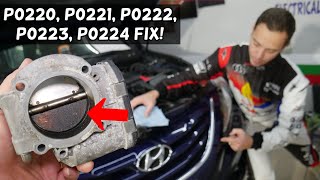
- Issues with the throttle body itself, like carbon buildup or physical damage
- Problems with the engine computer (PCM), though this is much less common
Most often, the culprit is either a bad sensor or a wiring issue. It’s rare, but sometimes a programming glitch in the computer can also trigger this code.
Symptoms and P0224 engine code
When this code is active, you’ll probably notice some changes in how your car behaves. Here’s what drivers usually report:
- Hesitation or stumbling when you try to accelerate
- Black smoke from the exhaust, especially when starting up
- Hard starting, particularly when the engine is cold
- Worse fuel economy than usual
- Sometimes, you’ll see other emission-related codes pop up alongside p0224
These symptoms can make driving unpredictable and frustrating, so it’s not something you want to ignore.

Diagnosis and P0224 trouble code
Let me walk you through how I’d tackle a P0224 code in the shop, step by step:
- First thing I do? I always check for any Technical Service Bulletins (TSBs) for your vehicle. Sometimes there’s a known quirk that’s already got a factory fix.
- Next, I give all the wiring and connectors heading to TPS “B” a careful look. I’m on the hunt for frayed wires, loose plugs, or any green fuzz (corrosion). While I’m there, it’s smart to peek at the throttle body for carbon buildup or visible damage.
- If nothing jumps out, I hook up the scan tool. Pulling all the stored codes and freeze frame data is a must. This tells me if the P0224 is a fluke, or if it keeps popping up, and under what conditions.
- With codes cleared, I’ll take the car for a spin to see if the code reappears. If it does, time to dig deeper.
- Next up, I monitor live data from the TPS using the scan tool. If those numbers are bouncing all over or don’t match the actual throttle movement, that’s a dead giveaway.
- If things are still fishy, I break out the DVOM (digital volt/ohm meter) and check the sensor directly. With the sensor plugged in, I’ll slowly move the throttle from closed to wide open, watching for a nice, steady voltage sweep (usually from about 0.5 volts closed to 4.5 volts wide open). Any jumps or flat spots, and you’re probably looking at a bad sensor.
- If you’ve just swapped in a new sensor, don’t forget to set it up right-double-check the adjustment against the manufacturer’s specs. You’d be surprised how often a simple tweak fixes the issue.
Here’s a pro-tip: have someone help you move the throttle while you keep an eye on the readings. Makes it a lot easier to catch weird blips.
Common Mistakes when fixing dtc P0224
There are a few traps I see folks fall into when chasing down a P0224:
- Swapping the TPS right away without checking the wiring and connectors. A dangling or corroded connector will cause the same trouble as a bad sensor.
- Ignoring carbon buildup or mechanical issues in the throttle body. If the throttle plate sticks even a little, it can throw off the whole reading.
- Forgetting to look for TSBs. Sometimes the factory knows about an issue and already has a fix or software update.
- Skipping the adjustment after installing a new TPS. If you just bolt it on and go, you might be right back where you started.
Take your time. Rushing in without checking the basics usually leads to wasted money and more headaches down the road.

Seriousness of obd2 code P0224
Don’t brush this one off. The TPS is a key player in how your engine runs, and if it’s not sending the right signals, you can end up with hesitation, stalling, or a mixture that’s so rich it ruins your catalytic converter. That’s not just bad for your wallet-it can get downright dangerous if your engine stumbles while you’re trying to merge or pass on the highway. Let it go too long, and you could be looking at a plugged cat, awful fuel economy, or even a car that refuses to start. Trust me, you don’t want to gamble with this code.
Repair steps for P0224
Here’s what usually gets a P0224 sorted, based on what I’ve seen in the shop and what the OEMs recommend:
- Repair or replace any damaged wiring or connectors at the TPS “B”
- Clean or fix the throttle body if you find carbon buildup or if it’s sticking
- Swap out the TPS “B” sensor if it’s acting up or measuring out of spec
- Adjust the new TPS to factory specs if that’s needed for your vehicle
- On rare occasions, if the PCM is to blame, it may need reprogramming or replacement
After any fix, always clear the codes and take it for a drive to make sure you nailed it. There’s nothing worse than thinking you’re done, only for that light to pop right back on.



Conclusion
Bottom line: If you’re seeing P0224, your engine computer is getting oddball signals from the throttle position sensor “B” circuit. It’s not something you want to ignore, since it can quickly lead to unsafe driving and bigger repair bills. The smart move is to start with a close look at the wiring and connectors, check for any service bulletins, and thoroughly test the sensor before buying new parts. Nine times out of ten, a careful diagnosis leads straight to the problem, and you’ll be back on the road without a lot of fuss. Don’t wait-deal with it now, and keep your car running smooth and safe.

 5885
 6 minutes of reading