
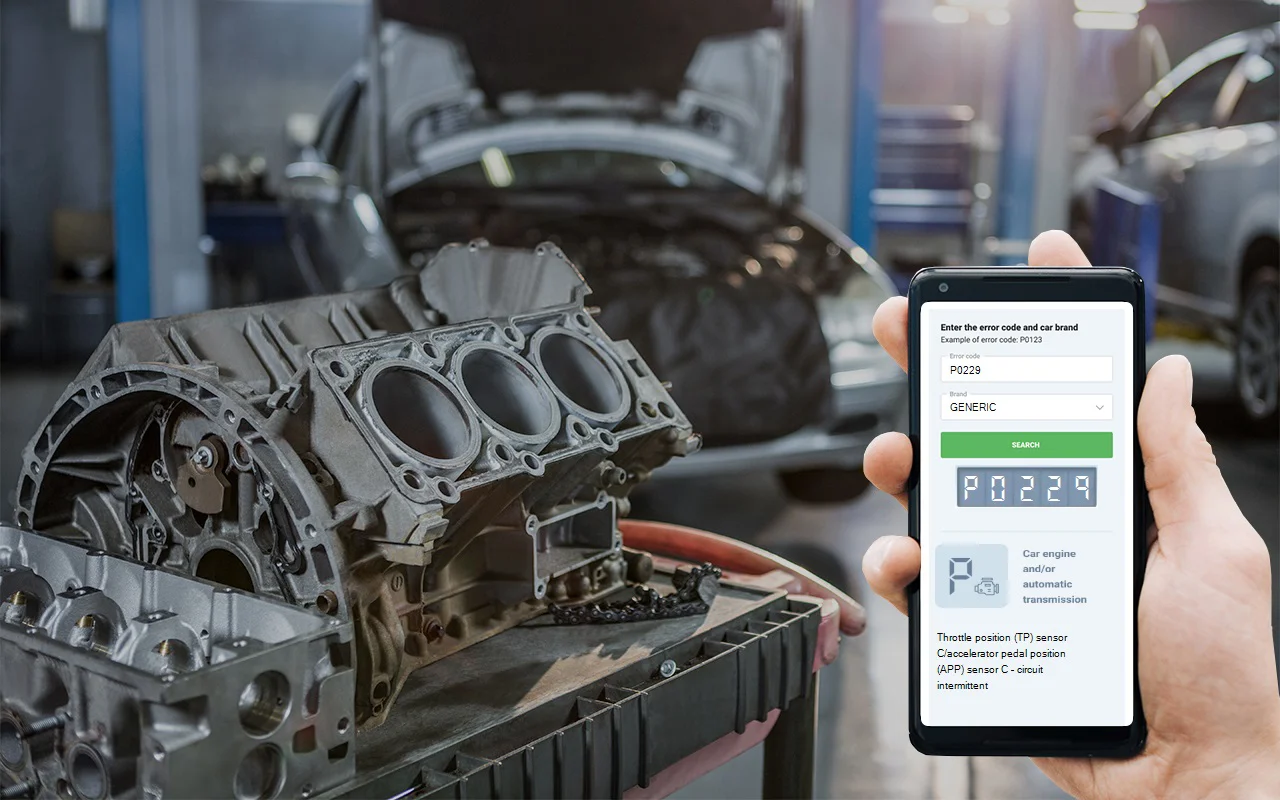
When you see the code P0229 pop up, what you’re really looking at is your car’s computer catching an on-and-off problem with the "C" circuit in your throttle or pedal position system. In my experience, this basically means the setup that tells your engine how far down you’re pressing the gas pedal isn’t sending a steady, reliable signal. You’ve got two main suspects here: the throttle position sensor (TPS) and the accelerator pedal position sensor (APP). Both feed info back to the powertrain control module (PCM), which then decides just how much air and fuel to feed your engine. If that signal starts flickering or drops out-even for a split second-the PCM can’t do its job, and that’s when P0229 shows up. The whole system is designed to make sure your engine responds exactly as you expect when you step on the gas, so when something’s off, you can bet your car’s performance and safety are taking a hit.
DTC P0229
 4255
4255 6 minutes of reading
Causes and obd2 code P0229
From my time under the hood, these are the usual suspects when I’m chasing down a P0229 code:
- A bad accelerator pedal position assembly-honestly, this one is top of the list, especially if you notice the glitch when you’re pushing or letting off the pedal.
- A throttle plate that’s sticking or gummed up-if it’s not moving freely, the sensors can’t do their job, and the readings go sideways.
- A throttle position sensor that’s on its way out-these do wear out, and when they start to fail, you’ll see all sorts of odd behavior.
- Wiring issues-broken, corroded, or loose wires and connectors in the circuit. I can’t tell you how many times a simple wiring fault was the real problem.
- A faulty PCM or outdated software-not super common, but it does happen. Sometimes the car just needs a software update; other times, the computer itself is the culprit.
If I had to bet, I’d say most of the time it comes down to the pedal assembly or the wiring. But don’t just swap parts-check everything thoroughly before you reach for the toolbox.
Symptoms and dtc P0229
When P0229 is active, there are a few things you can’t miss. First off, the check engine light is going to light up. Then, you might notice the engine feels rough, or the car just doesn’t respond the way it should when you hit the gas. Sometimes, you’ll get thrown into "limp mode"-that’s when the car puts the brakes on performance and won’t let you go much faster than 20 miles an hour, just to protect itself. You could also see your fuel mileage take a nosedive. In my shop, when someone comes in complaining about sluggish acceleration and a stubborn check engine light, I always check for this code.

Diagnosis and P0229 trouble code
Let me walk you through how I tackle a P0229 diagnosis:
- First thing’s first, I check for any other codes-sometimes there’s a clue hiding there that’ll save you a ton of time.
- Next, I take a close look at all the wiring and connectors for both the TPS and APP sensors. You want to be watching for frayed wires, corrosion, or anything that looks out of place. Here’s a pro-tip from the garage: have someone slowly press the pedal while you gently wiggle the harness. If the code pops back or the engine stumbles, you’ve likely found your problem.
- After that, I hook up a scan tool and watch the live data from both sensors. I’m looking for any weird jumps or sudden drops in the readings while slowly moving the pedal. If the numbers start acting up, that’s a red flag.
- If the sensors seem solid, I’ll check the throttle plate itself for any sticking or buildup. Sometimes a good cleaning is all it takes.
- Still no luck? Time to break out the multimeter and check the sensors against the specs in the wiring diagram. Make sure the voltage and resistance are where they should be.
- As a last resort, if everything else checks out, I look at the PCM. Sometimes a simple software update fixes it; in rare cases, the computer needs to be replaced.
Always start with the basics-wiring and connectors-before you start swapping out sensors. And don’t forget to check for technical service bulletins (TSBs); I’ve seen certain vehicles with known issues that are solved with a quick update or revised part.
Common Mistakes with the P0229 engine code
A classic mistake I see is folks going straight for a new sensor without checking the wiring first. That can end up costing more than it should if all you really needed to do was fix a loose plug or a busted wire. Another common error is skipping the live data step-if you’re not watching the sensors in real time, you might miss an intermittent glitch. I’ve also seen people ignore the possibility of a needed PCM software update, especially when there’s a TSB out for their make and model. Always check for those before you start ordering expensive parts.

Seriousness of a P0229 code
P0229 isn’t one of those codes you can just shrug off. If your ride’s stuck in limp mode, you’re going nowhere fast-and definitely not safe in traffic. Even if it’s still running, a bad throttle or pedal sensor can mean sudden loss of power or unexpected acceleration, which can be downright dangerous. Keep driving with this issue and you’re risking extra wear on your engine and transmission, and in rare cases, you might fry the PCM itself. Things can go south in a hurry if you ignore it, so my advice? Don’t wait around-get it checked out as soon as you can.
Repair tips for obd code P0229
Here’s what’s worked best for me and what the manuals back up when it comes to fixing P0229:
- Start by repairing or replacing any damaged wiring or connectors in the sensor circuits-this fixes the issue more often than you’d think.
- If the accelerator pedal position sensor assembly is bad, swap it out.
- Check the throttle plate for sticking or damage-sometimes a thorough cleaning is all it needs; if it’s too far gone, replace it.
- If the throttle position sensor is outside of spec, go ahead and replace it.
- Update the PCM software if there’s a known issue or a relevant TSB for your vehicle.
- Only replace the PCM if you’ve ruled everything else out and you’re sure it’s the source of the trouble.
Start simple-wiring and connectors-before moving on to the pricier parts. And only go after the PCM when you’ve exhausted every other possibility.
Conclusion
Bottom line: P0229 means your car’s computer isn’t getting a clean, steady signal from the throttle or pedal sensors, and that can really throw off how your engine responds. You can’t afford to ignore it-not if you want a safe, reliable ride. The best move is to work through the basics first, starting with the wiring and connectors, then testing the sensors and throttle plate, only looking at the PCM after you’ve ruled everything else out. Tackle it step by step, and you’ll have your car running smooth-and safe-again in no time.


