
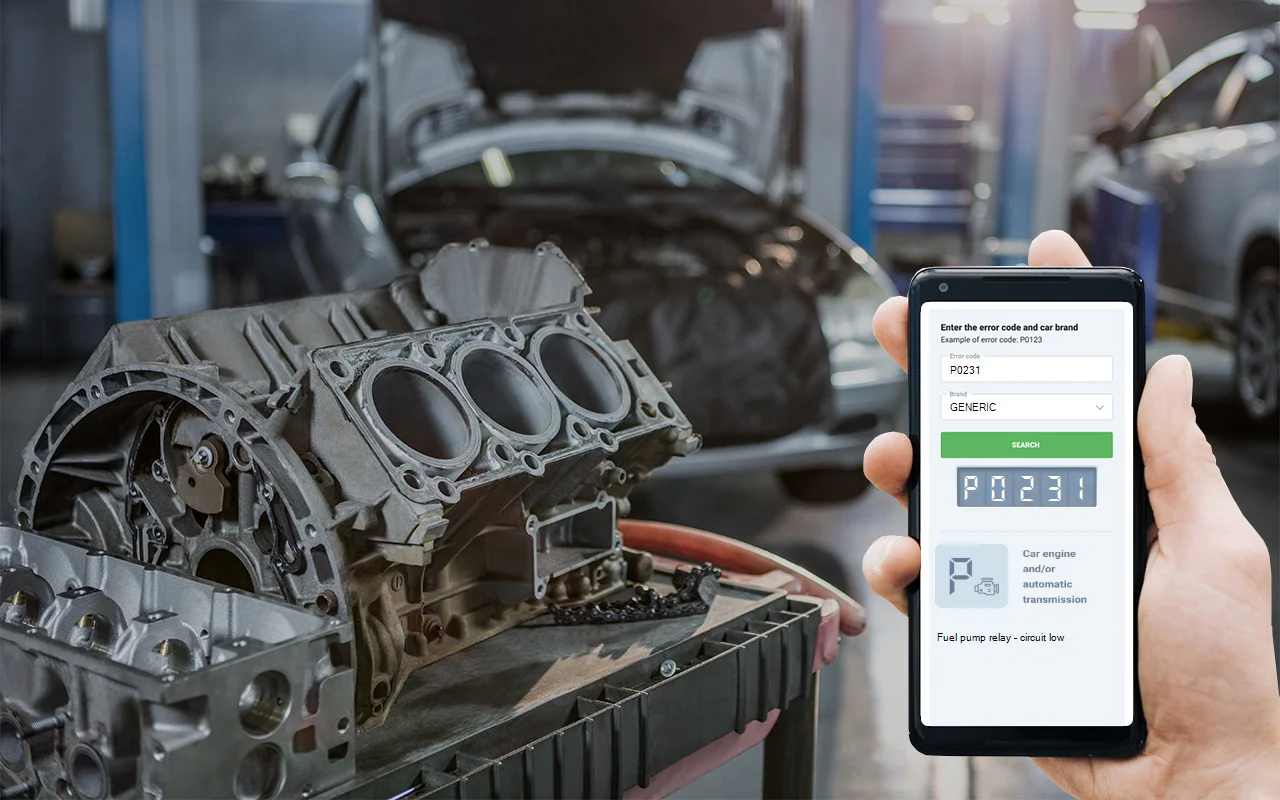
Let me break down P0231 for you in terms that make sense after years spent troubleshooting fuel systems. This code pops up when there’s a problem with the fuel pump’s power circuit-specifically, we're talking about the low voltage side. What’s happening is your car’s computer, the PCM, is keeping tabs on the voltage heading to the fuel pump. When you turn the key, the PCM flips a relay, which should send juice to the fuel pump so it can build up pressure. Many vehicles have a feedback wire in this setup, so the PCM can double-check the voltage actually hits the pump. If the computer sees the voltage is too low (or missing entirely), it’s going to light up the P0231 code. Here’s why it matters: without the right power getting to the pump, your engine’s not going to get the fuel it needs-plain and simple, you’re not driving anywhere.
DTC P0231
 4691
4691 7 minutes of reading
Causes and the P0231 engine code
From my time under the hood, I can tell you the root causes for a P0231 code usually aren’t complicated, but there are a few sneaky spots that can throw you off. Here’s what crops up most often in my shop:
- A fuel pump relay that’s gone bad-this one is the usual suspect, and it’s generally a quick test.
- Breaks or open circuits in the wiring harness leading to the fuel pump-wires can get brittle, corroded, or even become a snack for rodents if you park outside a lot.
- Loose or damaged connectors-sometimes, all it takes is a little moisture or vibration, and suddenly you’ve got a poor connection.
- An open in the feedback circuit between the PCM and the fuel pump power-this is a trickier one, but not unheard of.
- A blown fuel pump fuse, most often from a wire shorting out somewhere along the line.
Every once in a blue moon, the PCM itself is the problem, but honestly, that’s the last place I’d look.
Symptoms associated with the P0231 code
Trust me, you’ll know when P0231 is the issue. Here’s what I hear from drivers when this code rears its head:
- The engine just cranks and cranks, but never fires-by far the number one complaint.
- The engine starts, but it dies almost right away.
- Misfiring or rough running, especially when you step on the gas.
- It feels like your car left its get-up-and-go at home-there’s just not enough fuel making it to the engine.
Sometimes, if the problem comes and goes, you might get lucky and the car will run for a bit. But I wouldn’t count on it. It’s not the sort of thing you want to ignore or hope fixes itself.

Diagnosis process for the P0231 trouble code
If you rolled into my garage with a P0231, here’s exactly how I’d get to the bottom of it:
- First thing’s first-pop the hood and check the fuel pump fuse. If it’s popped, don’t just stick a new one in and call it a day-figure out what caused it to blow. Nine times out of ten, it’s a short to ground somewhere.
- Next up, the fuel pump relay. If you’ve got a matching one in the fuse box, swap them. If your car suddenly fires up, you’ve nailed it.
- After that, it’s time to eyeball the wiring and connectors to the pump and relay. You’re looking for any signs of wear, corrosion, or loose pins. Here’s a tip: have a buddy wiggle the harness while you watch for changes-it’s caught more intermittent issues than I can count.
- If nothing jumps out, grab your multimeter and check for voltage at the fuel pump connector while someone cranks the engine. No voltage? Work your way back to the relay and fuse until you find where the power drops off.
- Find voltage at the pump but it’s still quiet? Check the ground circuit for continuity-a weak ground can drive you nuts with weird electrical gremlins.
- On vehicles with that feedback circuit, you’ll want to check for continuity between the PCM and the tap-in point at the pump. If that wire is open, you’ll get the code even if the pump seems to be working.
- If you’re chasing your tail at this point, pull up the wiring diagram for your make and model-you’d be surprised how often the snag is somewhere unexpected, like tucked under a carpet or near the PCM.
Take it step by step. Don’t jump ahead, even if you think you’ve found the answer early on. It saves headaches and callbacks down the road.
Common mistakes when dealing with P0231
Here’s a classic blunder I see all the time: folks replace the fuel pump straight away without bothering to test the relay, fuse, or wiring. That’s a fast track to wasting a pile of cash. Another one? Ignoring the feedback circuit-just because the pump is humming doesn’t guarantee the PCM is happy with the voltage. I’ve also seen people pop in a new relay and assume it’s good, only to find out it was defective right out of the box. And don’t forget the ground! A lousy ground wire can mimic all sorts of other problems. Always check it-skipping this step bites a lot of techs.

Seriousness of dtc P0231 issues
Take it from me, you do not want to brush off a P0231. If your fuel pump isn’t getting power, your car can leave you stranded whenever it feels like it. Imagine that happening in the middle of a busy intersection. Not fun. Plus, running the engine with weak or no fuel pressure can fry your fuel pump, mess up your injectors, and even damage your catalytic converter if things start misfiring. Problems can snowball fast-so don’t sit on it. Get it checked and fixed before you’re stuck on the side of the road.
Repair steps for obd code P0231
If you want to actually fix P0231 and not just throw parts at it, here’s what usually gets the job done - straight from what I’ve seen work time and again in the shop:
- Swap out a faulty fuel pump relay if it’s not sending voltage.
- Fix or replace any busted wiring or sketchy connectors in the pump circuit.
- If the fuel pump fuse is blown, track down the short that caused it before popping in a new one.
- Patch up any broken or open feedback circuit wiring between the PCM and the fuel pump power.
- If you find the fuel pump itself has shorted internally, it’s time for a new pump.
- Only after ruling out everything else, consider repairing or replacing the PCM-but that’s pretty rare.
Once you’ve done the fix, always clear the code and take the car for a spin to make sure it doesn’t come back. That’s how you know you got it right.
Conclusion
So, here’s the bottom line: P0231 means your fuel pump isn’t getting the power it needs, and you can’t ignore it if you care about your car’s reliability and your own peace of mind. Nine times out of ten, it comes down to something simple like a relay, fuse, or wiring, so start with the basics before chasing ghosts. Don’t let this one linger-getting stranded is a headache, and waiting too long can turn a small repair into a major one. Trace the circuit, fix what’s broken, and double-check everything is working before you hit the road. That’s the path to a dependable fix, every time.
- FORD Central Junction Box (CJB) aka BCM repair / relay replacement OBD Code P0231 repair 2002 - 2007
- P0231 Circuito Secundário da Bomba Combustível Baixo 🔴 Código de problema Sintomas Causas Soluções

- POWERSTROKE P0231 FUEL PUMP
- P0231 Fuel Pump Secondary Circuit Low 🟢 Trouble Code Symptoms Causes Solutions
