
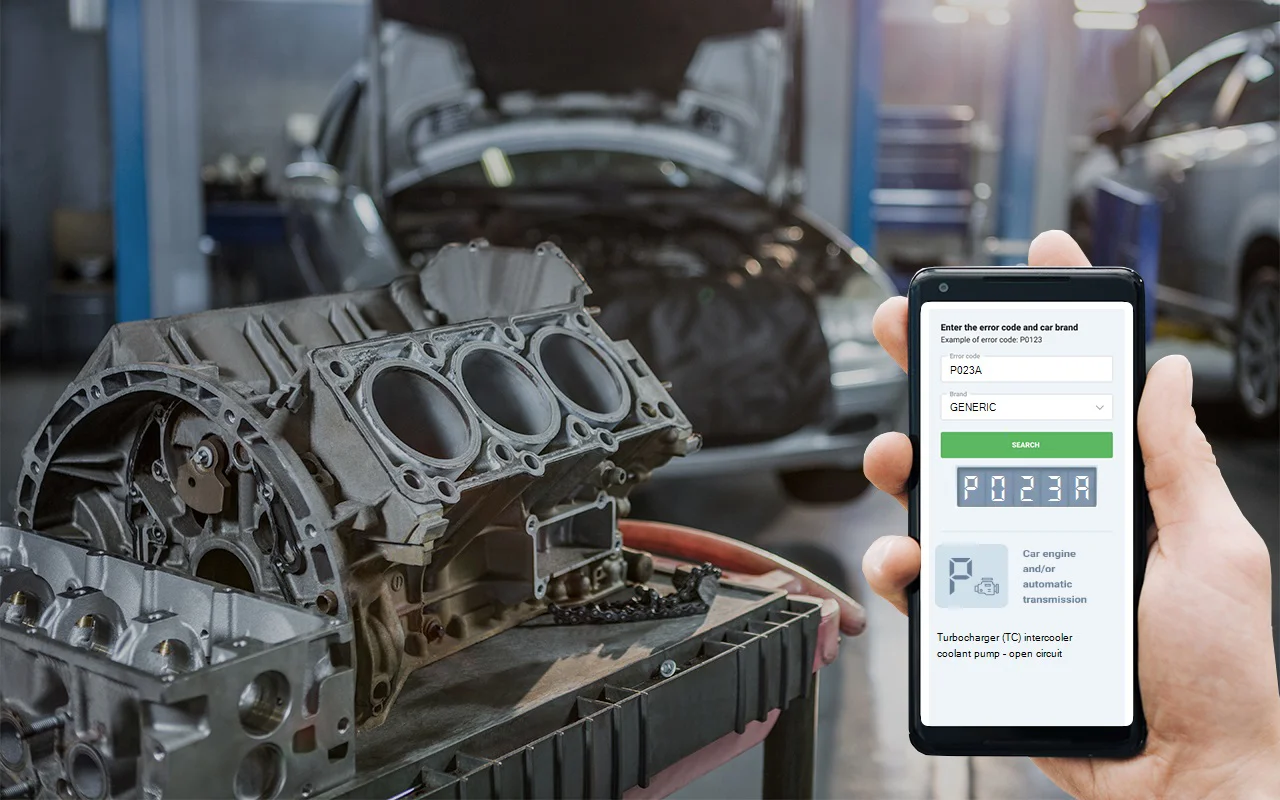
Causes and dtc P023A diagnosis
From what I see most often in the shop, the main culprits behind a P023A code are pretty straightforward. Here’s what tends to go wrong:
- Mechanical blockage inside the intercooler coolant pump (like debris or internal failure)
- Broken or damaged wiring in the pump’s control circuit
- Corroded or loose electrical connectors, especially at the pump or ECM
- Completely open circuit-meaning a wire has snapped or come loose somewhere
- Less commonly, a fault in the engine control module (ECM) itself
In my experience, it’s usually either a wiring issue or a pump that’s seized up. But I’ve also seen cases where a connector just wasn’t clicked in all the way, so don’t overlook the simple stuff.
Symptoms of P023A trouble code
If your car’s throwing a P023A code, here’s what you’re likely to notice behind the wheel:
- The check engine light (or malfunction indicator lamp) will be on
- You might feel the engine running rough, especially under boost
- Fuel economy could take a hit
- Engine temperatures might seem a bit off or fluctuate more than usual
Sometimes, the only sign is that warning light. But if you ignore it, you could start to notice the car just doesn’t have the pep it used to, or it gets hotter than normal after some spirited driving.

Diagnosis steps for P023A engine code
Here’s how I tackle a P023A code step by step, and you can do some of these checks yourself if you’re comfortable:
- First, I always check for any technical service bulletins (TSBs) for your specific make and model-sometimes there’s a known fix that saves a ton of time.
- Next, I locate the intercooler (usually up front, near the radiator or tucked behind the bumper) and trace the coolant lines to find the intercooler coolant pump. It can be a bit hidden, so patience helps.
- Before touching anything, let the engine cool down completely-hot coolant is no joke.
- Then, I inspect the wiring and connectors around the pump for any signs of melting, corrosion, or damage. Don’t forget to check for loose or unplugged connectors.
- I check the coolant level and condition-if it’s low or dirty, that can point to a leak or other issue. Always use the right type of coolant for your car.
- With a multimeter, I test the continuity of the pump’s control circuit. This means making sure electricity can flow from the ECM to the pump without interruption. If you’re handy, you can disconnect both ends and check for resistance in the wiring.
- If the wiring checks out, I’ll bench test the pump itself. With a 12-volt power source and a good ground, I see if the pump runs when powered directly. If it doesn’t, the pump’s likely bad. If it does, the problem might be upstream.
- As a last resort, I’ll check the ECM, but only after ruling out everything else. ECM failures are rare, but not impossible.
It’s best to have someone assist you, especially when checking electrical circuits or handling coolant. And always disconnect the battery before doing any electrical work.
Common mistakes with obd code P023A troubleshooting
One thing I see a lot is folks jumping straight to replacing the pump without checking the wiring or connectors first. That’s a surefire way to waste money. Another common slip is not letting the engine cool before poking around-burns are no joke. I’ve also seen people forget to check for TSBs, which sometimes point to a simple fix. Skipping the basics, like checking coolant level and connector fitment, can lead you down the wrong path fast.

Seriousness of P023A issues
While P023A isn’t usually an immediate safety hazard, it’s not something you want to ignore. If the intercooler coolant pump isn’t working, your intake air temps can climb, which hurts performance and fuel economy. Over time, running with this issue can cause the engine to run hotter than it should, and that can lead to more serious problems like detonation, pre-ignition, or even internal engine damage if left unchecked. Things can go south quickly if you keep pushing the car hard with this code active. Parts at risk include the intercooler pump itself, wiring harnesses, and in the worst case, engine internals due to overheating or poor air-fuel mixture.
Repair options for P023A code resolution
Here’s what usually fixes a P023A code, based on what I see in the field and in OEM repair guides:
- Repair or replace any damaged wiring or connectors in the pump control circuit
- Replace the intercooler coolant pump if it’s seized or failed
- Clean or replace corroded connectors
- Top off or flush the coolant if it’s low or contaminated
- In rare cases, repair or replace the ECM if all else checks out
Always follow the service manual for your specific car, and double-check the type of coolant before refilling. If you’re not sure, it’s best to have a professional handle the electrical and coolant work.

Conclusion
To sum it up, P023A means your intercooler coolant pump’s control circuit isn’t working right-most often due to wiring or pump issues. It’s not an emergency, but don’t put this off for later, because ignoring it can lead to bigger headaches down the road. Start with the simple checks: wiring, connectors, and coolant level. If those are good, move on to testing the pump itself. In my experience, taking a methodical approach is the most reliable way to get your car back to peak performance and avoid unnecessary repairs.
 3958
3958 6 minutes of reading