
Common Causes of P023D Code
From my time in the garage, I can tell you there are a handful of usual suspects behind a P023D code. Here’s what I run into the most:
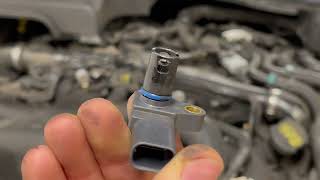
- The MAP sensor or boost pressure sensor 'A' goes bad-sometimes they start sending out-of-whack signals or just quit altogether.
- Wiring or connector issues-broken, corroded, or loose connections are classic troublemakers, especially if someone recently worked near the intake.
- Engine-related problems, like not making enough vacuum-this sometimes points to deeper internal issues.
- An intercooler that’s clogged up or airflow getting blocked somewhere-restricted air messes up the readings fast.
- PCM glitches-software bugs or, on rare occasions, a failed PCM itself.
I can’t tell you how many times I’ve tracked this down to a simple wiring problem or a tired sensor, but don’t rule out the bigger stuff. I’ve seen every item on this list cause headaches with P023D.
Symptoms Indicating a P023D Trouble Code
When P023D shows up, your car’s not going to feel right-trust me, you’ll notice. Here’s what I usually hear from drivers:
- Power loss-your car feels like it’s dragging an anchor when you hit the gas.
- Terrible fuel mileage-you’ll find yourself at the pump more often, burning through cash and gas.
- Engine stumbling, rough idling, or hesitation-especially when you start it up cold.
- The check engine light comes on-think of it as your car waving a big flag for help.
If these sound familiar, don’t wait around. Get your car looked at before a small issue turns into a big repair bill.

How to Diagnose an OBD Code P023D
I’ve walked through diagnosing this code plenty of times, and here’s the step-by-step process I use in the shop:
- Start with a good visual check. Pop the hood and inspect all wiring and connectors for the MAP and boost sensor 'A'-look for anything that’s loose, unplugged, or corroded. After an air filter change or intake work, it’s easy to miss a plug.
- Next, hook up a scan tool and pull every stored code and freeze frame. The details here help you see exactly when things went sideways.
- Clear the codes and take the car for a spin-does the code come back right away? If so, time to dig deeper.
- With the key off, grab a digital voltmeter and check resistance on both sensors. Compare your readings to the specs in the service manual-if one’s way off, you’ve found your culprit.
- If the sensors pass, check for a good 5-volt reference and solid ground. If you’re missing power or ground, trace the wiring to find the break.
- With the engine running, measure the sensor outputs. The voltages should match what you’d expect for the current boost or vacuum. If not, swap out the faulty sensor.
- If the sensor signal looks good at the sensor but not at the PCM, you’ve got a wiring problem between the two.
- If everything checks out and you’re still stuck, it might be a PCM issue or software problem. At this stage, I always check for factory TSBs before calling the PCM bad.
Pro tip: grab a buddy to help with the test drive and readings, especially if you’re new to using a voltmeter. It’ll save you a lot of hassle.
Avoiding Common Mistakes with DTC P023D
There are a few classic mistakes I see folks run into with P023D:
- Missing a simple loose connector after working on the air filter or intake. Happens more than you’d think.
- Swapping out sensors before checking the wiring-always check those connectors first. Broken wires or corrosion are sneaky.
- Ignoring the intercooler or forgetting to look for vacuum leaks. Airflow issues will throw your sensors out of whack every time.
- Jumping to blame the PCM before ruling out the basics. In all my years, PCM failures are rare compared to wiring or sensor issues.
Take your time and work through the checklist-don’t just throw parts at it. You’ll save yourself frustration and money.

How Serious Is an OBD2 Code P023D
If you’re wondering whether you can just keep driving with this code-don’t. I’ve seen guys ignore P023D and end up with turbo damage, cooked catalytic converters, even serious engine problems. When your sensors send mixed signals, your engine can run lean or rich, and that’s a recipe for disaster. This isn’t just a nuisance; it’s a warning that something’s off in a vital system. Put simply, deal with it right away or you’ll risk some very expensive repairs.
Repair Solutions for P023D
Based on what I see in the bay and what the manuals recommend, here’s what usually gets P023D sorted:
- Fix or replace any busted wiring or connectors going to the MAP or boost sensor 'A'.
- If a sensor’s readings are out of spec, swap it with a known good one.
- If you find a clogged intercooler or airflow restriction, get that cleaned out or replaced.
- Tackle any engine issues that mess with vacuum or boost-don’t overlook leaks or cracked hoses.
- And if you’ve ruled out everything else, look into updating or replacing the PCM, but only after you’re 100% sure.
One last thing-after any work under the hood, always double-check every connector. I can’t tell you how many “mystery” codes came from a plug that wasn’t seated all the way.


Conclusion
Bottom line, P023D means your engine’s computer is catching pressure readings that just don’t add up. Don’t ignore it-get it sorted before it turns into a bigger headache. Most of the time it’s something simple like a bad sensor or wiring issue. Start with the basics: check your wiring, connectors, and sensors before chasing the rare stuff. Trust me, jumping on this early will save your engine and your wallet.
 5108
 6 minutes of reading