When you see the P023F code pop up, your car’s computer-what we call the PCM-is basically waving a red flag about a fuel pump issue. Specifically, there’s an open or fault in the secondary circuit that’s got the PCM worried. Over the years, I’ve seen this come down to the PCM not liking what it sees in the voltage or current for the fuel pump or its relay. Remember, the fuel pump’s entire job is to shuttle fuel from the tank up to the engine, making sure the injectors get just the right amount at the right pressure. If that system breaks down, you might end up with a weak engine, no start, or even sudden stalling. The relay, which tells the pump when to get to work, is often part of the equation too. So, if the PCM can’t see the right signals in this circuit, it sets the P023F code and lets you know there’s a breakdown somewhere in the delivery system. Bottom line: this code is all about making sure your engine gets the fuel it needs. If it’s triggered, something’s not right, and it’s time to dig in.
DTC P023F
 5296
5296 5 minutes of reading
Causes of dtc P023F
From experience, the most common reasons I see for a P023F code are pretty straightforward, but it’s important to check each one carefully. Here’s what usually causes this code:
- A failed fuel pump (it just stops working or can’t deliver enough pressure)
- A faulty fuel pump relay (the switch that sends power to the pump isn’t working right)
- Bad wiring or poor connections in the fuel pump circuit (wires can corrode, break, or come loose)
- Problems with the wiring to the fuel pump relay
- In rare cases, an issue with the PCM itself, or sometimes the PCM needs a software update
Most often the issue is with the pump or relay, but I always recommend checking the wiring before jumping to replace parts.
Symptoms associated with P023F
When this code pops up, there are a few things you might notice right away. The most obvious is the check engine light coming on. You might also feel the engine running weaker than usual-like it’s lost some power or just doesn’t want to go. In some cases, the engine won’t start at all, no matter how much you try. If you’re seeing any of these, especially if the car won’t start, it’s a good bet the P023F code is involved.

Diagnosis steps for P023F trouble code
Here’s how I usually tackle a P023F code, step by step. I always start simple and work my way up:
- First, I check the basics-make sure there’s fuel in the tank. It sounds obvious, but you’d be surprised!
- Next, I listen for the fuel pump when the key is turned to ‘on’. You should hear a faint whirring sound from the back of the car for a second or two. If it’s silent, that’s a clue.
- Then, I check the fuel pump fuse and relay. Pull the relay and look for signs of burning or corrosion. Swapping in a known-good relay is a quick test.
- After that, I inspect the wiring and connectors at the fuel pump and relay. Look for loose plugs, broken wires, or anything that looks out of place. Sometimes it helps to have someone wiggle the harness while you watch for changes.
- If everything looks good so far, I’ll use a test light or multimeter to check for power and ground at the fuel pump connector while cranking the engine. No power? The issue is upstream-maybe the relay, wiring, or PCM.
- If the pump gets power but doesn’t run, it’s likely the pump itself is bad.
- Finally, if all else fails, I’ll check for PCM updates or faults, but that’s pretty rare.
It’s best to have someone assist you, especially when checking for power at the pump, and always be careful around fuel and electricity.
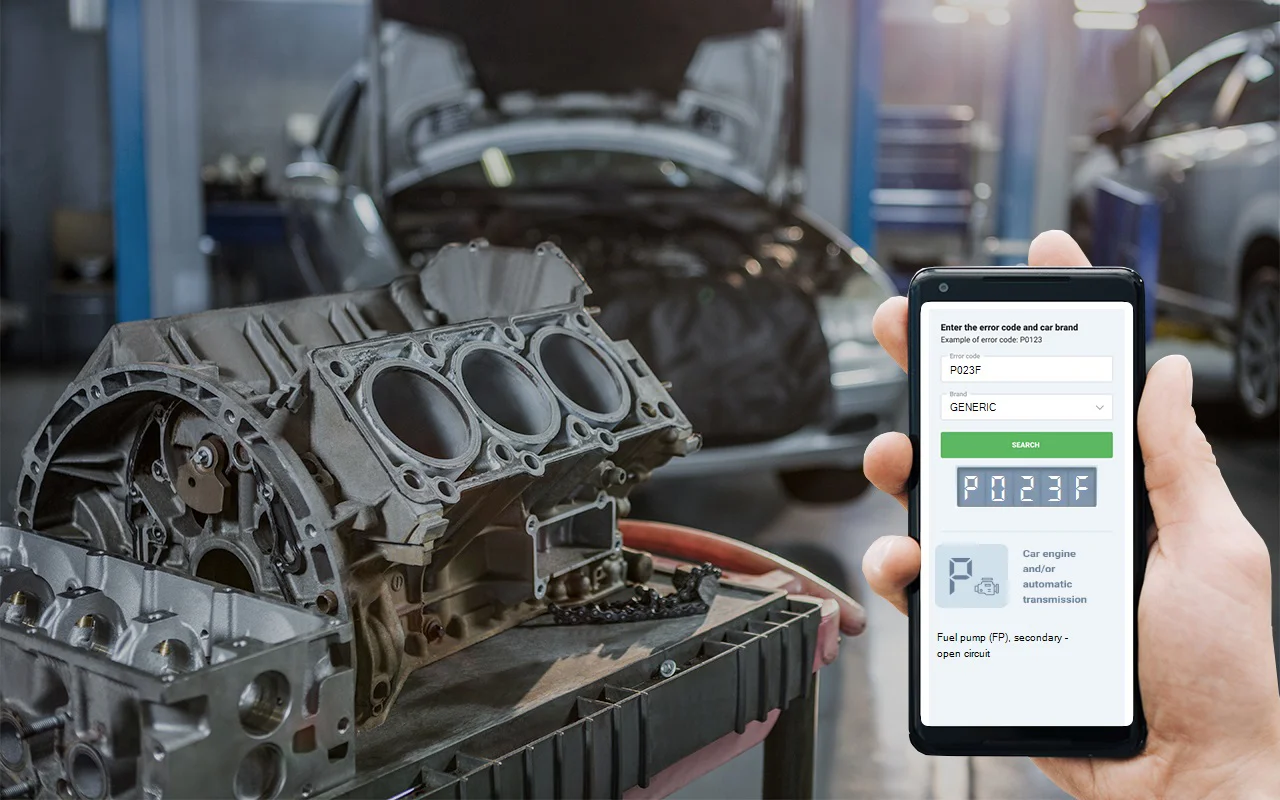
Common Mistakes when repairing P023F engine code
I’ve seen folks jump straight to replacing the fuel pump without checking the relay or wiring first. That’s a surefire way to waste time and money. Another common mistake is overlooking corroded connectors or broken wires, especially near the fuel tank where moisture can get in. Don’t forget to check the basics-sometimes it’s just a blown fuse or a loose plug. Skipping these steps can lead to unnecessary repairs and frustration.

Seriousness of P023F code
This is not something to ignore. If your fuel pump isn’t working right, your engine might not start, or worse, it could stall while you’re driving. That’s a serious hazard-you don’t want this kind of trouble on the road. Running the engine with low fuel pressure can also damage other parts, like the fuel injectors or even the catalytic converter if the engine runs lean. Things can go south quickly if overlooked, so don’t put this off for later.
Repair steps for obd code P023F
In cases like this, the fix usually comes down to one of a few things:
- Replacing a failed fuel pump
- Swapping out a faulty fuel pump relay
- Repairing or replacing damaged wiring or connectors in the fuel pump circuit
- In rare cases, updating or replacing the PCM if it’s at fault
Here’s what I usually do: start with the relay and wiring, since those are easier and cheaper to fix. If those check out, then it’s time to look at the fuel pump itself.
Conclusion
To sum it up, the P023F code means your vehicle’s computer has found a problem with the fuel pump circuit, and that can lead to poor performance or a no-start situation. This is a high-priority issue because it affects your ability to drive safely and can cause further damage if ignored. The most reliable way to resolve it is to start with the basics-check the relay, wiring, and connectors-then move on to the fuel pump if needed. Don’t delay getting this checked out, as the risks just aren’t worth it.