
Causes of dtc P02A3 in Your Vehicle
From what I see most often in the shop, the usual suspects for a P02A3 code are:
- A faulty fuel injector for cylinder 3 - it might be stuck open or leaking, dumping too much fuel in.
- A bad fuel pressure regulator - if this fails, it can let the whole system run too rich.
- A malfunctioning oxygen sensor - if it sends the wrong info, the computer can get confused and add too much fuel.
- Problems with the MAF or MAP sensor - if these aren’t reading right, the PCM can miscalculate the air/fuel mix.
In my experience, injector issues and bad sensors are the most common, but it’s important to check them all before replacing anything.
Symptoms of obd2 code P02A3 You Should Watch For
If you’ve got a P02A3 code, here’s what you’ll probably notice while driving:
- The engine might feel sluggish or less powerful than usual.
- You’ll likely see your fuel mileage drop - you’re burning more gas than you should be.
- It might take longer to start, especially when the engine’s warm.
- You could also see the check engine light come on, and sometimes you’ll get other codes related to rich exhaust or even misfires.
Sometimes, you might even smell raw fuel from the exhaust. If you notice any of these, don’t ignore them - they’re signs something’s off.

Diagnosis Steps for P02A3 engine code
Here’s how I’d go about tracking down the problem, step by step:
- First, I always check for any other codes, especially ones related to the MAF or MAP sensors. If those are present, I tackle them first - they can cause rich running all by themselves.
- Next, I do a visual inspection around the fuel rail and the pressure regulator. I look for any signs of leaks or fuel smell. If the regulator is leaking fuel inside or outside, it’s likely the culprit.
- If nothing obvious jumps out, I hook up a scan tool and pull all the stored codes and freeze frame data. Then I clear the codes and take the car for a test drive to see if the code comes back.
- While the engine’s running, I watch the live data from the oxygen sensors to see if the exhaust really is running rich.
- If it is, I use a fuel pressure gauge to check the fuel pressure against the manufacturer’s specs. If it’s too high, I check the regulator and its vacuum source (if it has one). If the regulator’s bad, I replace it.
- If the fuel pressure is normal, I move on to checking the injector for cylinder 3. I use a multimeter to check for proper voltage and ground pulse at the injector connector. If the injector isn’t clicking or is stuck open, it needs to be replaced.
- If everything checks out electrically, but the problem’s still there, I check the PCM’s injector control. If there’s no ground pulse at the PCM, or it’s always grounded, there could be a PCM issue - but that’s rare.
It’s best to take your time and check each step, so you don’t miss anything. And always be careful when working around the fuel system - safety first.
Common Mistakes When Addressing P02A3 code
I’ve seen a few common slip-ups with this code. Folks sometimes jump straight to replacing the oxygen sensor without checking the fuel injector or pressure regulator first. Another big one is overlooking vacuum leaks or not checking the wiring and connectors for the injector. Skipping the fuel pressure test is another mistake - it’s a simple check that can save a lot of time. My advice: don’t just throw parts at the problem. Follow the steps and rule things out one by one.

How Serious Is the P02A3 Problem
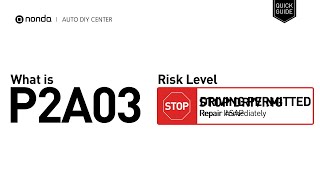
This is one of those codes you really don’t want to ignore. Running too rich can cause all sorts of trouble - from poor engine performance and wasted fuel to serious damage like a ruined catalytic converter. If too much raw fuel gets into the exhaust, it can overheat and destroy the cat, which is a pricey fix. In the worst cases, you could even end up with engine damage or a fire risk. Honestly, it’s dangerous to let this slide - things can go south quickly if overlooked.
Repair Solutions for obd code P02A3 Issues
Here’s what usually fixes a P02A3 code, based on what I’ve seen and what the manuals say:
- Replacing a faulty or leaking fuel injector for cylinder 3.
- Swapping out a bad fuel pressure regulator.
- Fixing or replacing a malfunctioning oxygen sensor.
- Repairing or replacing a faulty MAF or MAP sensor.
- Repairing wiring or connector issues for the injector or sensors.
- In rare cases, reprogramming or replacing the PCM if it’s not controlling the injector properly.
It’s best to fix the root cause, not just clear the code. That way, you avoid repeat problems and bigger repairs down the road.



Conclusion
To sum it up, the P02A3 code means your engine’s number 3 cylinder is running way too rich, and that’s a serious issue. It can hurt performance, waste fuel, and even damage expensive parts like the catalytic converter. I recommend diagnosing this as soon as possible, starting with the basics - check for other codes, inspect the fuel system, and test the sensors. Most of the time, it’s a bad injector or a sensor issue, and fixing those will get you back on the road safely. Don’t put this off - the risks just aren’t worth it.
 5570
 6 minutes of reading