
Common Causes of the P032D Code
From experience, I can tell you that P032D is most often caused by issues with the knock sensor circuit itself. Here’s what I usually find at the root of this code:
- Damaged or corroded knock sensor connector
- Open or short to ground in the knock sensor wiring
- Short to voltage in the knock sensor circuit
- Failed knock sensor
- Moisture or coolant contamination at the sensor or connector
- Using the wrong octane fuel (too low for your engine)
- In rare cases, a faulty PCM (engine computer)
It’s usually something simple like a bad connection or a sensor that’s seen better days, but I’ve also seen fuel issues and even wiring harness problems cause this code.
Typical Symptoms of OBD Code P032D
When P032D is active, you’ll probably notice a few things. The most obvious is the check engine light coming on. You might also hear a knocking or pinging noise from the engine, especially when you accelerate. Sometimes, the engine might feel a bit rough or sluggish, and you could notice a drop in performance. If the knock is bad enough, it can even sound like a metallic rattle from under the hood. In some cases, you might not notice anything except the warning light, but don’t let that fool you-this code means your engine isn’t happy.

How to Diagnose a P032D Trouble Code
Let me walk you through how I’d tackle P032D when a car rolls into my bay. Always start simple: pop the hood and check the knock sensor connector. Look for green corrosion, bent pins, or any sign that water or coolant’s gotten in there. You’d be surprised how often a little moisture causes big headaches. Next step? Trace the wiring from the sensor all the way back to the PCM. Look for spots where it’s pinched, frayed, or rubbing on something sharp-wiring harnesses love to hide their problems in plain sight. Before you go any further, make sure you’re running the right grade of fuel. Low-octane gas can definitely set this code off. Still nothing obvious? Unplug the knock sensor and with the ignition on (engine off), check for 5 volts at the connector. If you don’t see that voltage, follow the wire back to the PCM and check there. Missing voltage at the PCM could mean the computer itself is shot, but if you’ve got power at the PCM and not at the sensor, you’ve got a wiring issue to chase down. I also use an ohmmeter to check the sensor’s resistance-if it’s not within spec for your engine, it’s time for a new one. Here’s a pro-tip: hook up a scan tool and watch the knock sensor data with the engine running. If it’s not picking up any knock when you tap the engine block (gently, of course), the sensor is probably toast. Don’t hesitate to get a second set of eyes or hands if this is your first time digging into sensor diagnostics-it’s always easier with backup.
Avoiding Common Mistakes with DTC P032D
A classic mistake I see in the shop? Folks jump right to swapping out the knock sensor without even glancing at the wiring or connector. That’s a quick way to waste time and money, especially if the real culprit is a corroded pin or a split wire. Another one I’ve run into: ignoring the gas. Running bargain-bin, low-octane fuel is almost guaranteed to cause this headache. Don’t overlook coolant leaks either-if coolant gets into the sensor’s connector, it can throw all the readings out of whack. Make sure everything’s dry and clean before you start throwing parts at the problem. Skipping these basics usually means you’ll be back in the garage fixing the same issue again.

How Serious is OBD2 Code P032D
Trust me, you don’t want to brush this code off. Leaving P032D unresolved is asking for trouble-real, wallet-emptying trouble. Knock and pre-ignition can beat up pistons, hammer valves, trash spark plugs, and even take out your catalytic converter if things get out of hand. I’ve seen engines with holes melted right through the pistons because someone ignored a knock code. The damage can snowball fast, so don’t let this one sit on the back burner. Get it checked and fixed before you end up with a much bigger mess under the hood.
Repair Solutions for the P032D Engine Code
Over the years, I’ve found a handful of fixes that usually get rid of P032D. Here’s what I recommend, based on what actually works in the shop:
- Repair or replace any damaged knock sensor wiring or connectors-always check these first
- Replace the knock sensor if it’s out of spec or not reacting to engine noise
- Clean and dry any signs of moisture or coolant at the sensor or connector-don’t skip this!
- Switch to the correct octane fuel if you’ve been running the cheap stuff
- Tackle any mechanical engine knock issues before you go replacing sensors or computers
- If you’ve ruled out everything else and the PCM’s still not cooperating, then-only then-think about replacing the computer
Start with the basics: wiring and connectors. Nine times out of ten, that’s where the issue hides. Don’t jump straight to the expensive repairs until you’ve worked through the simple stuff.

Conclusion
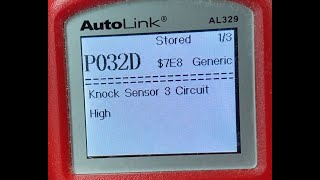
Bottom line? P032D is your engine’s way of waving a red flag-either it’s hearing knock when it shouldn’t, or the sensor’s sending out bad info. I’ve seen everything from worn-out sensors and broken wires to drivers using the wrong fuel cause this code. Don’t ignore it, because the risk of engine damage is all too real. The smart approach is to start with a careful look at the wiring and connectors, double-check your fuel, and only swap out the sensor or PCM if you’re certain that’s the problem. Take it from me: get on top of this code now, and you’ll save yourself a world of trouble down the road.
 5681
 6 minutes of reading