
Causes of P0385
From experience, I can tell you that most of the time, p0385 is caused by one of a few main culprits. Here’s what I usually find when I’m tracking down this code:
- A failed crankshaft position sensor (CKP sensor) - this is the most common issue by far.
- A damaged or misaligned reluctor ring - if this ring is bent, cracked, or has missing teeth, the sensor can’t read it properly.
- Faulty wiring or poor electrical connections - sometimes it’s just a broken wire or a corroded connector causing the trouble.
- A faulty powertrain control module (PCM) - this is rare, but if the computer itself is malfunctioning, it can trigger this code.
It’s best to start with the simple stuff before assuming it’s something major.
Symptoms of obd code P0385
If you’ve got a code related to p0385, here’s what you’re likely to notice behind the wheel:
- The check engine light will almost always be on.
- You might feel the engine running rough, like it’s misfiring or shaking more than usual.
- Sometimes the engine will stall out, especially when you’re idling or coming to a stop.
- In some cases, the engine might not start at all, leaving you stranded.
- Overall, you’ll probably notice a drop in engine performance-less power, sluggish acceleration, or hesitation.
These symptoms can show up suddenly or get worse over time, but either way, they’re not something you want to ignore.

Diagnosis process for P0385 engine code
Here’s how I personally go about diagnosing a p0385 engine code, step by step:
- First, I always start with a visual inspection. Pop the hood and check the wiring and connectors going to the crankshaft position sensor. Look for anything obvious-broken wires, loose plugs, corrosion, or signs of damage.
- Next, I check the sensor itself. If you’re comfortable with tools, you can unplug the sensor and look for dirt, oil, or metal shavings on the tip. Sometimes cleaning it off can help, but if it’s damaged, it’ll need to be replaced.
- Then, I inspect the reluctor ring. This can be tricky because it’s usually tucked away, but if you can see it, look for cracks, missing teeth, or anything that looks out of place.
- After that, I use a scan tool to check for any other related codes and to see if the sensor is sending a signal while cranking the engine. No signal usually means the sensor is bad or there’s a wiring issue.
- If all that checks out, I’ll test the wiring for continuity and check for proper voltage at the sensor connector. A wiring diagram helps here, but basically, you want to make sure power is getting to the sensor and the signal wire isn’t broken.
- Only after all these checks would I consider the PCM as the culprit, and that’s pretty rare.
It’s always a good idea to have someone help you crank the engine while you check the sensor signal, and don’t forget to disconnect the battery before unplugging any sensors.
Common Mistakes when fixing obd2 code P0385
I’ve seen a few common mistakes when folks try to tackle obd2 code p0385 themselves:
- Jumping straight to replacing the sensor without checking the wiring or connector first. Sometimes it’s just a loose plug or a broken wire.
- Overlooking the reluctor ring. If it’s damaged, a new sensor won’t fix the problem.
- Not using a scan tool to confirm the sensor isn’t sending a signal. Guesswork can lead to wasted time and money.
- Ignoring the possibility of corrosion or water intrusion in the connectors, which can cause intermittent issues.
Take your time with the basics before spending money on parts you might not need.

Seriousness of P0385 code
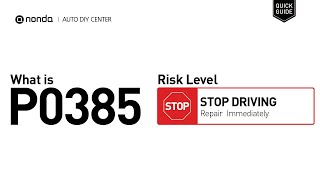
I can’t stress this enough-don’t brush off a P0385 code. Here’s why: If your crankshaft position sensor isn’t working right, your engine could stall with zero warning. Imagine that happening in the middle of traffic or as you’re merging onto the highway. Not good. I’ve seen cars get towed in because they just wouldn’t start, all because this code was ignored. On top of that, running your engine with a faulty signal can cause misfires, which over time will wreck your catalytic converter and possibly even harm your engine. Things can go from bad to worse in a hurry, so if you see this code, get on it fast.
Repair solutions for P0385 trouble code
Let me walk you through what usually solves a p0385 code, straight from the garage and official repair guides:
- Swapping out the crankshaft position sensor if it’s gone bad.
- Repairing or replacing any busted wiring or connectors leading to the sensor.
- Taking care of the reluctor ring-if it’s bent, cracked, or missing teeth, it’ll need to be fixed or replaced.
- On rare occasions, replacing or reprogramming the PCM if you’ve ruled everything else out.
After you’ve made the fix, always clear the code and take the car for a spin to make sure everything’s back in working order. Don’t skip that last step-it saves a lot of headaches.

Conclusion
Here’s the bottom line: P0385 means your engine’s computer isn’t getting the signal it needs from the crankshaft position sensor, and that’s a recipe for trouble. Ignore it, and you could end up stranded or facing bigger (and more expensive) problems down the road. My advice? Start with the obvious-check your wiring, connectors, and the sensor itself. Nine times out of ten, that’s where the issue lies. If you’re stuck or not sure, don’t hesitate to call in a pro. The quicker you tackle this, the better off you’ll be, and your car will thank you for it.

 3894
 6 minutes of reading