
Main Causes of P0387 Engine Code
From experience, the most common reasons I see for a P0387 code are pretty straightforward. Here’s what usually causes it:
- A faulty crankshaft position sensor (CKP) "B"-this is the sensor itself going bad.
- Broken, shorted, or damaged wiring going to the sensor-wires can get brittle, cut, or even soaked in oil or coolant, which really messes things up.
- Corroded or contaminated sensor connectors-sometimes connectors get gunked up with oil or moisture, leading to poor contact.
- Problems with the PCM (the engine computer) or its programming-rare, but it happens.
Most often, it’s the sensor or the wiring that’s to blame. I recommend starting your checks there before worrying about the computer.
Common Symptoms Linked to OBD2 Code P0387
When this code is active, you’ll usually notice some pretty obvious problems. Here’s what drivers typically experience:
- The engine won’t start at all-this is the big one. If the PCM can’t get a good signal from the crankshaft sensor, it won’t let the engine fire up.
- If the engine does start, it may run rough, hesitate when you try to accelerate, or even stall unexpectedly.
- The tachometer (if your car has one) might not move at all when you’re cranking the engine.
- You might also notice poor fuel economy or the check engine light staying on.
Honestly, if you’re seeing these symptoms, it’s best not to keep trying to drive the car until it’s fixed.

Step by Step Diagnosis for P0387 Code
Over the years, I’ve developed a routine for tracking down a P0387 code that hasn’t let me down yet. Here’s my go-to process:
- First thing I do is pop the hood and give the wiring and connectors around the crankshaft position sensor a good look. You’d be amazed how often a simple oil leak or a splash of coolant is the culprit, eating away at wires or corroding a connector. Spot any damaged or crusty connectors? That’s a clue.
- Next, I’ll grab a scan tool and pull all the stored codes, making a note of freeze frame data. If the problem’s intermittent, that info can be gold.
- Then, it’s time to break out the digital volt/ohm meter (DVOM). I’ll check for the 5-volt reference, ground, and signal wires at the sensor connector. Miss a voltage or a ground? You’ve zeroed in on the issue.
- If the wiring passes muster, I unplug the sensor and check its resistance compared to spec. If it’s out of range, swap it out.
- If the sensor looks good, I’ll go a step further with an oscilloscope (if I’ve got one handy). Watching the sensor’s signal pattern while cranking the engine can show me if there are any weird dropouts or spikes that might not show up on a simple multimeter.
- If the sensor’s sending a clean signal but the PCM isn’t seeing it, the break or short’s between the two-check those wires one by one.
- Now, on the off chance everything checks out and the code won’t go away, you might have a PCM issue. That's rare, but I have seen it once or twice.
A quick tip: Don’t go poking around with live circuits alone-always have a helper, and make sure your battery’s fully charged before you get deep into diagnostics.
Common Mistakes When Fixing OBD Code P0387
A classic mistake I see is folks rushing to swap out the crankshaft sensor without bothering to check the wiring or connectors first. Sometimes, it’s just a grimy or loose connector that’s to blame. Another thing people overlook? Leaks. Oil or coolant dripping onto the sensor area can cause repeat failures down the road if you don’t address the root cause. Skipping out on proper voltage and resistance checks can send you chasing your tail, too. Oh, and here’s a pro-tip from the garage: Always check for technical service bulletins (TSBs) for your specific vehicle. Sometimes, there’s a factory fix or an updated part that’ll save you a lot of headaches.

How Serious is P0387
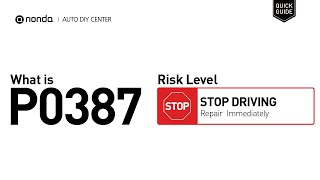
If you’re wondering whether this is something you can ignore, let me stop you right there. P0387 is a show-stopper. I’ve seen folks end up stranded when they try to limp along with this code. Even if the engine still runs, you’re flirting with misfires, lousy performance, and possibly even damage to your catalytic converter or other expensive parts. Things can snowball fast if you let it slide, so don’t gamble with your car or your wallet-get it sorted sooner rather than later.
Effective Repairs for P0387 Trouble Code
From what I’ve seen in the bays and straight from the manufacturer repair manuals, these are the repairs that actually fix P0387:
- Replace the crankshaft position sensor “B” if it flunks the resistance or signal test. Don’t guess-test it.
- Patch up or swap out any damaged, shorted, or oil-soaked wiring or connectors. And don’t forget to clean the area-leftover oil or coolant is just asking for trouble later.
- If you spot corrosion or moisture in the sensor connector, clear it out and make sure it clicks in snug.
- In rare cases, if every other test comes back clean but the code’s still there, you may need to reprogram or replace the PCM. That’s a last resort, though.
- Some vehicles have TSBs that recommend changing both the crankshaft and camshaft sensors together, especially if there’s a known issue. Always check your service info first.
After making any repairs, clear the code and take the car for a drive. If the code stays gone, you know you’re in the clear.


Conclusion
Bottom line? A P0387 code means your PCM isn’t getting the right signal from the secondary crankshaft sensor, and that’s not something to ignore. It can leave you stranded or worse, cost you a fortune in repairs if you keep driving. The best way to tackle it is by methodically inspecting the sensor, its wiring, and the connectors-don’t jump straight to blaming the computer unless you’ve ruled everything else out. Trust me, dealing with this early is the best thing you can do for your car and your peace of mind.

 5637
 6 minutes of reading