
Causes of obd code P0392
From what I see most often in the shop, there are a handful of usual suspects when it comes to P0392:
- The camshaft position sensor "B" on bank 2 itself has failed. This is probably the most common cause.
- The wiring harness to the sensor is damaged-sometimes it’s as simple as a broken wire, corrosion, or insulation that’s worn through.
- Poor electrical connections at the sensor plug, like bent pins or corrosion.
- A weak or failing starter can cause low voltage during cranking, which messes with the sensor signal.
- Bad wiring to the starter or a weak battery-if your battery can’t hold a charge, the sensor might not get enough power to send a strong signal.
In my experience, it’s usually the sensor itself or a wiring issue, but you can’t rule out the battery or starter without checking.
Symptoms associated with P0392 trouble code
Here’s what you’re likely to notice if your car has a P0392 code:
- The check engine light will come on-sometimes that’s the only clue at first.
- You might feel a lack of power, especially when accelerating.
- The engine could stumble, hesitate, or even stall out unexpectedly.
- Hard starting is another big one-sometimes the car just cranks and cranks before it finally fires up.
From what I’ve seen, these symptoms can range from mild to pretty severe, depending on how bad the sensor signal is.

Diagnosis steps for P0392 code
Here’s how I usually tackle a P0392 code, step by step:
- First, I always check for any Technical Service Bulletins (TSBs) related to this code-sometimes there’s a known issue with a simple fix.
- Next, I test the battery. A weak battery can cause all sorts of weird sensor problems. Make sure it’s fully charged and holding voltage.
- Then, I look over all the wiring going to the starter and the camshaft sensor. I’m looking for corrosion, loose connections, or any spots where the insulation is rubbed through. Don’t forget to check the sensor plug for bent pins or greenish corrosion-clean it up and use a little dielectric grease to keep moisture out.
- If the wiring checks out, I test the starter. If it’s drawing too much current or cranking slowly, it can cause low voltage to the sensors.
- Finally, if everything else looks good, I’ll swap out the camshaft position sensor "B" on bank 2. It’s usually mounted at the front or rear of the camshaft-sometimes you need to remove a cover to get to it.
It’s best to start with the simple stuff-battery and wiring-before replacing parts. Having someone help you crank the engine while you check voltages can make this a lot easier.
Common mistakes with obd2 code P0392
I’ve seen a few common slip-ups with this code:
- Jumping straight to replacing the sensor without checking the wiring or battery first-sometimes it’s just a loose connection.
- Overlooking corrosion or bent pins at the connector. Even a tiny bit of green corrosion can mess up the signal.
- Ignoring the starter and battery. If your battery is weak, you’ll chase your tail replacing sensors that aren’t actually bad.
- Not checking for TSBs-sometimes the manufacturer has already figured out a fix.
Take your time with the basics before spending money on new parts.

Seriousness of dtc P0392
This isn’t something you want to ignore. If the camshaft sensor signal is weak or missing, your engine can run rough, stall, or even fail to start. That’s a serious hazard, especially if it happens while you’re driving. Plus, running the engine with a bad sensor can cause misfires, which might damage your catalytic converter or other engine components over time. Things can go south quickly if you put this off, so I recommend getting it checked out as soon as possible.
Repair solutions for P0392
Here’s what usually fixes a P0392 code, based on what I see in the field:
- Replace the camshaft position sensor "B" on bank 2 if it’s faulty.
- Repair or replace any damaged wiring or connectors going to the sensor or starter.
- Clean and secure all electrical connections-use dielectric grease to prevent future corrosion.
- Replace the battery if it’s weak or failing.
- Repair or replace the starter if it’s drawing too much current or cranking slowly.
Always clear the code and test drive the car to make sure the issue is resolved.


Conclusion
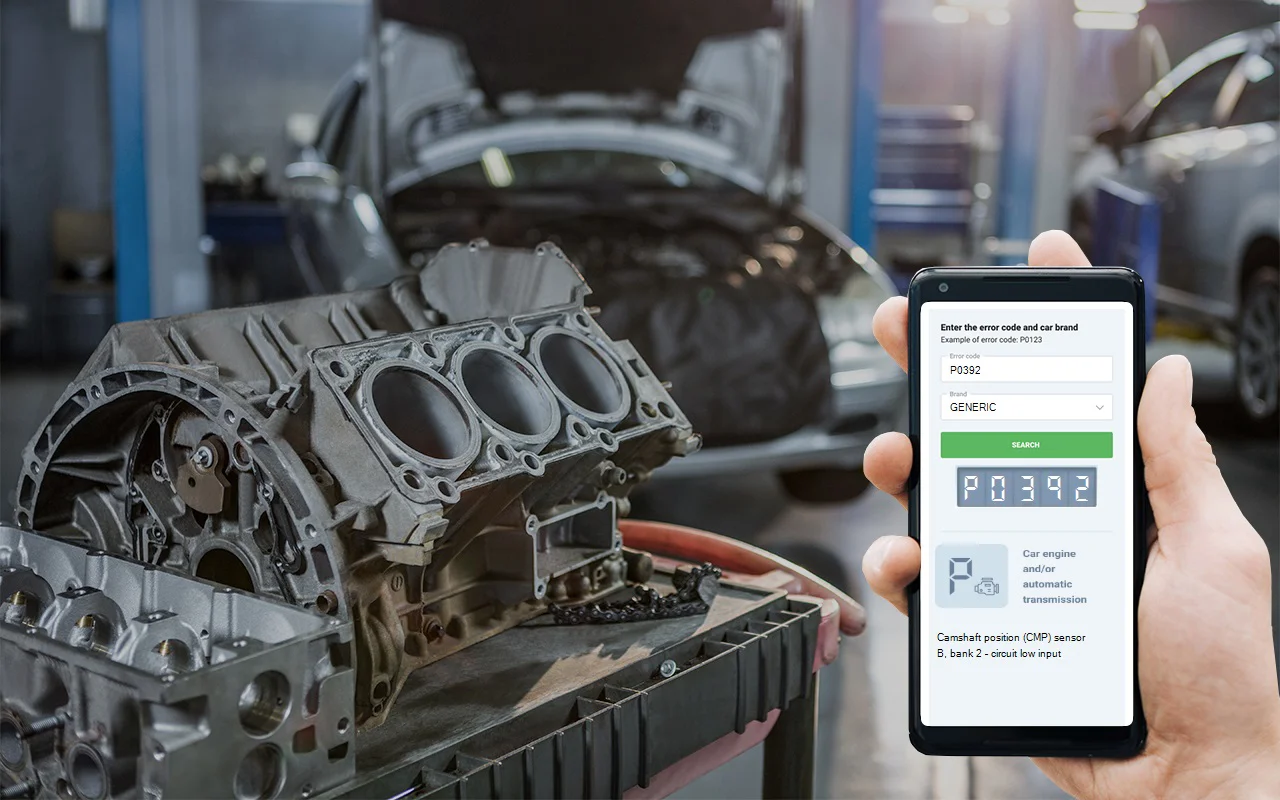
To sum it up, P0392 means your engine’s computer isn’t getting a strong enough signal from the camshaft position sensor "B" on bank 2. This can cause anything from a check engine light to hard starting or even stalling. It’s a moderate to high priority-don’t wait on this, because it can lead to bigger problems fast. Start with the simple checks: battery, wiring, and connections. If those are good, the sensor itself is probably the culprit. Fixing this promptly is the best way to keep your engine running safely and reliably.
 4602
 5 minutes of reading