
Causes of obd code P0408
From what I’ve seen in the shop and based on official repair data, the most common reasons for this fault are:
- The EGR position sensor signal wire is shorted to battery voltage or the 5-volt reference circuit.
- The ground wire for the EGR sensor is broken or disconnected.
- The signal wire for the EGR sensor is open (broken connection).
- The EGR valve itself is faulty-this could be an internal sensor or solenoid failure.
- Debris or carbon buildup is jamming the EGR valve open or closed.
In my experience, wiring issues and stuck valves are at the top of the list, but I always check for all these possibilities.
Symptoms of P0408 trouble code
When this code is active, you’ll probably notice a few things. The check engine light will definitely be on. You might feel the engine running rough, or it could even stall or hesitate, especially when idling or accelerating. Sometimes, you’ll notice the engine is harder to start, or it might start and then die right away. Another thing I’ve seen is increased exhaust emissions, and in some cases, you might even smell more exhaust or notice the engine running hotter than usual. But sometimes, especially if the valve is stuck closed, you might not notice much besides the warning light.

Diagnosis with obd2 code P0408
Here’s how I usually go about diagnosing this problem, step by step:
- First, I check for any other codes that might be stored-sometimes they give extra clues.
- Next, I inspect the wiring and connectors at the EGR valve and sensor. Look for broken wires, loose plugs, or corrosion. It’s best to have good lighting and maybe a helper to wiggle the harness while you watch.
- Then, I use a scan tool to look at the EGR position sensor readings with the engine running. If the voltage is stuck high (usually above 5 volts), that’s a big red flag for a shorted wire or bad sensor.
- If the readings are off, I unplug the EGR valve and see if the readings change. If not, I check the wiring for shorts to power or ground using a multimeter.
- I also remove the EGR valve to check for carbon buildup or debris. If it’s dirty, I clean it out and reinstall it.
- If the wiring checks out and the valve is clean, but the problem persists, I swap in a known-good EGR valve to see if that fixes it.
- For vacuum-operated EGR valves, I disconnect the vacuum line to see if the engine starts and runs better. If it does, the solenoid might be stuck open and need replacing.
Don’t forget to double-check the ground connections-bad grounds cause all sorts of headaches.
Common Mistakes when fixing P0408 code
One thing I see a lot is folks jumping straight to replacing the EGR valve without checking the wiring first. That’s a surefire way to waste money if the issue is just a broken wire or bad connection. Another common mistake is not cleaning out carbon buildup-sometimes a simple cleaning does the trick. Also, skipping the scan tool data check can lead you down the wrong path. Always verify the sensor readings before replacing parts.

Seriousness of dtc P0408
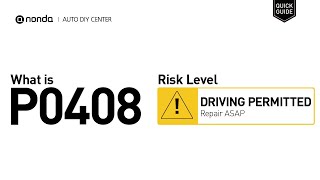
This isn’t something you want to ignore. A malfunctioning EGR system can cause your engine to run hotter than it should, which can lead to serious damage over time-think burnt valves, damaged pistons, or even a failed catalytic converter. Plus, your emissions will go up, and you could fail a state inspection. If the engine stalls or hesitates, that’s a safety risk, especially in traffic. Things can go south quickly if overlooked, so don’t put this off for later.
Repair options for P0408 engine code
Here’s what usually fixes this issue, based on verified repair cases:
- Repair or replace any damaged wiring or connectors at the EGR valve and sensor.
- Clean out the EGR valve if there’s carbon or debris inside.
- Replace the EGR valve if it’s internally faulty or the sensor is bad.
- For vacuum-operated systems, replace the EGR solenoid if it’s stuck open or not working properly.
- Make sure all ground connections are solid and corrosion-free.
After repairs, I always clear the code and test drive the vehicle to make sure everything’s working as it should.


Conclusion
To sum it up, code P0408 means your car’s EGR position sensor "B" circuit is reading too high, usually because of a wiring problem, a stuck or dirty valve, or a bad sensor. It’s important to diagnose and fix this promptly to avoid engine damage and safety issues. Start with a careful inspection of the wiring and connectors, clean or replace the EGR valve as needed, and always double-check your work with a scan tool. Acting quickly is the most reliable way to keep your engine running smoothly and safely.
 4792
4792 5 minutes of reading