
Causes of obd2 code P0415
From my years in the shop, P0415 almost always boils down to something awry in the switching valve’s wiring. Here’s what’s usually behind it when I pop the hood:
- A short to ground or power in the valve circuit wiring-maybe the harness got pinched or rubbed raw against a hot exhaust or a sharp bracket. That insulation wears thin fast in a hot engine bay.
- Broken wires or an open circuit-corrosion gets into connectors or a plug shakes loose after years of vibration.
- A failed solenoid inside the valve-a classic internal short or open, often from moisture creeping in.
- A blown fuse or a relay that’s given up the ghost-common after a failed air pump or water intrusion.
- Every so often, the PCM itself has an issue, like a fried driver circuit, but that’s the outlier.
If you’re chasing down P0415, always start with the wiring and connectors-they’re the weak link nine times out of ten.
Symptoms related to obd code P0415
Now, here’s the tricky part: most folks don’t feel a thing when this code sets. The car runs smooth, no rough idle, no stumble. But keep your eyes (and nose) open for these:
- The check engine light is your first (and maybe only) warning-it’ll stay on until you fix the root cause.
- If you’re due for an emissions test, odds are you’ll fail. Sometimes, you’ll catch a whiff of extra exhaust, especially on cold mornings.
- In rare cases, the engine might run rich just after a cold start-burning more fuel than normal, spiking emissions.
So, just because it drives fine doesn’t mean you can let it slide. Small issues add up over time, and this one can snowball fast if ignored.

Diagnosis steps for P0415 trouble code
Here’s my go-to game plan for tracking down P0415-step by step, just like I’d do in the bay:
- Start simple: check the fuse for the secondary air system. Then eyeball all visible wiring and connectors near the air pump and switching valve. Look for burnt, frayed, or loose stuff-don’t skip the basics.
- With a scan tool, try toggling the solenoid on and off (key on, engine off). If you don’t hear a click, it’s time to get the voltmeter and check for battery voltage at the solenoid connector when the PCM commands it. Don’t forget to check for a solid ground, too.
- If you’ve got power and ground but the solenoid stays silent, it’s a safe bet the solenoid’s toast. Time for a new one.
- No voltage at the connector? Trace the wiring back to the relay. Make sure the relay’s clicking and getting power. If not, look at the fuse or chase down a break in the wiring harness.
- If you’ve gone this far and it all looks good, yet the PCM isn’t sending the signal, check the PCM’s grounds and connectors for corrosion or water. If the PCM isn’t grounding the relay, you might have a computer issue-that’s rare, but I’ve seen it once or twice.
- Here’s a pro-tip: always check the air injection system’s one-way valve for exhaust blowback. If it’s leaking, hot gases can fry your solenoid or wiring in no time.
Grab a buddy for the relay and voltage checks-two sets of hands make it safer and a whole lot easier.
Common mistakes in fixing P0415 code
Let me tell you, I’ve seen plenty of folks throw money at this code without fixing the real problem. A classic mistake? Swapping out the air pump or solenoid right away, only to find it was just a crusty connector or busted wire. Another one: skipping the fuses and relays-they’re quick to check and often the culprit. And don’t overlook water intrusion in the connectors; a little moisture can wreak havoc on these circuits. Take a few extra minutes with your multimeter and flashlight. It’ll save you headaches and cash in the long run.

Seriousness of P0415
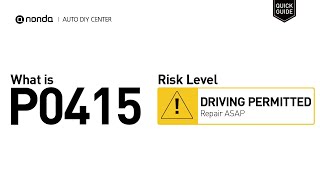
Here’s the bottom line-P0415 won’t leave you stranded right away, but you definitely shouldn’t ignore it. A busted air injection system means you’re pumping extra pollutants out the tailpipe, and you’ll flunk your next emissions test for sure. What’s worse, running rich for too long can cook your catalytic converter, and that’s one of the priciest repairs out there. If exhaust gases start backing up into the system, things can get ugly in a hurry. Take it from me: fix it now before a small repair turns into a big bill.
Repair solutions for dtc P0415
Once I’ve nailed down the cause, here’s my repair checklist for P0415:
- Patch up or swap out any damaged wires or connectors in the switching valve circuit. Don’t just slap on electrical tape-do it right with proper splices or replacements.
- Pop in new fuses or relays if the old ones are shot. Always check why they blew in the first place, though-don’t just replace and forget.
- If the solenoid’s dead, replace it. Stick with quality parts-cheap ones can fail just as fast.
- Very rarely, if the PCM is at fault and all else checks out, you might have to replace or reflash the PCM. But that’s the last resort.
- After you’ve made the fix, clear the code and run a few cold starts. Watch to see if the code comes back. No news is good news.
And don’t forget-always check the check valve for leaks. If it’s letting exhaust back through, you’ll be chasing this problem again before you know it.

Conclusion
To wrap things up, P0415 means your secondary air injection switching valve circuit is having electrical issues. It probably won’t mess with your daily drive, but it’s a real concern for emissions and your wallet down the road. My advice? Start simple-check fuses, wiring, and connectors before you start buying new parts. Most of the time, it’s just an electrical gremlin, but don’t rule out the solenoid or relay. Knock this out early and you’ll save yourself a lot of hassle and expense in the future.

 4997
4997 6 minutes of reading