
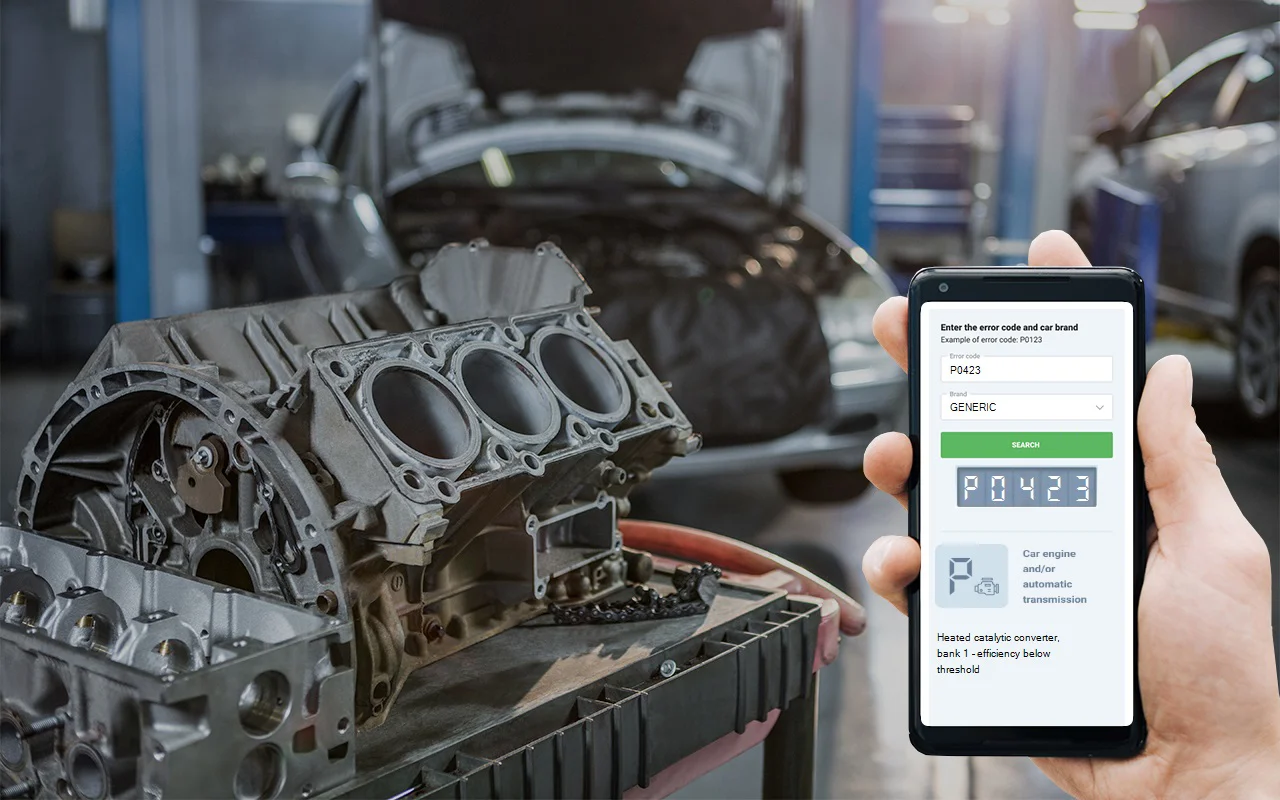
Causes and P0423 engine code
From my time under the hood, I’ve found that a p0423 code can come from a handful of usual suspects. Here’s what tends to be behind it in most cases:
- A worn-out or failing catalytic converter-this one’s especially common once your car racks up some miles
- Misfires or ignition problems letting raw fuel get into the exhaust (nothing ruins a cat faster than that)
- Bad oxygen sensors-either before or after the converter can set you up for this code
- Issues with the mass air flow (MAF) sensor or the manifold air pressure (MAP) sensor
- Wiring nightmares-burnt, broken, or loose wires and connectors on the sensor circuits
- Exhaust leaks ahead of the converter-sometimes just a tiny crack can throw everything off
Let me tell you, more often than not, it’s a sensor or wiring issue rather than the converter itself. I always recommend checking the small stuff before you ever consider shelling out for a new cat.
Symptoms and obd2 code P0423
If you’re dealing with this code, odds are you’ll spot a few warning signs. The check engine light is usually your first hello from the system. You might also notice:
- Worse mileage at the pump-don’t be surprised if your fuel efficiency drops
- Sluggish performance or a general lack of zip when you hit the gas
- Other codes showing up, often related to misfires or sensor problems
Every now and then, your car might feel totally normal-but don’t let that fool you. Ignoring this can snowball into bigger headaches. I’ve seen it turn up on brands like Ford and Renault, so no one’s immune.

Diagnosis and P0423 code
When I’m faced with a P0423, here’s my playbook. Start with the basics and don’t rush:
- First thing I do is check for any other codes-especially misfires or sensor faults. You’ve got to chase those down first or the rest is a waste of time.
- Next, I take a good look at the wiring and connectors for the oxygen sensors and anything else nearby. Melted wires or loose plugs are more common than you’d think, especially close to a hot exhaust.
- Once that’s done, I hook up my scan tool, pull all the codes and freeze-frame data, and make a few notes-sometimes the issue only shows up under certain conditions.
- After clearing the codes, I’ll take the car for a spin to see if P0423 comes back right away. If it does, you know the problem’s still lurking.
- With the motor warmed up, I keep an eye on live sensor data. Your upstream O2 sensor should bounce all over, but the one downstream of the cat should be much steadier. If both graphs look too similar, that’s a big red flag for converter trouble.
- If sensor readings seem fishy, I break out the digital voltmeter and check resistance and wiring-always unplugging connectors first to keep from frying anything.
- If everything else checks out, then, and only then, do I start eyeing the catalytic converter as the culprit. It’s a spendy part, so double- and triple-check the easy stuff first.
Trust me, having a second set of hands to watch the scan tool while you’re working can make life a lot easier. And don’t even think about making a call until the engine’s up to full temp.
Common Mistakes and P0423
A classic mistake I see all the time? Folks jump straight to swapping out the catalytic converter without checking the O2 sensors or wiring. In reality, a flaky sensor or a nicked wire is way more likely. Another pitfall is ignoring companion codes-things like misfires or air/fuel sensor problems that can wreck your converter in the first place. Skipping the visual once-over or not letting things heat up properly during tests will just send you chasing your tail. My advice? Take it slow and rule out the basics before you drop serious cash on big-ticket parts.

Seriousness and dtc P0423
Don’t brush this one off. A P0423 code means your emissions system is slacking, and that can set off a domino effect of bigger engine issues if you let it ride. If your catalytic converter gets damaged, it can overheat, melt from the inside, and clog your exhaust. That’ll rob your engine of power-or worse, leave you stranded. Keeping a misfire or bad sensor in the mix can also trash the cat, the sensors, and eventually hurt the engine itself. Bottom line: get on top of this sooner rather than later. It’s not worth the risk.
Repair and obd code P0423
Here’s what’s worked for me, time and again, when it comes to clearing a P0423:
- Swapping out a dodgy oxygen sensor-nine times out of ten, this is the fix
- Repairing or replacing any gnarly wiring or loose connectors in the sensor circuits
- Hunting down and sealing up any exhaust leaks ahead of the converter
- Sorting out misfires or ignition glitches that could be harming the converter
- Cleaning or replacing a stubborn MAF or MAP sensor, if that’s where the trouble lies
- If you’ve ruled out everything else and the cat is truly toast, then it’s time for a new OEM converter-skip the rebuilt ones, trust me, they’re not worth the headache
My go-to move is always tackling the sensors and wiring first. They’re usually the guilty party and way cheaper to fix.




Conclusion
So, here’s the bottom line: P0423 is your car’s way of telling you the emissions system isn’t doing its job, most often because something’s up with the catalytic converter or the sensors keeping an eye on it. You need to take this one seriously-don’t risk extra damage or getting left on the side of the road. Your best bet? Start small. Check for other codes, inspect the wiring and sensors, and only think about swapping the converter if you’ve ruled everything else out. If you work methodically and don’t rush, you’ll get your car back to running clean and strong in no time.
 5342
 6 minutes of reading