
Causes of P0428
From what I see most often in the shop, P0428 usually comes down to a handful of culprits. Here’s what tends to trigger this code:
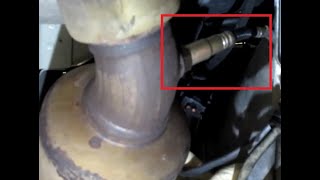
- Faulty oxygen sensor (the one before the catalytic converter)
- Damaged or corroded wiring to the sensor
- Poor electrical connections or loose plugs
- Exhaust leaks near the sensor
- Problems with the engine’s air/fuel mixture (running too rich or too lean)
- Issues with the engine computer (PCM), like outdated programming or internal faults
In cases like this, it’s usually the sensor or the wiring, but I’ve seen the occasional PCM glitch too. This error can also happen on this car brand Ford, Renault, Toyota, or Nissan if similar sensor circuit faults occur.
Symptoms of obd2 code P0428
If your car’s showing a P0428 code, you’ll probably notice a few things. The check engine light will definitely be on-that’s your first clue. You might also feel the engine running rough or not as smoothly as usual. Sometimes, folks mention their fuel economy drops, meaning you’re burning more gas than you should. And if you’re due for an emissions test, you’ll likely fail because the car’s not cleaning up the exhaust properly. In rare cases, you might smell stronger exhaust fumes or hear odd noises from the exhaust area.

Diagnosis steps for obd code P0428
Let me walk you through the steps I use whenever P0428 shows up. First thing’s first: I pop the hood and go straight to the oxygen sensor and its wiring harness. You want to check for cracked insulation, corroded plugs, or any loose connectors. Here’s a pro-tip from the garage-have a buddy gently wiggle the wires while you keep an eye on the sensor; a bad connection will often show itself when things shift around. I always check the exhaust system for leaks too, especially right near the sensor. Even a hairline crack can throw the readings off. Once the physical inspection’s done, I hook up a scan tool to watch the sensor’s voltage. The upstream O2 sensor should be bouncing quickly between about 0.1 and 0.9 volts. If it’s slow, stuck, or just not moving, odds are the sensor’s on its way out. If the numbers are weird, I grab my multimeter and check for continuity between the sensor and the PCM-don’t forget to test the ground, either. If you’ve been through all that and still can’t nail it down, it’s time to check for technical service bulletins or software updates for your make and model. Sometimes, the fix is a PCM reflash. And if everything else checks out, I’ll even test the computer to make sure it’s interpreting the sensor’s signal the way it should.
Common Mistakes When Fixing P0428 engine code
A classic mistake I see is folks rushing to swap out the catalytic converter or the PCM without checking the basics. Honestly, with P0428, the real trouble is almost always in the wiring or the sensor itself. Overlooking a frayed wire or a crusty connector is easy to do, but it’s often the root of the problem. Another thing that slips through the cracks is a small exhaust leak-just a pinhole can mess up sensor readings and set this code. And here’s something a lot of DIYers miss: if you’ve got other codes stored, fix those first. Sometimes, a problem with fuel mixture somewhere else is what’s really causing P0428 to show up. Take your time. It’ll save you headaches and cash in the long run.

Seriousness of a P0428 code
Don’t brush this one off. While P0428 usually isn’t an immediate safety risk, letting it go can snowball into much bigger headaches. A sensor that’s not working right can make your engine run rich or lean, and that puts extra stress on the catalytic converter. Trust me, you don’t want to pay for a new one of those-they’re not cheap. Plus, if your emissions go up, you can end up failing your inspection or even facing fines, depending on where you live. If the wiring issue gets worse, it could set off other problems with your engine management. My advice? Get on top of it before it spirals into something much costlier.
Repair Tips for dtc P0428
Here’s how I handle P0428 in the shop. First, I repair or replace any damaged wires or sketchy connectors at the sensor-don’t cut corners here. If the sensor’s bad, swap it for a genuine OEM part; aftermarket sensors sometimes cause more headaches than they solve. If you find an exhaust leak near the sensor, seal it up before moving forward. Always check if there’s a technical service bulletin for your specific car-sometimes the fix is as simple as a PCM update. After you’ve handled the repairs, clear the code and take the car for a decent test drive. If the light stays off, you’re golden. Double-check the live voltage readings after any work to make sure everything’s doing what it should.


Conclusion
Bottom line, a P0428 code means your car’s computer isn’t happy with the signal from the oxygen sensor ahead of the catalytic converter. Most of the time, it’s a wiring or sensor glitch, not a busted converter. Don’t ignore it-if you do, you could end up with expensive repairs and a failed emissions test. Your best bet is to roll up your sleeves and work through the basics: inspect the sensor, the wiring, and the exhaust before you start replacing big-ticket parts. In my experience, fixing the simple stuff first is what gets most cars back on the road without drama.
 5137
5137 6 minutes of reading