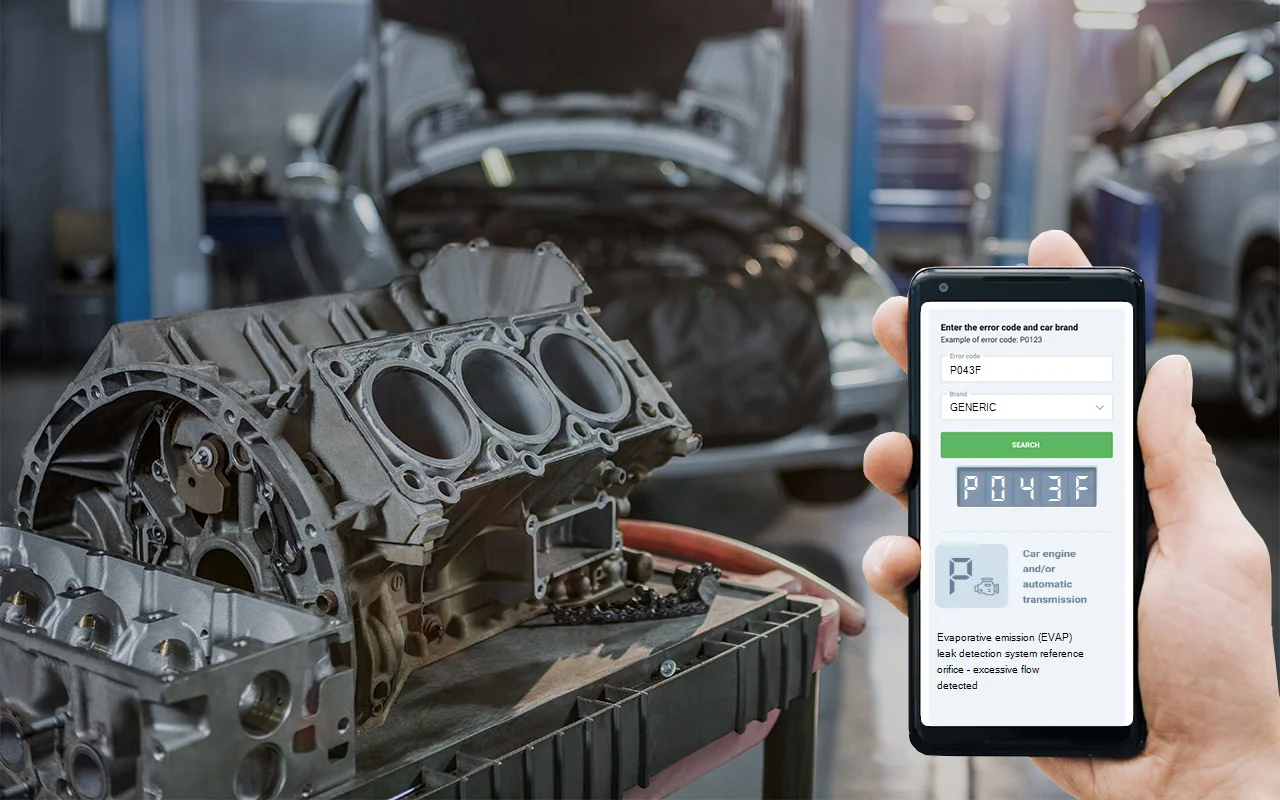
Whenever I see the p043f code pop up, I know the car’s computer-what we call the PCM-isn’t happy with what it’s seeing from the evaporative emissions (EVAP) system. Specifically, it’s picking up on too much air flow through a tiny reference hole that’s used to sniff out leaks. If you’re not familiar, the EVAP system is there to trap fuel vapors from your gas tank and keep them from venting out into the atmosphere. The system holds those vapors in a charcoal canister, waiting for the engine to be ready to burn them off. There’s quite an assortment of hardware in play: canister, leak detection pump, pressure sensors, purge and vent valves, plus all the hoses tying it together. That reference hole? It’s a small, calibrated opening that lets the system check itself for leaks by measuring air flow. If the PCM notices there’s way more flow than there should be, it flags the P043F code. I’ve seen this code on a lot of Toyotas, but it’s not exclusive-Ford and Renault owners aren’t immune either. Bottom line: this one’s all about keeping those fuel vapors where they belong and not letting your ride pollute more than it should.
DTC P043F
 5593
5593 6 minutes of reading
Causes of P043F trouble code
From my time under the hood, the main culprits behind a P043F code almost always come down to issues in the EVAP system’s sensors or valves. Here’s what I most often find:
- An EVAP pressure sensor that’s acting up and feeding bad info to the computer.
- A purge or vent solenoid that’s sticking or failing-these little guys control when the fuel vapors move through the system.
- A leak detection pump that’s not doing its job, which can throw the whole system’s pressure readings out of whack.
Every once in a blue moon, I’ll uncover a wiring or connector problem, or maybe even a clog or charcoal contamination in the reference hole or canister. But honestly, it’s almost always one of those first three I mentioned above.
Symptoms related to obd code P043F
If you’re waiting for your car to start acting up when this code sets, you’ll probably be waiting a long time. Most drivers don’t notice anything different. Sometimes you might pick up on a faint hum or buzzing from the rear of the car-especially if you’re poking around when the ignition is off-that’s just the leak detection pump running its checks. Maybe you’ll spot a slight dip in MPG, but usually it’s not enough to make you panic. Of course, the check engine light might shine, and you could see some other EVAP codes in the mix. But generally, this isn’t a problem that’ll make your car stall, misfire, or leave you stuck by the side of the road.

Diagnosis steps for dtc P043F
When I’m faced with a P043F, here’s the process I stick to:
- First, I grab my scan tool and pull every code and bit of freeze-frame data. Trust me, jotting these down pays off later.
- After clearing the codes, I’ll take the car for a spin to see if P043F returns. If it comes back, I know I’m dealing with something real, not just a one-off hiccup.
- Next up: a careful look at all the wiring, hoses, and connectors around the EVAP system. I always keep an eye on spots near exhaust or moving parts-those tend to be problem zones for heat or wear.
- If everything appears solid, I’ll use the scan tool to watch live data from the EVAP pressure sensor and test how the system responds as I manually open and close the purge and vent valves. The numbers should line up with what the factory expects.
- When the data’s off, I reach for my digital volt/ohm meter to directly check the sensors and solenoids, making sure their readings aren’t out of line.
- If I can get to the reference hole, I’ll check for charcoal dust or any blockage. A canister full of charcoal dust? That’s a warning sign right there.
- Finally, I’ll run through the wiring with continuity and resistance checks, hunting for any open circuits or shorts back to the PCM.
Here’s a pro-tip from the garage: always look for technical service bulletins (TSBs) first-sometimes they’ll point you straight to a known issue and save a ton of troubleshooting. And if you see any other EVAP codes stored, handle those before worrying about P043F, since they can be the root cause.
Common Mistakes When Fixing a P043F code
A classic mistake I see is folks jumping straight to swapping out expensive parts before checking the basics. Not inspecting wiring or connectors for corrosion or damage is a big oversight-sometimes all it takes is cleaning up a dirty connector or fixing a broken wire. Another slip-up? Ignoring other EVAP codes that might be logged; those can be the real troublemakers, and if you skip them, you’ll just end up chasing your tail. Don’t forget about TSBs either-missing one can mean hours wasted. And plenty of people forget to look for a clogged reference hole or a canister full of charcoal dust before reaching for their wallet. Always start simple before replacing pricey components.

The Seriousness of a P043F engine code
Now, P043F probably won’t leave you stranded or cause a safety scare, but don’t make the mistake of ignoring it for too long. The biggest risk is ramped-up emissions, which is bad for the air and could lead to a failed emissions test down the line. Let it go, and you could end up with a trashed charcoal canister, faulty sensors, or a leak detection pump on its last legs-especially if charcoal dust starts migrating through the system. So while you don’t have to treat it like a roadside emergency, don’t put it off until your next major service either.
Repair options for P043F
When it comes time to fix a P043F, these are the solutions that have worked for me over the years:
- Swap out the EVAP pressure sensor if it’s not giving proper readings.
- Replace a faulty purge or vent solenoid that’s stuck or not operating.
- Repair or trade out the leak detection pump if it’s not pulling its weight.
- Clean or replace the charcoal canister if you spot contamination or blockage.
- Patch up any damaged wiring or connectors you found during your inspection.
My advice? Always start with the simplest fixes first-a bit of cleaning or a quick wiring repair can sometimes clear the code, saving you the headache and cost of replacing bigger parts unnecessarily.
Conclusion
So here’s the scoop: when you see P043F, your car’s EVAP system is moving more air through its leak-check reference hole than it should-usually because a sensor, valve, or pump isn’t doing its job. It won’t leave you stranded, but it’s a sign your emissions system needs attention, and ignoring it can spiral into bigger (and pricier) problems later. The smartest move is to give the system a thorough once-over, check for any TSBs, and only swap parts once you’re sure they’re at fault. Take care of it promptly and you’ll keep your Toyota (or whatever you drive) running cleaner and avoid headaches down the road.
- Causes and Fixes Toyota P043E Evaporative Emission System Leak Detection Reference Orifice Low Flow
- DIY How to fix Toyota corolla check engine light emissions P2401 P043E P043F P2402 P2419

- Causes and Fixes Toyota P2401 Code: EVAP System Leak Detection Pump Control Circuit Low
- 2016 RAV-4 EVAP CODES P2401, P2402, P043F, P043E