
Main Causes of obd2 code P049C
From experience, the most common reasons I see for a P049C code are:
- A faulty EGR valve that’s stuck or not responding properly
- Carbon buildup clogging the EGR passages
- Cracked or damaged DPFE sensor hoses
- A bad DPFE, MAP, or MAT sensor
- Broken or shorted wiring to the EGR valve or its sensors
It’s usually one of these culprits, but the exact cause can vary depending on your vehicle’s make and model.
Typical Symptoms of P049C
Ever had your car just not feel right, and you can’t quite put your finger on it? When P049C pops up, here are the telltale signs I’ve noticed most often:
- Engine performance drops off-a sluggish feel when you hit the gas, like the car’s just tired
- Your gas mileage takes a hit, so you’re stopping at the pump more than normal
- Starts can get rough, especially on those chilly mornings
- That dreaded check engine light stares you down from the dash
On top of that, sometimes you’ll catch a strange exhaust smell, or the idle just doesn’t settle in like it should. These are all classic symptoms that something’s up with the EGR system.

Diagnosis Steps for dtc P049C
Here’s how I usually tackle a P049C code, step by step:
- First, I hook up a scan tool to pull all stored codes and freeze frame data. This gives me a snapshot of what was happening when the code set.
- Next, I clear the codes and take the car for a test drive to see if the code comes back right away. This helps confirm if the issue is persistent.
- Then, I do a thorough visual inspection of the EGR valve, its wiring, and all related connectors. I pay special attention to wires running near hot exhaust parts or sharp edges, as these are common spots for damage.
- I check the DPFE sensor hoses for cracks or leaks - these get brittle and break over time.
- If everything looks good visually, I use a digital voltmeter (DVOM) to check the wiring for continuity and shorts, following the wiring diagrams for your specific vehicle.
- With a scan tool, I try to manually activate the EGR system to see if the valve responds. Most cars need to be at a certain speed or engine temp for this to work, so sometimes a helper is handy.
- If the EGR valve or any of the sensors (DPFE, MAP, MAT) don’t meet the manufacturer’s specs when tested, I recommend replacing the faulty part.
It’s best to start with the simple checks before diving into more complex diagnostics. Don’t forget to look up any Technical Service Bulletins (TSBs) for your vehicle - sometimes there’s a known fix or updated part.
Avoiding Common Mistakes with P049C code
A classic mistake I see-and I’ve seen it more times than I can count-is folks swapping out the EGR valve first thing without checking for carbon-clogged passages or split hoses. Another trap: ignoring potential wiring problems. I can’t stress enough how a chafed or corroded wire will mimic a bad valve. And here’s a pro-tip from the garage: always check for TSBs. Overlooking a factory bulletin means you might miss a fix that’s already been figured out by the manufacturer. Skipping steps only leads to chasing your tail and wasting time (and money) on parts you didn’t need.

How Serious is a P049C engine code Issue
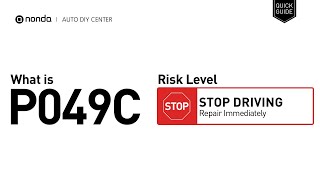
This isn’t the kind of thing you want to put off. Letting a P049C code linger can mean your engine struggles, emissions skyrocket, and you risk cooking the EGR valve, sensors, or even the engine itself with carbon buildup. I’ve seen engines run hot enough to cause real trouble when the EGR system isn’t doing its job. It can go from a minor annoyance to a major headache fast-so don’t delay sorting it out.
Repair Solutions for a P049C trouble code
In the shop, these are the fixes that actually get P049C sorted out for good:
- Take the EGR valve off and clean it out-or replace it if it’s too far gone
- Scrape out those EGR passages; carbon in there is a common villain
- Swap any DPFE sensor hoses that are brittle, split, or loose
- Replace any sensor (DPFE, MAP, MAT) that fails the spec checks
- Track down and fix any wiring or connector issues in the EGR circuit
- If your manufacturer has a software update or TSB, make sure the PCM gets updated
Here’s the bottom line: don’t just throw parts at the problem. Pinpoint the real cause so you’re not spending money you don’t have to.


Conclusion
So, what are you really dealing with when P049C shows up? Your EGR system’s on the fritz, and that spells trouble for your engine and the environment. Don’t brush this one off. Start with a scan, check all the usual problem spots, and only replace what’s truly faulty. From my time under the hood, I can tell you: a thorough, step-by-step approach is the fastest way to get your ride running smooth and clean again.
 4037
 5 minutes of reading