
P0510 code Causes
From my time under the hood, the usual suspects behind a p0510 code-whether it's a Chevrolet, Ford, or Renault-are pretty consistent:
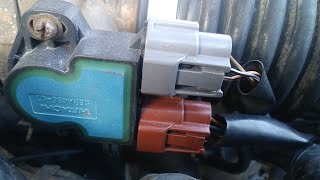
- The closed throttle position switch itself bites the dust. That’s the part sending the signal to the computer when the throttle’s closed.
- Wiring gremlins-think damaged, corroded, or loose wires between the switch and the PCM. These can scramble the signal in no time.
- A throttle body idle set screw that’s been fiddled with or just vibrated loose over the years. If that screw isn’t sitting where it should, the switch won’t trigger properly.
- I’ve very rarely seen a PCM itself be the root cause, but it’s not where I’d bet my lunch money.
Nine times out of ten, you’re looking at a bad switch or some wiring trouble. My advice? Start your hunt there before tearing into anything deeper.
P0510 engine code Symptoms
Let me be straight with you: the number one thing you’ll spot is the check engine light staring back at you. Most of the time, you won’t feel a single hiccup behind the wheel. No rough idle, no stalling, nothing that screams for attention. But here’s the thing-just because your ride feels fine doesn’t mean you should shrug it off. This isn’t something to sweep under the rug.

Obd2 code P0510 Diagnosis
Here’s how I tackle a p0510 diagnosis in the garage:
- First up, I hook up the scan tool, confirm the code, and peek at any related trouble codes. Freeze frame data can drop hints about when things went sideways.
- Next, I get my hands dirty inspecting the wiring and connectors at the throttle body and the closed throttle position switch. Look for fraying, corrosion, or plugs that don’t feel snug. Here’s a pro-tip: have someone gently wiggle the harness while you watch for any changes in readings.
- After that, I turn my attention to the throttle body idle set screw. If someone’s tweaked it or it’s out of whack, the switch might never tell the PCM the throttle's actually closed. Don’t mess with this screw unless you’ve got the OEM specs handy-it’s easy to make things worse.
- If the basics check out, I grab my multimeter and test the closed throttle position switch. With the throttle plate shut, you should see continuity. If you don’t, the switch is toast.
- Only after all this do I start thinking about the PCM, and honestly, that’s a rare bird in these cases.
Trust me, having a second set of hands makes life easier, especially when you’re checking the switch as the throttle plate moves.
P0510 trouble code Common Mistakes
A classic mistake I see all the time is folks swapping out the throttle body or even the PCM before checking the obvious stuff. Skipping the wiring check? That’s a fast track to frustration. Another misstep is messing with the idle set screw without knowing the factory specs-that can tank your idle and create new headaches. My advice: always start with the basics and save the pricey parts for later.

Obd code P0510 Seriousness
Even if your car drives like nothing’s wrong, don’t drag your feet on this. The stakes are higher than they look. If the PCM isn’t getting the closed throttle signal, it can throw off your air-fuel ratios. Down the line, that means poor mileage, higher emissions, and you could even wind up with a cooked catalytic converter. Sometimes, driveability issues sneak in later. Bottom line-you don’t want to let this linger. Problems can snowball before you know it.
DTC P0510 Repair
When I’m fixing a dtc p0510 chevrolet, here’s my step-by-step:
- Patch up or swap out any busted wiring or shaky connectors at the throttle body and switch.
- If the closed throttle position switch flunks the continuity test, I replace it. No shortcuts here.
- Adjust or reset the throttle body idle set screw to the exact OEM specs if it’s out of alignment.
- Only after ruling out everything else do I consider dropping in a new PCM.
Once repairs are wrapped up, I always clear the code and take it for a test drive, just to be sure the problem’s sorted.


Conclusion
Here’s the bottom line: P0510 means your PCM isn’t hearing from the closed throttle position switch, and that can mess with your engine’s management. Don’t brush it off just because your car feels fine. Start simple-check wiring and the switch-before diving into the deep end with expensive parts. If you tackle things methodically and don’t skip steps, you’ll keep your car running strong and dodge bigger problems down the road.
 4728
 5 minutes of reading