
Causes of P057C
Over the years, after chasing down a good number of these codes, I can tell you the typical suspects behind a p057c code are:
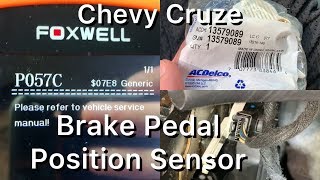
- The brake pedal position sensor itself giving up the ghost-by far, that’s the issue I see most often.
- Wiring problems: sometimes a wire gets chafed or pinched, and ends up touching metal somewhere, which shorts it out.
- Connectors that have gotten loose or crusty with corrosion right at the sensor-this can make the signal flaky.
- Every once in a blue moon, the car’s main computer (the ECU) has a glitch, but honestly, that’s rare compared to the other culprits.
In my experience, almost every time, you’re tracking down a bad sensor or a wiring issue-not a blown computer.
Symptoms Associated with obd2 code P057C
If you’re dealing with a p057c code, here’s some of what you might notice when you’re behind the wheel:
- Cruise control refusing to work, or cutting out without warning.
- Dash lights lighting up like a Christmas tree-think traction control or ABS warning lamps.
- Brake lights acting up: they might not come on when you hit the pedal, or they could stay on even after you let go.
- Sometimes, the transmission feels off-it might shift at odd times since it relies on brake input for certain operations.
Thing is, sometimes these issues sneak up on you. Even if nothing feels wrong right now, don’t ignore these signs-they have a way of getting worse when you least expect it.

Diagnosis Process for P057C code
Let me walk you through how I typically hunt down a p057c code in the shop. You can tackle some of these checks yourself if you’re handy with a wrench:
- First step? Have a buddy press the brake pedal while you check the brake lights. If they don’t light up, that’s a huge clue right out of the gate.
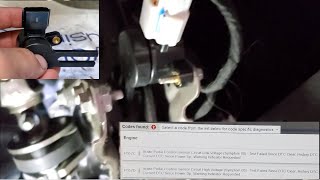
- Next, get your head under the dash and inspect the brake pedal position sensor. Make sure the connector’s clicked in tight, and look for any signs of water, dirt, or corrosion in or around the plug.
- Now, trace the wiring back from the sensor. Look for any spots where the insulation’s rubbed through or where the harness might’ve gotten pinched. Pay close attention wherever the wires could move or rub against metal.
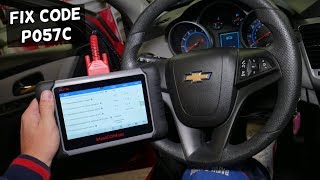
- If nothing’s obvious, I break out the multimeter and check the sensor wiring for continuity and shorts to ground. If that’s outside your comfort zone, no shame in handing it off to a pro.
- Last, I check the sensor’s output voltage. If it’s always stuck at zero or reading way too low, chances are the sensor itself is cooked and needs replacement.
Here’s a pro-tip: always start with the basics. I’ve seen plenty of folks swap out parts only to find a loose plug was the real culprit.
Common Mistakes When Addressing obd code P057C
A classic mistake I see in the garage? People jump straight to changing the brake pedal position sensor before checking the wiring or connectors. That’s one way to spend money you didn’t need to. Another misstep: ignoring the code just because the car still drives okay. Trust me, letting it go can snowball into bigger issues fast. Always check the simple stuff first before you start throwing parts at the problem.

Seriousness of dtc P057C
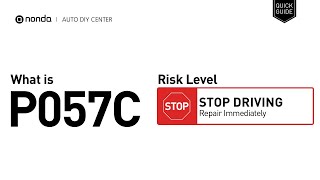
This isn’t just a minor inconvenience. If your car doesn’t know when you’re hitting the brakes, you’re risking more than just a failed cruise control. You could be driving around with no brake lights, or with critical safety systems like traction control and ABS not working right. Worst case, other drivers won’t see you slowing down. And if you ignore it long enough, you might even fry parts of your car’s computer or wiring. When this code shows up, make it a priority to get it sorted out-your safety’s on the line.
Repair Steps for P057C engine code
Here’s how I typically fix a p057c code, following the repair manuals and what I’ve learned on the job:
- First, repair or replace any busted wiring or crusty connectors going to the brake pedal position sensor.
- If the sensor’s reading out of whack or stuck low, swap it out for a new one-it’s usually not too hard to reach under the dash.
- Once repairs are done, clear the code, then take the car for a spin and double-check that everything’s working-especially those brake lights and cruise control.
- If you’ve done all that and the code’s still there, then (and only then) start suspecting the car’s main computer. But honestly, unless the car’s been underwater or had a major electrical meltdown, it’s almost never the ECU.
Start simple. Nine times out of ten, you’ll solve it with a wiring repair or a new sensor-no need to overcomplicate it.
Conclusion
If you see that P057C code, your car isn’t getting the right feedback from the brake pedal position sensor, which can mess with safety systems and even your brake lights. You don’t want to let this one sit. Check the basics first-look at the brake lights, wiring, and sensor connections. Most times, a quick wiring fix or a fresh sensor gets you back on the road. Don’t ignore this code. Your safety-and everyone else’s-is riding on you getting it sorted sooner rather than later.

 5626
5626 6 minutes of reading