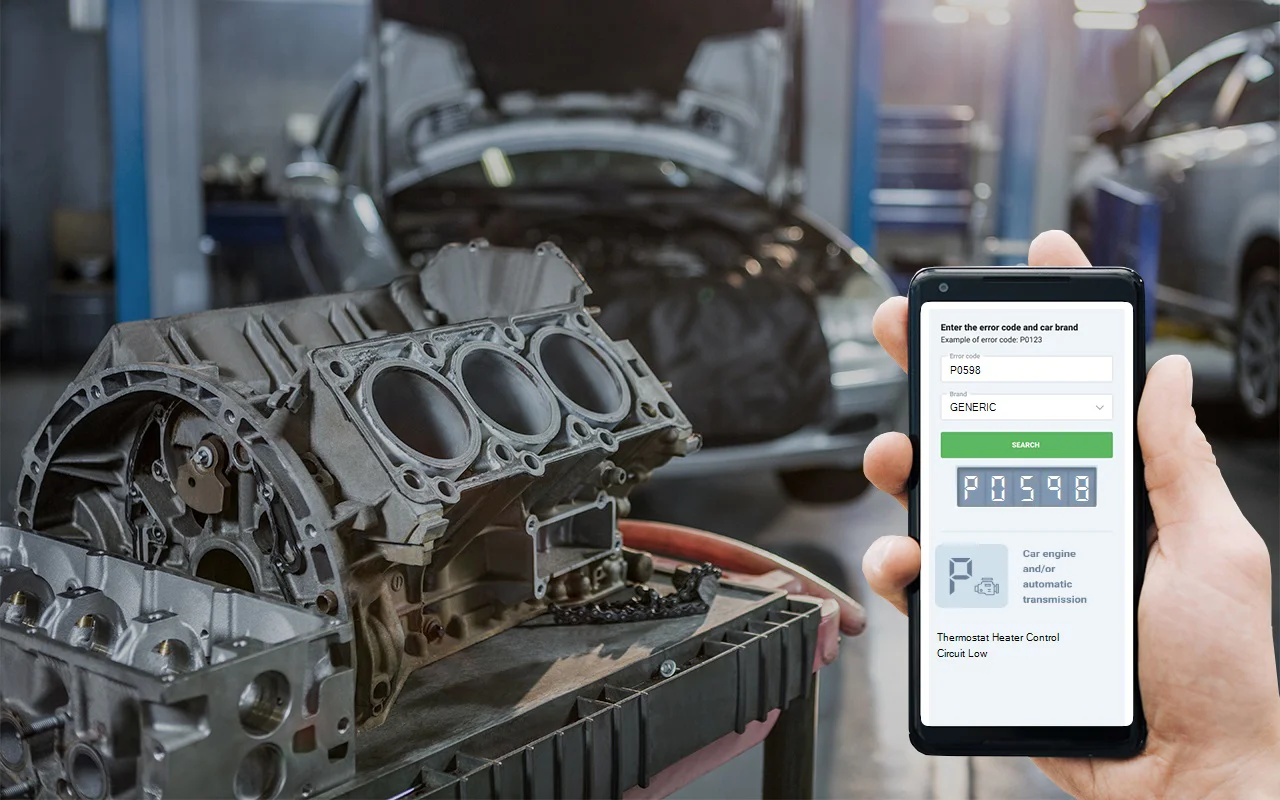
Let me break down what the P0598 code actually means for your car. This code pops up when there’s a problem with the electronically controlled thermostat system-specifically, it’s saying the control voltage is too low. In plain English, your car uses an electronic thermostat (not the old-school mechanical type) to help manage engine temperature more precisely. This system uses sensors, wiring, and a computer to keep the engine running at the best temperature for performance and emissions. Most often, you’ll see this code on German cars like BMW, Mercedes, Audi, Mini, Volkswagen, Opel, and Jaguar, since they tend to use this advanced setup. The main goal here is to improve fuel economy and reduce emissions by adjusting coolant flow electronically, but if something goes wrong in the circuit, the P0598 code gets triggered.
DTC P0598
 6181
6181 5 minutes of reading
Common Causes of obd code P0598
From experience, the most common culprits behind a p0598 code are pretty straightforward. Here’s what I usually find when I dig into these cases:
- Poor or corroded electrical connector at the thermostat-this is the top offender in most cases.
- A failed electronically controlled thermostat itself-these do wear out over time.
- Coolant leaks-if the coolant gets too low, it can trigger this code.
- Shorts or breaks in the wiring harness between the engine computer and the thermostat-sometimes wires get damaged or brittle.
- Very rarely, a fault in the engine control module (Motronic)-but honestly, this is the least likely scenario.
I recommend starting with the simple stuff like connectors and coolant level before worrying about the thermostat or computer.
Typical Symptoms of obd2 code P0598
Here’s what you might notice if your car’s got a p0598 code. Honestly, in a lot of cases, you won’t feel much difference in how the car drives. The main thing you’ll see is the check engine light coming on. If the thermostat fails in a certain position, you might see the engine temperature gauge reading higher or lower than usual-if it’s stuck closed, the engine can run hot; if it’s stuck open, it might run cooler than normal. But most folks only spot the warning light and maybe a temperature reading that seems a bit off.

How to Diagnose a P0598 trouble code
Here’s how I approach diagnosing a p0598 code, step by step:
- First, I always check the electrical connector at the thermostat. Pop the hood, find the thermostat housing, and look for any signs of corrosion, loose pins, or damage. If you see greenish buildup or rust, clean it off with a little baking soda and a brush, then apply some dielectric grease before reconnecting.
- Next, I check the coolant level in the radiator or reservoir. Low coolant can set this code, so top it up if needed and look for leaks.
- After that, I unplug the thermostat connector and use a multimeter to check resistance across the thermostat terminals. You’ll need the specific values from your car’s service manual, since they vary by make and model.
- If you have access to a scan tool, I recommend checking the live data for the engine temperature sensor and thermostat operation. Compare these readings to what’s expected at different engine temperatures.
- If the wiring and thermostat check out, I move on to inspecting the harness between the thermostat and the engine computer for any signs of damage or broken wires.
- As a last resort, if everything else looks good but the code won’t clear, the issue could be with the engine control module-but that’s extremely rare in my experience.
It’s best to have someone assist you if you’re not comfortable with electrical checks, and always double-check your readings before replacing any parts.
Avoiding Common Mistakes with dtc P0598
I’ve seen a few common slip-ups when folks try to tackle this code. The biggest one is replacing the thermostat right away without checking the connector or wiring-most of the time, it’s just a dirty or loose connection. Another mistake is ignoring the coolant level; a simple top-up can sometimes solve the problem. Skipping the resistance and voltage checks is another pitfall-don’t just guess, test everything step by step. And finally, don’t jump to replacing the engine computer unless you’ve ruled out every other possibility. That’s a costly move and almost never the real issue.

The Seriousness of a P0598 engine code
This isn’t something you want to ignore. While the car might seem to run fine for a while, a malfunctioning electronic thermostat can lead to overheating or running too cool. Overheating can cause serious engine damage-think warped cylinder heads or blown gaskets-while running too cool can hurt fuel economy and emissions. You don’t want this kind of trouble on the road, and things can go south quickly if overlooked. The risks just aren’t worth it, so don’t put this off for later.
Recommended Repair Steps for P0598
Here’s what usually fixes a p0598 code, based on what I see in the shop and what the official procedures recommend:
- Clean and secure the electrical connector at the thermostat-remove any corrosion and apply dielectric grease.
- Repair or replace any damaged wiring in the harness between the thermostat and the engine computer.
- Top up the coolant and fix any leaks you find.
- If the thermostat fails resistance or voltage checks, replace the electronically controlled thermostat assembly.
- In the rare case the engine control module is faulty, replace or reprogram it, but only after confirming all other components are good.
Always clear the code and test drive the car after repairs to make sure it doesn’t come back.
Conclusion
To sum it up, the P0598 code means your car’s electronic thermostat system isn’t getting the right voltage, usually because of a bad connector, wiring issue, or a failed thermostat. It’s not a code you should ignore, since it can lead to engine overheating or poor performance. Start with the simple checks-connector, coolant level, and wiring-before replacing parts. Acting quickly and methodically is the best way to keep your engine safe and avoid bigger headaches down the road.