
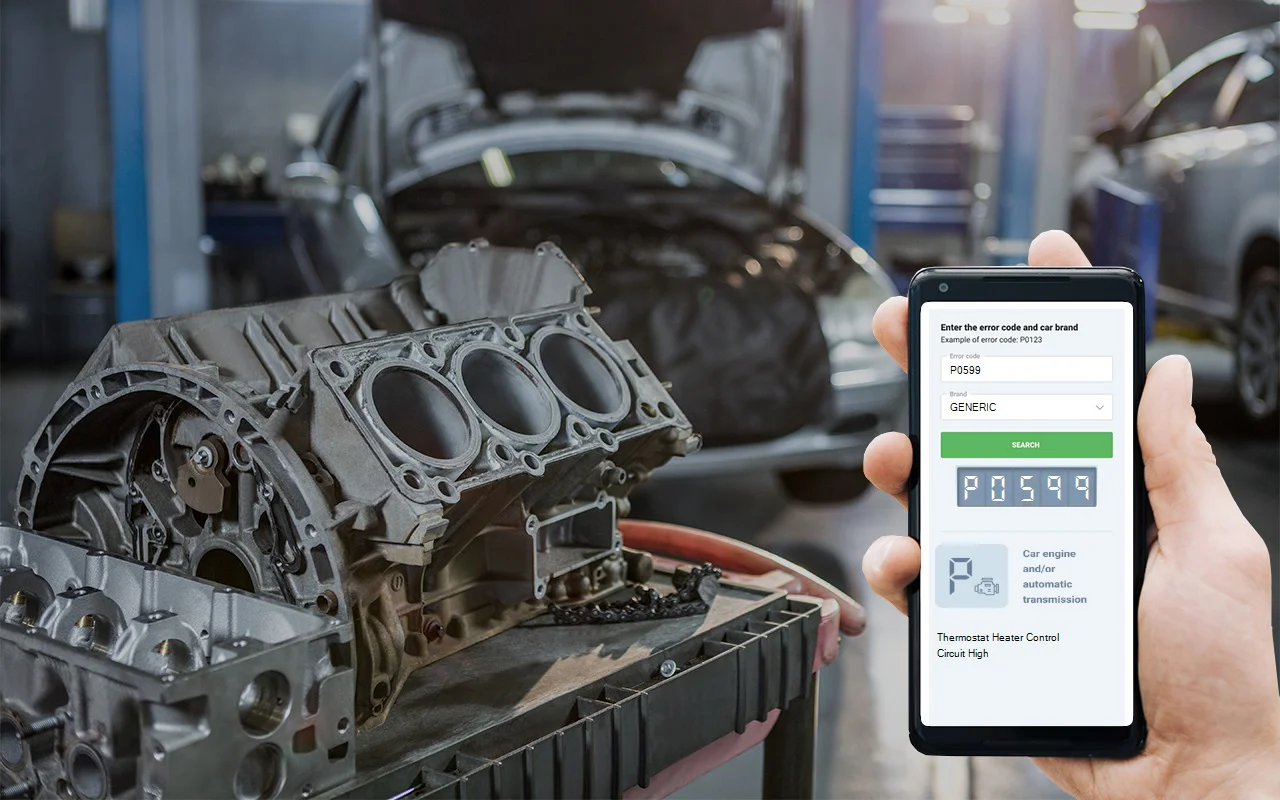
In all my years under the hood, p0599 is one of those codes that tells you your car’s computer-yep, the PCM-isn’t happy with the electronic thermostat heater circuit. Let me break it down: a lot of modern engines use an electronic thermostat, not the old-school kind that just opens and closes by temperature alone. The PCM actually talks to this thermostat, nudging it to warm up the engine faster and keep things steady. When the PCM picks up a signal that’s out of whack-usually too much voltage running through the circuit, or numbers that don’t look right compared to what’s expected-it flags p0599. The whole setup is vital for keeping your engine’s temperature in check, which isn’t just about comfort; it’s about making sure your engine runs efficiently and lasts.
DTC P0599
 5980
5980 5 minutes of reading
Causes of the P0599 trouble code
From my time in the garage, I can tell you most p0599 cases come down to a handful of usual suspects. Here’s what I run into most often:
- Wiring problems-think cracked insulation, corroded connectors, or wires shorting out on the way to the thermostat.
- A thermostat that’s given up the ghost, especially those electronic types-they’re great when they work, but they do fail.
- Loose, dirty, or just plain faulty connectors at the thermostat itself. Sometimes all it takes is a sloppy connection to trigger the code.
- Coolant leaks splashing onto connectors or wiring, causing electrical headaches.
- And very rarely, the PCM itself might be the culprit, but that’s usually after everything else checks out.
Pro-tip from the shop: Always start with the basics-wiring and connectors-before you start swapping out parts.
Symptoms of the P0599 code
When p0599 pops up, there are a few telltale signs I see all the time. First off, that check engine light is almost a guarantee. Keep an eye on your temperature gauge-it might start acting squirrelly, like bouncing around or not holding steady. I’ve also seen cooling fans kick on and just keep running, even when the engine’s barely warm. Sometimes, though, you’ll only see the warning light with no other symptoms. Just so you know, this issue isn’t picky-it shows up on Fords, Renaults, Opels, and plenty of others.

Diagnosis steps for P0599
Let me walk you through how I tackle this code on the job, and you can try some of these at home if you’re handy. Step one is always a good look at the thermostat wiring and connectors-check for green corrosion, coolant residue, or anything loose. Don’t overlook the wiring harness; I’ve seen everything from chewed wires (thanks, squirrels) to brittle insulation from old age. Next, I grab a multimeter and check the voltage right at the thermostat connector. If you’re not comfortable with electrical testing, get someone experienced to help-one slip can make things worse. If all the wiring and connectors check out, then I’ll test the thermostat itself, as they can fail inside without any obvious signs. Only after all that would I suspect the PCM, and that’s a real last resort. Every car’s a little different, so grab your service manual for the exact specs. Keep an eye out for p0599 as you go through these steps-it’s easy to miss something simple.
Common mistakes when fixing dtc P0599
A classic mistake I see? Folks rushing to replace the thermostat right off the bat, without ever checking the wiring or connectors. That’s a fast way to burn through cash if the real issue is just a crusty wire or a loose plug. Another one is ignoring coolant leaks around the thermostat; those leaks can wreak havoc on the electrical side of things. And don’t just clear the code and hope for the best-if you don’t fix the root problem, dtc p0599 will come right back. Stick to the basics before spending big.

Seriousness of the P0599 engine code
This is one you definitely don’t want to brush off. If your thermostat isn’t behaving, your engine could run too cool-or worse, overheat. That means wasted fuel, rough idle, or if you’re really unlucky, a blown head gasket or worse. Trust me, engine damage can get expensive in a hurry. Take this code seriously and get it sorted before it turns into a much bigger problem.
How to repair obd code P0599
In most cases, repairs for p0599 aren’t complicated. Here’s my go-to checklist:
- Fix or swap out any damaged wiring or connectors you find at the thermostat.
- If the thermostat itself has failed, put in a new electronic thermostat.
- Clean up any coolant leaks and make sure the thermostat housing is sealed tight.
- If you’ve checked everything else and it still isn’t fixed, the PCM might need attention-but treat that as a last resort.
After I’ve made repairs, I always clear the code and take the car for a spin to make sure p0599 doesn’t pop up again. Some vehicles might still throw eobd dtc p0599 after the first fix-don’t cut corners, double-check your work before calling it done.
Conclusion
So, what’s the bottom line? When you see p0599, your car’s computer has spotted a problem with the electronic thermostat’s heater circuit. Nine times out of ten, it’s a wiring issue, a failed thermostat, or a dodgy connector. Don’t drag your feet on this one-ignoring it can lead straight to major engine headaches. Start simple: check wires, connectors, and for any leaks before you throw new parts at it. Take a systematic, step-by-step approach and you’ll save yourself time, money, and a lot of frustration down the road.
- P0599 fix Chevy | Thermostat Heater Control Circuit High 09-16
- Diagnostic DTC P0599 Engine thermostat heater circuit in Chevrolet. (thermostat problem)
- How to Fix P0599 Engine Code in 2 Minutes [1 DIY Method / Only $11.97]
- P0599 Thermostat Heater Control Circuit High 🟢 Trouble Code Symptoms Causes Solutions
