
Main Causes of obd code P0617
From experience, the most common culprits behind a p0617 code are usually pretty straightforward. Here’s what I typically see in the shop:
- A faulty ignition switch-this is often the root cause, especially on older vehicles.
- A bad starter relay-these can fail internally or get stuck.
- A failing starter solenoid or the starter itself.
- Blown fuses or fusible links in the starter circuit.
- Corroded or damaged connectors-especially at the battery, relay, or starter.
- Worn, frayed, or broken wiring in the starter circuit.
- Corroded or loose battery cables.
- In rare cases, a faulty PCM (the car’s main computer).
Most often, it’s something simple like a bad relay or corroded connection, but I’ve seen every item on this list cause headaches.
Recognizing Symptoms of P0617
When this code is active, you’ll probably notice one or more of these issues:
- The engine won’t crank or start at all-this is the most common complaint.
- Sometimes, the car will start intermittently, making it seem like a fluke.
- The check engine light will be on, even if the car starts.
From what I’ve seen, a no-start condition is the big red flag here. If you’re lucky, you might just have a warning light, but don’t count on it staying that way.

Step by Step P0617 engine code Diagnosis
Here’s how I usually tackle a p0617 code, step by step:
- First, I always check for any technical service bulletins (TSBs) for your specific vehicle-sometimes there’s a known issue or a quick fix.
- Next, I look at the fuses related to the starter relay circuit. If any are blown, that’s a clue right there. Don’t forget to check fusible links, too.
- Then, I do a careful visual inspection of all the wiring and connectors in the starter circuit. Look for burnt spots, frayed wires, corrosion, or loose connections-especially at the battery, starter, relay, and ignition switch. It’s better to have someone help you turn the key while you watch for sparks or movement.
- After that, I test the starter relay itself. Swapping it with a known good relay (if you have one) is a quick way to rule it out.
- If everything looks good so far, I’ll use a multimeter to check for voltage at the starter and relay when the key is turned to ‘start’. You should see battery voltage-if not, trace back to find where the power stops.
- If you find voltage at the starter but it doesn’t crank, the starter or solenoid is likely at fault. If there’s no voltage, the problem is further up the chain-often the ignition switch or wiring.
- Don’t forget to check ground connections, too. Poor grounds can cause all sorts of weird problems.
- Finally, if all else fails, I’ll consider the PCM as a last resort, but that’s rare.
Take your time with each step-rushing can lead to missed details.
Avoiding Common Mistakes When Handling P0617 trouble code
I’ve seen a few common pitfalls with this code that are worth mentioning:
- Jumping straight to replacing the starter or PCM without checking the wiring and relays first. That’s a surefire way to waste money.
- Overlooking blown fuses or corroded connectors-these are easy to miss but often the real cause.
- Not checking for TSBs-sometimes there’s a manufacturer fix that saves hours of guesswork.
- Testing continuity or voltage with the battery still connected-always disconnect power before poking around in the wiring.
It’s best to be methodical and rule out the basics before moving on to expensive parts.

How Serious is dtc P0617
This is not something you want to ignore. If your car won’t start, you’re stranded-plain and simple. Even if it’s intermittent, things can go south quickly and leave you stuck at the worst possible time. There’s also a risk of damaging the starter, relay, or even the PCM if the underlying issue isn’t fixed. Honestly, this is a serious hazard, especially if you rely on your vehicle daily. Don’t put this off for later-it could end badly if ignored.
Effective Repair Steps for obd2 code P0617
Here’s what I typically do to fix a p0617 code, based on what I find during diagnosis:
- Replace the ignition switch if it’s faulty.
- Swap out any blown fuses or fusible links.
- Clean or repair corroded connectors and battery terminals.
- Repair or replace damaged wiring in the starter circuit.
- Replace the starter relay if it’s sticking or dead.
- Install a new starter solenoid or starter motor if needed.
- In rare cases, reprogram or replace the PCM if it’s confirmed to be the problem.
Always double-check your work before calling it done-one missed connection can bring the problem right back.


Conclusion
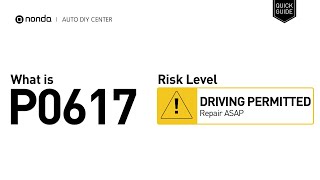
To sum it up, P0617 means your car’s computer has found a high voltage problem in the starter relay circuit-usually resulting in a no-start or hard-start situation. This is a high-priority issue: it can leave you stranded and cause further damage if ignored. The best approach is to start with the simple checks-fuses, relays, wiring, and connectors-before moving on to bigger components like the starter or PCM. In my experience, most cases are solved by fixing a bad relay, corroded connector, or blown fuse. Don’t delay-get this sorted out before it leaves you in a tough spot.
 3934
3934 5 minutes of reading