
Causes of P0619
From experience, the most common reasons for a P0619 code are pretty straightforward, but they’re not always easy to pin down. Here’s what I usually see in the shop:
- A faulty AFCM or PCM (the control module itself has gone bad)
- Programming errors in the AFCM or PCM-sometimes the software just isn’t right
- Broken, shorted, or corroded wiring or connectors in the CAN (Controller Area Network) harness
- Problems with the power supply to the AFCM or PCM, like blown fuses or bad relays
- Poor or missing ground connections for the control module
In cases like this, it’s usually an electrical or module issue, not a simple sensor or fuse. But don’t rule out the basics before moving on to the complex stuff.
Symptoms of obd2 code P0619
When this code is active, you’ll likely notice some real headaches. Most often the issue is with how the car runs. Here’s what you might experience:
- Rough engine performance-things just don’t feel right when you’re driving
- The engine might stall, especially when idling
- Hard starting, especially on cold mornings
- Other warning lights or codes popping up on the dash
Honestly, if you’re seeing these symptoms, it’s best not to ignore them. Things can go south quickly if overlooked.

Diagnosis process for P0619 code
When I’m faced with a P0619, I always stick to a methodical approach-cutting corners here just leads to frustration and wasted time. Here’s my process:
- First step is to hook up a scan tool and grab all the codes, plus the freeze frame data. Jot down everything, because intermittent problems can easily hide if you’re not paying attention.
- Clear the codes next and take the car for a spin. If the code doesn’t return, it might have just been a fluke, but don’t drop your guard yet.
- If the code pops back up, I’ll always check for any Technical Service Bulletins (TSBs). You’d be amazed how many headaches can be avoided if you know about a software update or wiring fix straight from the manufacturer.
- After that, it’s fuse and relay time. A digital volt/ohm meter (DVOM) is your best friend here-don’t just eyeball fuses, actually test them under load. Sometimes a fuse looks fine but fails under current.
- Visual inspection comes next. I get right in there and check every inch of wiring and every connector feeding the PCM and AFCM. Corrosion, broken wires, loose pins-they’re all suspects. Having a buddy around to help check ground points can save you a ton of hassle.
- Speaking of grounds-never skip them. Poor grounding causes some of the weirdest electrical gremlins you’ll ever see. Use your DVOM and make sure every ground is truly solid.
- If all of that checks out and you’re still getting the code, the module itself is likely at fault. At this stage, replacement and reprogramming are on the table, and you’ll need the right equipment or a dealership’s help for that.
One last thing: if you see power supply codes along with P0619, fix those first. Chasing ghosts in the module is pointless if the basics aren’t right.
Common Mistakes with P0619 engine code
A classic mistake I see all the time-folks jump right to swapping out the control module. That gets expensive fast, and often it’s not even the root of the problem. Here are the biggest slip-ups:
- Ignoring simple checks on fuses, relays, and especially grounds. These are quick and cheap fixes that get missed way too often.
- Skipping over TSBs. Sometimes, the OEM has already put out a fix, but if you never look, you’ll never know.
- Missing wiring issues. Corroded or loose connectors can cause the same symptoms as a bad module, but are much easier to repair.
- Jumping to conclusions about a bad module without verifying power and ground. Never assume-test everything first.
Take it from someone who’s been burned before: always start simple before you start spending big.

Seriousness of obd code P0619
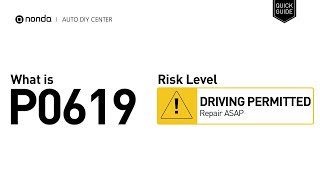
Let me be blunt-this code’s nothing to mess around with. When there’s a memory issue in the control module, you’re risking everything from a rough idle to a no-start situation. I’ve seen cars stall out at the worst possible moments, and with alternative fuel vehicles, the risks can multiply. If you let this slide, you’re looking at the possibility of being stranded, or even damaging the module and surrounding wiring further. My advice? Don’t wait. Get this sorted before it turns into a much bigger-and more expensive-problem.
Repair steps for dtc P0619
Here’s how I handle P0619 repairs, combining what works in the real world with the manufacturer’s playbook:
- Go after any damaged wiring, connectors, or grounds involved with the PCM/AFCM. Repair or replace as needed-it’s amazing how often this is the culprit.
- Swap out any blown fuses or sketchy relays in those same circuits.
- If you’ve found a TSB, follow it to the letter. Sometimes that means a simple software update; other times, a specific repair technique.
- If the control module itself is toast, replace it. But don’t forget-these modules nearly always require programming, which means you’ll need dealer-level scan tools.
- After everything’s buttoned up, clear the codes and take the car for a decent test drive. Don’t call it fixed until you’re sure that code’s not coming back.
Here’s a pro-tip: don’t skip steps or rush it. Miss something small, and you’ll be back at square one before you know it.


Conclusion
Bottom line? P0619 means your alternative fuel control module’s memory is on the fritz, and that spells trouble for drivability. I can’t stress enough-don’t let this code slide. Start with the basics: fuses, relays, wiring, and grounds. Only move on to the module itself if those check out. Taking your time and being thorough is how you keep your vehicle on the road, not on a tow truck. Trust me, a little patience now saves a lot of headaches later.

 5613
5613 6 minutes of reading