
Causes of obd code P061E
From experience, the most common reasons for a P061E code are pretty straightforward, but there are a few tricky ones too. Here’s what I usually find:
- A faulty brake light switch-this is the switch at the pedal that tells the car when you’re braking.
- Problems with the PCM itself, like a software glitch or internal failure.
- Broken, corroded, or shorted wiring or connectors in the brake signal circuit or the CAN (Controller Area Network) wiring harness.
- Poor grounding of the control module-sometimes a loose or rusty ground connection can cause all sorts of weird issues.
- An open or short circuit between the brake switch and the PCM.
Most often the issue is with the brake switch or the wiring, but I’ve seen my share of PCM failures too, especially if there’s been water damage or electrical surges.
Symptoms of P061E engine code
If your car has a P061E code, here’s what you might notice as a driver:
- Rough or delayed shifting-sometimes the transmission just doesn’t feel right.
- The engine might stall, especially when you’re coming to a stop or idling.
- Brake lights that don’t work, or maybe they stay on all the time.
- Cruise control not working at all.
- Transmission lock-up not engaging, which can eventually damage the transmission.
In cases like this, it’s usually a combination of these symptoms, but even just one is enough reason to get it checked out right away.

Diagnosis of P061E code
Here’s how I personally go about diagnosing a P061E code, step by step:
- First, I always scan for all stored trouble codes and freeze frame data. Write this down-it’s gold if the problem is intermittent.
- Clear the codes and take the car for a test drive to see if the code comes back or if the PCM goes into readiness mode. If it’s intermittent, it can be tricky to catch.
- Next, I check for any technical service bulletins (TSBs) that match your car’s year, make, and symptoms. Sometimes there’s a known fix from the manufacturer.
- Then, I inspect the brake light switch at the pedal. Make sure it clicks on and off, and check if the brake lights work properly. Don’t forget to check the switch wiring and connector for corrosion or loose pins.
- Using a digital volt/ohm meter (DVOM), I check all related fuses and relays under load. A fuse can look good but still fail under stress.
- After that, I do a visual inspection of all wiring and harnesses between the brake switch, PCM, and any related modules. Look for frayed wires, water intrusion, or signs of overheating.
- I always check the ground connections for the PCM and related modules. A bad ground can cause all sorts of ghost codes.
- If everything checks out and the code still returns, I suspect the PCM itself-especially if there’s evidence of water damage or if all other tests pass. At this point, programming or replacing the PCM may be needed, which usually requires dealer-level tools.
It’s better to have someone assist you when checking brake lights, and make sure you inspect the basics before moving on to the expensive stuff.
Common mistakes with dtc P061E
Honestly, I’ve seen a few common mistakes when folks try to tackle this code:
- Jumping straight to replacing the PCM without checking the brake switch or wiring-this can get expensive fast and often isn’t the real problem.
- Overlooking a blown fuse or a simple bad ground. It’s easy to miss, but it’s a surefire way to end up chasing your tail.
- Ignoring technical service bulletins. Sometimes the fix is a simple software update or a known wiring issue.
- Not checking for water damage in the PCM area-especially if the car’s been in heavy rain or a flood.
My advice: always start with the basics and don’t skip steps, no matter how tempting it is to go for the big fix.

Seriousness of P061E
This is a serious hazard, no two ways about it. If you ignore a P061E code, you risk losing cruise control, having your transmission shift poorly, or even stalling in traffic. The biggest danger is that the transmission lock-up might not work, which can lead to overheating and major transmission damage. I’ve seen transmissions ruined because this was ignored. Plus, faulty brake lights are a safety risk for you and everyone else on the road. Don’t put this off for later-things can go south quickly if overlooked.
Repair options for P061E trouble code
Here’s what I typically do to fix a P061E code, based on what the OEMs and real-world cases recommend:
- Replace a faulty brake light switch if it’s not working right.
- Repair or replace any damaged wiring or connectors in the brake signal circuit or CAN harness.
- Clean and tighten all ground connections for the PCM and related modules.
- Replace blown fuses or faulty relays after checking them under load.
- If the PCM is at fault, reprogram or replace it using the correct tools-sometimes a software update is all that’s needed, but sometimes the whole module has to go.
- Address any water intrusion or corrosion issues near the PCM or wiring harnesses.
I recommend starting with the simple stuff-switches, fuses, wiring-before moving on to the computer itself. That’s usually the most reliable path to a fix.

Conclusion
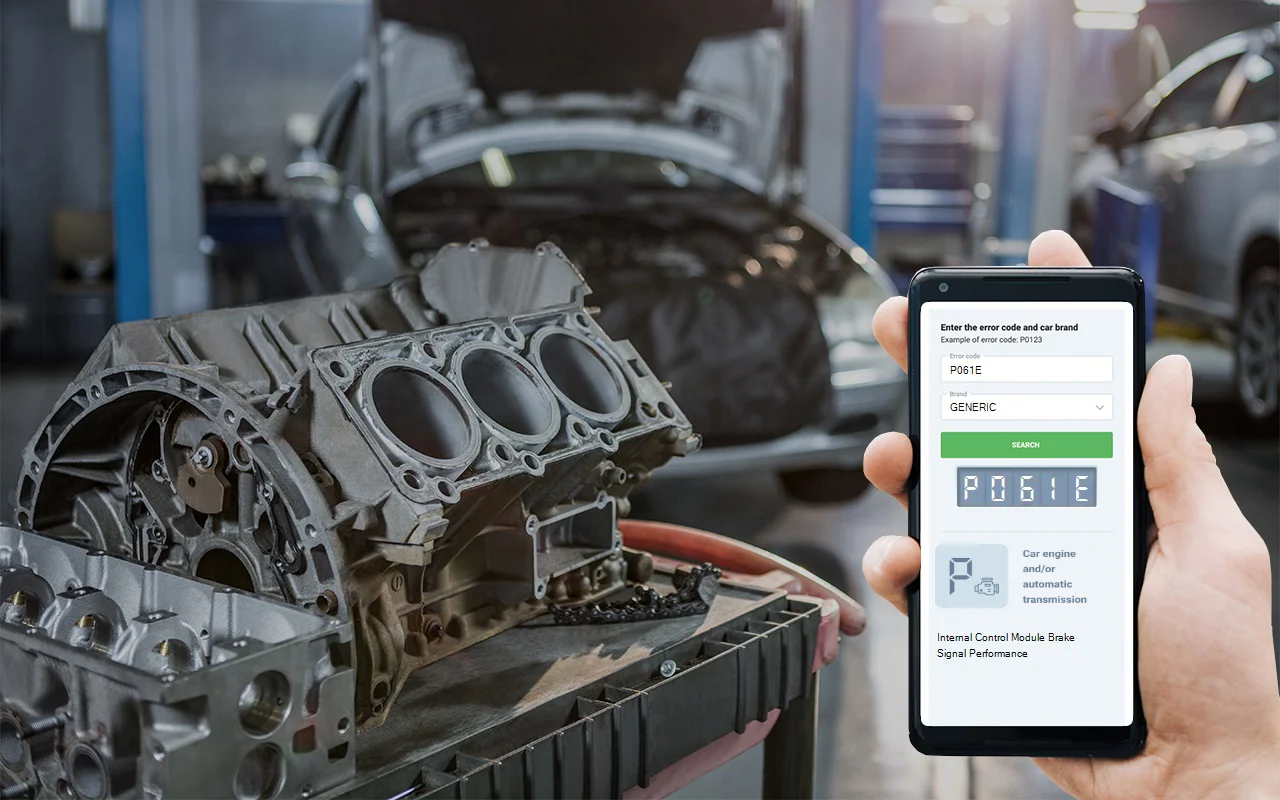
To sum it up, P061E means your car’s computer has found a problem with the brake signal circuit, which can affect everything from shifting to brake lights and cruise control. This isn’t something to ignore-the risks just aren’t worth it, especially with the chance of transmission damage or brake light failure. I always recommend starting with the basics: check the brake switch, wiring, fuses, and grounds. Only move on to the PCM if everything else checks out. Acting quickly and methodically is the best way to keep your car safe and reliable.
 4843
 6 minutes of reading