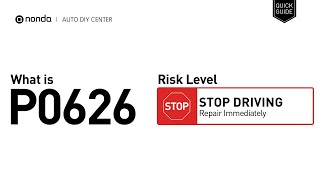
When you see a P0626 code pop up, what you’re really dealing with is your car’s PCM (that’s the main computer) flagging a voltage issue in the alternator’s field coil circuit. In simple terms, the alternator is the part responsible for charging your battery and powering all the electrical goodies while the engine’s running. The field coil inside the alternator is critical for generating electricity. From years of wrenching on these systems, I can tell you the PCM watches that circuit like a hawk. If the voltage goes higher than it should, the computer sets this code. So if your scan tool is giving you P0626, that’s the PCM telling you there’s a genuine issue in the charging system. And trust me, that’s not something to brush off-if left alone, it can lead to all sorts of headaches, from trouble starting your car to it dying on you out on the road.
DTC P0626
 5786
5786 6 minutes of reading
Causes of dtc P0626
From experience, I can tell you that the most common causes for a P0626 code are usually pretty straightforward, but you do need to check them all to be sure. Here’s what I see most often:
- A break or short in the alternator field control circuit wiring
- A blown fuse or fusible link in the charging system
- A faulty alternator (sometimes called a generator)
- A problem with the PCM itself (rare, but it happens)
- Occasionally, a programming error in the PCM
Most often the issue is with the wiring or the alternator itself, but it’s important not to overlook the fuses and relays.
Symptoms of obd2 code P0626
When this code pops up, you’ll likely notice a few things that just aren’t right. Here’s what drivers usually report:
- The battery or charging system warning light comes on
- The engine may run rough or have drivability problems
- Sometimes the engine will stall unexpectedly, even while driving
- Hard starting or delayed cranking when you turn the key
- Other related trouble codes may also show up
If you’re seeing any of these, it’s a sign the charging system isn’t doing its job, and things can go south quickly if overlooked.

Diagnosis steps for obd code P0626
Let me walk you through how I tackle a P0626 code, step by step, just like I would in the shop:
- First thing’s first-plug in a scan tool and grab all the stored codes and freeze-frame data. Don’t skip writing this stuff down; intermittent issues love to play hide and seek.
- Next, clear the codes, then take the car out for a spin. If the code comes back, you know you’re dealing with an active fault-it’s not a one-off glitch.
- Here’s a pro-tip: always check battery charge and alternator output with a proper tester. If the battery’s low, charge it up before doing anything else. Chasing electrical problems with a weak battery is like trying to find a leak in a dry hose.
- After that, compare the alternator’s output voltage to what the manufacturer says it should be. If it’s off, you’ve just narrowed down your suspects.
- Now comes the nitty gritty: break out your DVOM and check for battery voltage at the alternator field coil circuit. No voltage? Start hunting for blown fuses, bad fusible links, and lazy relays. I can’t tell you how many times I’ve seen corrosion or a loose pin at the alternator plug cause all sorts of mayhem.
- If the wiring checks out and the alternator is still asleep at the wheel, odds are the alternator’s your culprit. Most of the time, you can’t just swap the field coil-it’s part of the whole unit.
- Last, if everything else is spot on, maybe the PCM is at fault. Honestly, that’s rare, but it does happen.
Start simple: fuses, wiring, and connections. Only move on to the big-ticket items like the alternator or PCM if the basics check out.

Common Mistakes with P0626 code
A classic mistake I see is folks yanking out the alternator right away without bothering to check the wiring or fuses first. That’s a sure way to waste money and time. Another one? Ignoring a blown fusible link or a crusty connector-seen it more times than I can count. Don’t forget to check for technical service bulletins (TSBs); sometimes the manufacturer’s already figured out the fix, and you’re just spinning your wheels. Skipping these steps usually means you’re fixing the wrong thing and still chasing the same code.

Seriousness of P0626 engine code
If there’s one thing I’d stress, it’s don’t ignore this code. A busted charging system can leave you stranded with a dead battery, or even worse, your engine could stall out in the middle of traffic. That’s a dangerous situation you don’t want to be in. Letting it go can cook your battery, fry the alternator, or even take out the PCM. Bottom line: you’re risking a lot more than just an annoying warning light if you let this one slide.
Repair steps for P0626
Here’s what’s worked best in my hands-on experience:
- Repair or replace any damaged wiring or connectors in the alternator field circuit
- Swap out blown fuses or fusible links
- Replace the alternator if you find it’s not putting out or if the field coil’s cooked
- On rare occasions, reflash or replace the PCM if it’s the root cause
My advice? Always start with the wiring and fuses-they’re quick checks and cheap fixes. Only move up to the alternator or PCM if the basics don’t solve it. And whatever you do, follow the manufacturer’s test procedures to the letter.
Conclusion
To wrap it all up, a P0626 code means your vehicle’s computer has picked up on a voltage problem in the alternator’s field coil circuit. It’s not something to ignore-this issue can snowball fast, leaving you with a dead battery or a car that stalls when you least expect it. The smartest approach is to start by checking the simple stuff: wiring, fuses, and alternator output. If those check out, only then should you consider the PCM. Don’t put this one on the back burner-fixing it now can spare you a world of trouble later.