
Main Causes of obd code P0630
From what I’ve seen in the shop, the most common reasons for a P0630 code are:
- The ECM or PCM was replaced but not programmed with your car’s VIN.
- Someone swapped the computer from another vehicle without doing the proper setup.
- There was a programming error during a repair or update.
- In rare cases, the ECM or PCM itself has failed and can’t store or read the VIN anymore.
Most often, it’s a programming issue after a computer swap or repair. Actual hardware failure is much less common, but it does happen. This error can also happen on car brands such as Honda and others.
Recognizing obd2 code P0630 Symptoms
If this code is active, here’s what you might notice:
- The car might not start at all-no crank, no start conditions are typical.
- The security system could kick in and lock everything down.
- You’ll probably see the check engine light or malfunction indicator lamp (MIL) on the dash.
- Other warning lights or codes may show up, since the computer can’t verify the car’s identity.
Honestly, if you’re seeing this code, chances are you’re not going anywhere until it’s fixed.

How to Diagnose a P0630 trouble code
Here’s how I tackle a P0630 code, step by step:
- First, I hook up a diagnostic scanner to the car’s OBD-II port. This lets me see what VIN the ECM or PCM thinks it has.
- I compare that VIN to the one etched on your dashboard (usually at the base of the windshield on the driver’s side). If they don’t match, that’s a big clue the computer was swapped without proper programming.
- If the scanner can’t read any VIN at all, it’s likely the ECM/PCM was replaced and never programmed, or there’s a deeper issue with the computer.
- I always check for any relevant Technical Service Bulletins (TSBs) for your make and model-sometimes there are known issues or special procedures.
- If everything points to a programming issue, the next step is to reprogram or ‘flash’ the ECM/PCM with the correct VIN and mileage. This usually requires specialized equipment and access to the manufacturer’s database.
- If reprogramming doesn’t work, or the computer won’t accept the VIN, then I start suspecting a hardware failure in the ECM/PCM itself.
It’s best to have someone experienced handle this, since the process is delicate and mistakes can make things worse.
Common Mistakes When Addressing P0630
One thing I see all too often is folks swapping out the ECM/PCM and forgetting to program it to the car. Another common slip-up is assuming the problem is with wiring or sensors, when really it’s a programming issue. Skipping the VIN comparison step is a surefire way to chase your tail. Also, trying to use a used computer without proper reprogramming just leads to more headaches.

Seriousness of a P0630 engine code
This is not something to ignore. If the ECM/PCM can’t recognize the VIN, your car may not start or run at all. Even if it does, the security system could activate unexpectedly, leaving you stranded. Plus, you risk messing up the odometer reading and running into legal or registration issues. Ignoring this can also lead to further damage to the ECM/PCM or related electronics. Bottom line: you don’t want this kind of trouble on the road, and it’s a serious hazard if left unresolved.
Recommended Repair Steps for a P0630 code
Here’s what usually fixes a P0630 code:
- Reprogramming the ECM/PCM with the correct VIN and mileage using the proper diagnostic tools.
- If the ECM/PCM was replaced, making sure it’s programmed specifically for your car-sometimes a new or remanufactured unit is needed.
- In rare cases, replacing a faulty ECM/PCM if it won’t accept programming.
It’s important to have the right info handy-VIN, mileage, and sometimes proof of ownership-since the process is tightly controlled for security reasons.



Conclusion
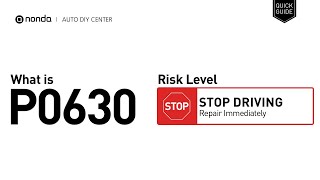
To sum it up, P0630 means your car’s computer can’t find or match the VIN, which is a big deal for security and operation. It’s a high-priority issue-your car probably won’t run until it’s sorted out. The most reliable fix is to have the ECM/PCM properly programmed with your car’s VIN and mileage, ideally by someone with the right tools and know-how. Don’t put this off-get it checked and fixed promptly to avoid bigger headaches down the line.
 4576
4576 5 minutes of reading