
Causes of P0667
From what I’ve seen in the shop and according to the official repair info, the most common reasons for a p0667 code are:
- Corroded or damaged connectors - moisture or dirt can sneak in and mess with the connection.
- Loose or faulty ground straps for the control module - if the module isn’t grounded well, it can’t work right.
- Broken or damaged wiring - sometimes wires get pinched, rubbed through, or even chewed by critters.
- A faulty PCM, ECM, or TCM - this is less common, but it does happen, especially if there’s been water intrusion or electrical issues.
Most often the issue is with the wiring or connectors, not the module itself. I recommend starting with the simple stuff before jumping to expensive parts replacements.
Symptoms of obd2 code P0667
When this code is active, here’s what you might notice behind the wheel:
- The engine might not start at all, or it could stall unexpectedly. That’s a real headache.
- Shifting can get rough or unpredictable - the transmission might not change gears the way it should.
- You’ll almost always see the check engine light or the transmission warning light on your dash.
Sometimes, the only clue is the warning light, but honestly, if you’re having starting or shifting issues, don’t ignore it. Things can go south quickly if overlooked.

Diagnosis using the P0667 engine code
When I run into a P0667 code, I’ve got a tried-and-true process I stick to. Here’s how I go about it:
- First thing I do? Check for technical service bulletins (TSBs) for your exact year, make, and model. These bulletins can point straight to known issues or fixes the manufacturer’s already outlined. Sometimes, that’s all you need.
- Next up, I dig into a close visual inspection. I’m looking at every inch of wiring and every connector that runs to the PCM, ECM, and TCM. Frayed wires? Burn marks? Loose or dirty plugs? I’ve seen all of these cause headaches. Pay special attention to ground straps - if they’re loose, rusty, or crusted up, you’ve found a likely culprit.
- After that, I’ll unplug connectors and search for green corrosion or bent pins. If you see it, clean it up thoroughly - sometimes that’s all it takes to get you back on the road.
- If everything still looks clean, out comes the digital multimeter. Now I’m checking for proper voltage and solid ground at those module connectors. Don’t just guess - double-check wiring diagrams for your specific car. Specs can vary from one model to another.
- With the battery disconnected, I’ll test continuity on those wires from the modules to their power and ground sources. If there’s any unexpected resistance or an open circuit, you’re looking at a wiring issue that needs fixing.
- Only after all that will I even consider blaming the control module itself. In my experience, most P0667 codes aren’t the module’s fault - wiring or connections are almost always to blame.
Here’s a pro-tip from the garage: get someone to help you out, especially when checking for power and ground. A second set of eyes can save you from missing small details. Always start with the basics before diving deep.
Common Mistakes with obd code P0667
A classic mistake I see is swapping out the PCM, ECM, or TCM right off the bat, thinking the module’s toast, when it’s actually just a bad wire or corroded connection. That’s a fast way to burn through your budget for no reason. Skipping the search for TSBs is another slip-up - sometimes there’s a straight-from-the-factory fix that’s easily missed. And don’t forget: always test continuity with the power off. Checking live wires can throw off your readings or even fry something else. Trust me, I’ve seen it happen.

Seriousness of the P0667 code
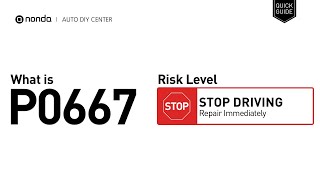
Don’t brush this one off. Depending on the root cause, you might be looking at anything from a persistent warning light to a dead engine that leaves you stranded. Worse yet, if the control module can’t keep tabs on its own temperature, it could overheat and fail for good. That’s not a cheap repair - replacing a PCM, ECM, or TCM can really sting. I tell folks: don’t wait and hope it goes away. The risk of getting stuck or facing even bigger repair bills just isn’t worth it.
dtc P0667 Repair Steps
When I’m fixing a P0667, here’s the approach that’s worked for me over the years:
- Start by cleaning up any corrosion from connectors, and make sure every pin is clean, straight, and making good contact.
- Track down and properly repair or replace any damaged wiring - don’t just slap some electrical tape on it and call it good. Do it right the first time.
- Secure or replace any loose or crusty ground straps for the modules. Reliable grounds are essential for these systems.
- If wiring and grounds all check out but the code’s still there, you might need to have the module reprogrammed, or in rare cases, replaced. But don’t jump to that step unless you’ve ruled out everything else.
Always use the repair manual for your specific ride, and double-check every step before spending big on parts.


Conclusion
Here’s the bottom line: P0667 means your car’s computer isn’t able to keep track of its own temperature, usually thanks to a wiring or connector problem. If you don’t get on top of it, you could go from a simple warning light to a full-blown no-start or a fried control module. The smartest way to tackle it is by carefully inspecting all wiring and connectors first, checking for any TSBs, and only thinking about swapping the module if everything else comes up clean. Don’t drag your feet-addressing it early and methodically will keep your car reliable and save you a lot of grief down the line.

 4085
4085 6 minutes of reading