
Causes of P068B
From my time under the hood, I can tell you there are a handful of root causes that show up again and again with P068B. The power relay itself is often the main offender-these little guys can wear out, get stuck, or just plain fail. Blown fuses or a toasted fusible link in the PCM power circuit are right up there, too. Don’t overlook wiring, either; I’ve chased plenty of issues back to a broken wire, a crusty connector, or a short somewhere between the relay and the PCM. Here’s what I see most in the shop:
- PCM power relay gone bad
- Blown fuse or fusible link in the PCM power feed
- Open circuit or shorted wiring between relay and PCM
- Loose or corroded connections at the relay or PCM
- And on rare days, a fault inside the PCM itself
Truthfully, it’s usually something simple-relay, fuse, or wiring. But every so often, it’s a sneaky wiring gremlin that’ll keep you chasing your tail.
dtc P068B Symptoms
So what tips you off that you’ve got a P068B? Most times, your car won’t want to start, or it’ll crank and crank before finally firing up-if it starts at all. A weak or suddenly drained battery is another red flag. That check engine light? It’ll almost always be shining bright. Once in a while, you might catch random stalling or weird glitches with your car’s electronics. If you’re facing any of these headaches, especially a stubborn no-start, this code is your road map to what’s going wrong.

P068B engine code Diagnosis
Here’s how I handle a P068B when one rolls into my bay. First thing-pop that hood and check your battery terminals for corrosion or looseness, and don’t forget to get a good look at all the ground straps. Next, I go straight to the fuses and fusible links for the PCM power circuit. If you find a blown fuse, don’t just slap a new one in-hunt down what toasted it in the first place. After that, I zero in on the PCM power relay. Here’s a pro-tip: swap it with another similar relay from the fuse box and see if the problem moves. If the relay and fuses look solid, I’ll start tracing wiring. Check the harnesses and connectors running between the relay and PCM for signs of damage, corrosion, or loose pins. I’ll even have someone wiggle the harness while I watch for changes-sounds simple, but it works. If everything still looks good, I break out the digital voltmeter and test for correct voltage at the relay and PCM connectors, following the wiring diagrams in the service manual. If you’re not comfy with electrical checks, don’t risk it-get a pro involved. And here’s something a lot of folks miss: check for technical service bulletins (TSBs) for your car. Sometimes the manufacturer already knows about the problem and has a fix, saving you hours of guesswork.
Common obd code P068B Mistakes
A classic mistake I see is folks jumping straight to replacing the PCM-almost never the answer. Another blunder is checking fuses only when the car’s off; a fuse might look fine until it’s under load. Skipping a thorough inspection of the wiring and connectors bites a lot of people, too. I’ve seen too many “bad” PCMs that were really just a broken wire or a loose connector. My advice? Always start with the basics. Simple fixes save you time, cash, and a lot of frustration.

Seriousness of obd2 code P068B
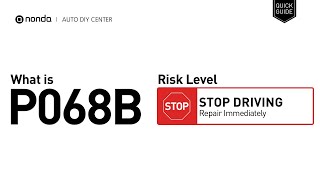
Don’t take this code lightly. I’ve seen P068B leave drivers stranded without warning-a no-start can happen out of the blue, or you might get hit with all sorts of electrical gremlins while driving. If the PCM doesn’t power up or down the right way, you could fry the module, which isn’t cheap. Worse, you might end up damaging other sensitive electronics if voltage spikes start flying around. In other words, this is the kind of issue you want to fix fast. Don’t wait, don’t gamble-get it sorted or you could be facing a much bigger headache.
P068B code Repair Steps
When I’m fixing a P068B, I always start with the tried-and-true basics. Here’s my go-to checklist:
- Swap out the PCM power relay if it’s acting up or sticking
- Replace blown fuses or fusible links, and track down what caused the blowout
- Repair or replace any damaged wiring or connectors between relay and PCM
- Clean up and tighten every related electrical connection you can find
- If, after all that, the PCM’s still the culprit (which is rare), then reprogram or replace it
My advice? Don’t jump to the PCM. Most times, you’ll solve it with a relay, fuse, or wiring fix. That’s where your money and time are best spent.


Conclusion
Bottom line: P068B means your car’s computer isn’t getting power the way it’s supposed to, usually thanks to a bad relay, fuse, or wiring. Ignore it, and you could be left stranded or facing major electrical repairs. I can’t stress enough-start with a careful check of the relay, fuses, and wiring. Only consider the PCM if nothing else pans out. Tackle it now, and you’ll keep your car running smooth-and your wallet a whole lot happier.

 3660
3660 6 minutes of reading